
Planting
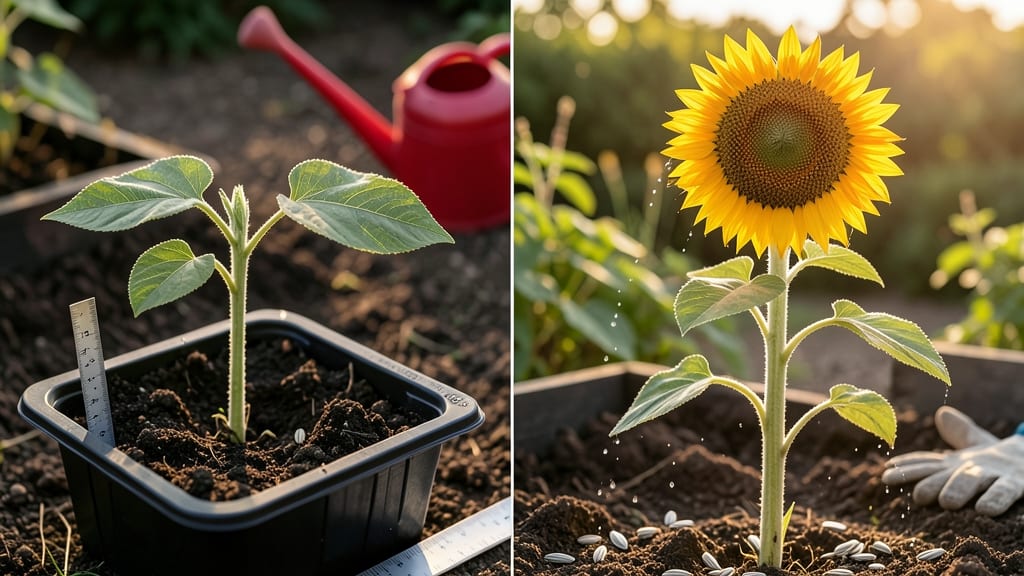
A sunflower seed takes 60 to 120 days to grow into a towering bloom, but the exact timeline depends on the variety, soil warmth, and sunlight—meaning your patience (or excitement) will be tested along the way.
Picture this: you tuck a seed into the soil in early spring, and by midsummer, a 10-foot giant 🌻 stands in your backyard, drawing bees and birds like a magnet.
But before that drama unfolds, there’s the waiting—those first 3 to 14 days where you’re staring at empty soil, wondering if anything will happen.
Here’s the good news: once those first leaves crack through the dirt, growth accelerates. Seedlings hit 6 inches in just 3 weeks, and by 80 days, you’ll see the first buds.
Dwarf varieties? They’re the speed demons, flowering in as little as 60 days, while giants take nearly double that time.
Below, I’ll break down the exact stages—from sprout to sun—and share the 3 pro tips to shave weeks off your wait. Ready to turn that seed into a sky-high showstopper?
Sunflower growth timeline: exact days from seed to bloom by stage
Sunflowers are one of the fastest-growing plants in gardens, but their exact timeline from seed to bloom depends on variety, climate, and care. Most sunflowers reach maturity in 80–120 days, but dwarf varieties can bloom in as few as 60 days.
Understanding each growth stage helps you track progress and troubleshoot delays. Let’s break it down day-by-day, from that first tiny sprout to the towering sunflower bloom you’ll admire all summer.
Germination is the first critical phase, where moisture and warmth trigger the seed to break open. Under ideal conditions—soil temperatures between 70–90°F and consistent moisture—most sunflower seeds sprout within 3–14 days.
Cool soils or dry conditions can stretch this to 2–3 weeks, while overly wet soil may cause rot. Planting depth matters too: bury seeds 1 inch deep for best results. Once sprouted, seedlings need bright light to prevent leggy growth.
Here’s a clear breakdown of the sunflower growth timeline by stage, including key milestones and care tips to keep your plants on track:
| Stage | Days to Reach | Key Features | Care Tips |
|---|---|---|---|
| Germination | 3–14 days | Seed cracks open; first cotyledons (seed leaves) emerge | Keep soil moist but not soggy; maintain 70–90°F soil temp |
| Seedling | 14–21 days | True leaves appear; stem strengthens | Thin seedlings to 6–12 inches apart; ensure full sun exposure |
| Vegetative Growth | 21–60 days | Rapid stem elongation; bud formation begins | Water deeply 2–3x per week; fertilize with balanced 5-10-10 |
| Flowering | 60–120 days | Bud opens; petals fully unfurl; pollen develops | Reduce watering slightly; stake tall varieties if needed |
| Seed Maturity | 90–120 days | Petals droop; seed head turns brown; seeds rattle | Harvest seeds when back of head is fully yellow |
The vegetative growth stage (21–60 days) is where sunflowers show their true potential. This is when they bolt upward, sometimes growing 2–3 inches per day under ideal conditions. During this phase, focus on deep watering—soak the soil to a depth of 6–8 inches—to encourage strong root development.
Avoid overhead watering, which can spread fungal diseases like powdery mildew. If your sunflowers start leaning, it’s a sign they need more sunlight or support. Thin out crowded seedlings to give remaining plants 12–24 inches of space, depending on the variety.
Flowering typically begins around 60 days for dwarf varieties and up to 120 days for giant sunflowers like 'Russian Giant'. You’ll know buds are ready to open when they swell rapidly and the outer petals turn bright yellow.
At this stage, reduce watering slightly to prevent bud rot, but keep the soil moist. The first buds to open are usually the lowest on the stem, with later blooms following upward.
Each flower lasts 1–2 weeks before the petals wilt, but the seed head remains productive for seed harvesting for weeks afterward.
Several factors can speed up or slow down sunflower growth. Temperature is the biggest influencer: seeds germinate fastest in warm soil (70–90°F), while cooler temperatures delay sprouting. Sunlight is equally critical—sunflowers need at least 6–8 hours of direct sun daily.
Shady conditions cause leggy, weak stems and smaller blooms. Soil quality also plays a role: well-draining, nutrient-rich soil with a pH of 6.0–7.5 supports faster growth. Amend heavy clay soil
Fastest vs slowest sunflower varieties: which grow in 60 days vs 120+?
Not all sunflowers follow the same timeline—some bloom in under 60 days, while others take nearly 120 days or more to reach their full glory. If you're planning a summer garden with limited time, choosing the right variety can make all the difference.
For example, 'Moulin Rouge' sunflowers are the speed demons of the bunch, while 'Russian Giant' varieties take their sweet time to mature.
The key difference lies in their genetic makeup: dwarf varieties prioritize early blooms, while giant varieties focus on height and seed production. If you're in a short growing season, opt for early bloomers like 'Autumn Beauty' or 'Teddy Bear'.
But if you're dreaming of towering sunflowers that attract pollinators for weeks, heirloom types like 'Russian Mammoth' are worth the wait.
Here’s a quick comparison of popular sunflower varieties and their growth timelines to help you decide:
If you're growing sunflowers in containers, stick to dwarf varieties like 'Moulin Rouge' or 'Teddy Bear'. Their compact size makes them perfect for patios and balconies, and they’ll bloom faster than their towering cousins.
For cut flowers, 'Autumn Beauty' is a crowd-pleaser—its vibrant petals last longer in bouquets and attract bees like crazy.
On the other hand, if you're after giant sunflowers for a dramatic backyard display, be prepared to wait. Varieties like 'Russian Giant' and 'Russian Mammoth' are the ultimate showstoppers but require 100+ days to reach their full potential.
They’re also heavier, so planting them in well-draining soil with support (like stakes) is a must to avoid toppling over.
Pro tip: For short growing seasons, pair fast-blooming varieties with slower ones. Plant 'Moulin Rouge' in early spring for quick color, then add 'Autumn Beauty' a few weeks later to extend your sunflower season well into fall. This way, you’ll enjoy blooms from June to October—no waiting required!
No matter which variety you choose, the key to faster blooms is consistent care. Keep the soil moist, provide full sun, and fertilize lightly during the growing season.
With the right variety and a little patience (or impatience, if you're going for speed!), you’ll have sunflowers reaching for the sky in no time. 🌻