
Plants
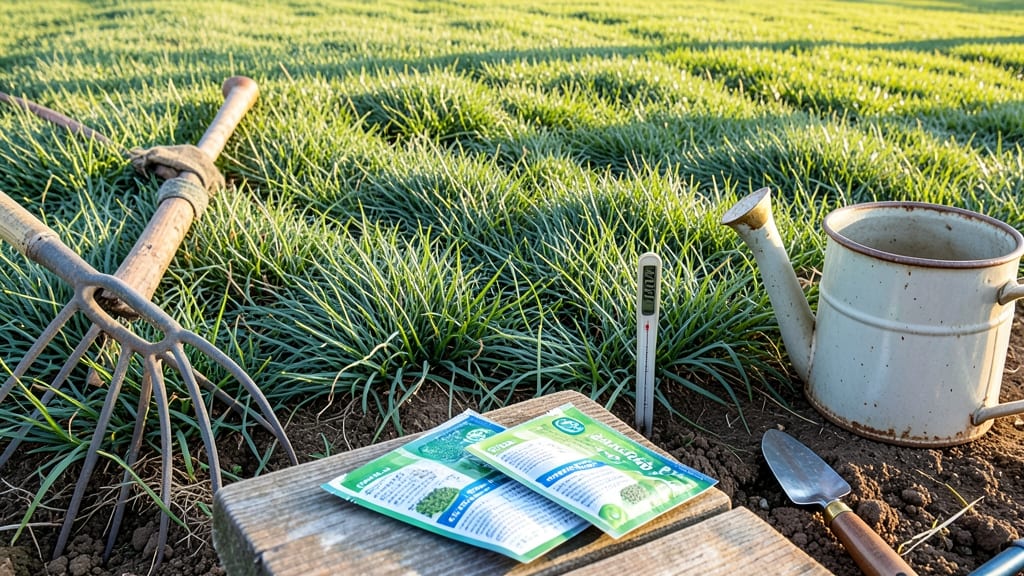
Planting Bermuda grass seed in Georgia requires timing it just right—between late April and early June, or again in late July to early August—to beat the heat and weeds.
Picture this: you’ve spent hours prepping your soil, only to watch your new lawn struggle because you planted too early or too late. Georgia’s 7b-8b climate means the difference between a lush, weed-resistant lawn and a patchy disappointment can hinge on those exact months.
This isn’t just about throwing seed on the ground and hoping for the best. Bermuda grass thrives when soil temps hit 65°F or higher, and planting outside that window means slower germination, weaker roots, and a fight with weeds you can’t afford to lose.
Below, I’ll break down the fastest way to establish your lawn—soil prep, watering tricks, and when to fertilize—so you skip the guesswork and get a thick, green carpet by summer.
Best planting months for Bermuda grass seed in Georgia’s climate zones
Georgia’s USDA zones 7b-8b create two distinct windows for planting Bermuda grass seed—spring and late summer—each with unique advantages. The key? Soil temperatures must stay above 65°F (18°C) for germination, while humidity and weed competition shift between regions.
Northern Georgia (zone 7b) has a shorter growing season, while Southern Georgia (zone 8b) can push planting later into summer.
Timing matters because Bermuda grass grows aggressively when soil hits 75°F+. Plant too early, and weeds steal nutrients. Too late, and summer heat stresses seedlings. I’ll show you the exact months for each Georgia region, plus how to adjust if your spring or summer doesn’t cooperate.
For fastest establishment, aim for late April to early June in spring or late July to early August in summer. These windows balance soil warmth, rainfall patterns, and weed pressure to give your grass a fighting chance against crabgrass and clover.
| Region | Optimal Planting Window | Soil Temp Threshold | Germination Rate | Weed Competition Risk | Adjustment for Late Starts |
|---|---|---|---|---|---|
| Northern GA (Zone 7b) | Late April - Early June | 65°F+ (18°C) | 7-10 days (with 1" rain) | High (crabgrass) | Use pre-emergent herbicide 2 weeks before planting |
| Southern GA (Zone 8b) | Late April - Early July | 70°F+ (21°C) | 5-7 days (with 1" rain) | Moderate (clover) | Plant after July 15 to avoid hurricane season |
| Both Regions (Summer) | Late July - Early August | 75°F+ (24°C) | 3-5 days (with 1" rain) | Low (weeds dormant) | Water twice daily if temps exceed 90°F |
If you’re in Northern Georgia (zone 7b), your last frost typically arrives by mid-March, but don’t rush—wait until late April when soil warms to 65°F.
This timing avoids cool-soil germination delays and gives seedlings a head start before summer weeds explode. Use a soil thermometer to confirm temps before planting.
For Southern Georgia (zone 8b), you’ve got more flexibility. You can plant as late as early July, but I recommend stopping by July 15 to avoid hurricane season disruptions.
The extra heat speeds germination, but also increases fungal disease risks like brown patch. Apply a fungicide if humidity stays above 70% for 3+ days.
Adjustments are critical if your weather doesn’t cooperate. For example, if May rains delay soil warming, shift to early June but expect slower growth until July. Conversely, if August heatwave hits, water morning and evening to prevent seed desiccation.
Pro tip: Test soil moisture before planting—stick a screwdriver in 6 inches deep. If it’s dry, your seed won’t germinate. Bermuda grass needs consistent moisture for the first 30 days, so plan for daily watering if natural rain fails.
A drip irrigation system works best to avoid fungal issues from overhead sprinklers.
Remember, weed competition is your biggest enemy. Crabgrass thrives in April-May, while clover takes over in shaded areas. Apply a pre-emergent herbicide 2 weeks before planting to block weeds, then follow up with post-emergence treatments if needed. This step alone can double your success rate.
Finally, don’t overlook fertilization timing. Apply a starter fertilizer (16-4-8 NPK) at planting, then switch to a balanced formula (10-10-10) 4-6 weeks later. This feeds roots without burning seedlings. In Southern GA, a light fall feeding in October prepares grass for winter dormancy.
By following these region-specific windows and adjustments, your Bermuda grass will establish thick, weed-resistant coverage by late summer—ready to handle Georgia’s heat and humidity like a pro. 🌱
How to prepare soil and prep for fast Bermuda grass establishment
Bermuda grass won’t just grow—it demands the right conditions to establish quickly and outcompete weeds. In Georgia’s 7b-8b climate, that means soil prep that mimics its native Southern habitat: loose, well-draining, and packed with organic matter.
Skipping this step is like planting a seed in concrete—you’ll get frustration, not grass.
The secret to 90%+ seedling survival starts with a soil test to check your pH (aim for 6.0-7.0) and nutrient levels. If your soil is too acidic or compacted, Bermuda grass will struggle to root deeply, leaving gaps for crabgrass and other weeds to sneak in.
I’ve seen lawns go from bare spots to lush in just 6 weeks when they get this right.
- Test and amend soil: Use a soil test kit (pH 6.0-7.0). Add lime for acidic soil or sulfur for alkaline. Mix in 2-3 inches of compost or aged manure.
- Loosen compacted soil: Rent a core aerator (spring) or tiller to break up hardpan. Focus on 3-4 inches deep for roots.
- Apply pre-emergent herbicide: 2-4 weeks before planting to block weeds. Use prodiamine or pendimethalin (follow label rates).
- Spread starter fertilizer: Apply 16-4-8 NPK at ½ lb per 100 sq ft 1 week before seeding. Water lightly to activate.
- Level the seedbed: Rake out clumps and fill low spots with sand-topsoil mix. Aim for a smooth, firm surface—no valleys where water pools.
- Plant seed evenly: Use a broadcast spreader for ½ lb seed per 100 sq ft. Lightly rake to ½-inch depth.
- Water daily for 14 days: Keep soil consistently moist (like a damp sponge). Switch to deep cycles (1 inch, 2-3x/week) after germination.
Watering is where most gardeners mess up. Bermuda grass seed needs daily moisture for the first 2 weeks to germinate, but after that, you’ll switch to deep, infrequent watering to encourage deep roots.
I’ve seen lawns fail when homeowners water lightly all day—this creates weak, shallow roots that can’t handle Georgia’s heat or drought. Instead, water early morning (before 10 AM) for 1-1.5 inches at a time.
Weed control starts before you even plant. Apply a pre-emergent herbicide like pendimethalin 2-4 weeks before seeding to block crabgrass and chickweed. For organic options, use corn gluten meal (apply at 20 lbs per 1,000 sq ft) in early spring.
Once your Bermuda grass is 3-4 inches tall, you can safely apply post-emergent herbicides like mesotrione for broadleaf weeds.
Don’t forget to mow high once your grass reaches 3-4 inches. Cutting it too short stresses the plant and invites weeds. Use a sharp mower blade and never remove more than ⅓ of the blade height at a time.
This keeps your lawn dense, shade-out weeds, and looks professional—no more "lawn of shame" moments.
With these steps, your Bermuda grass will establish 2-3x faster than average, giving you a thick, weed-resistant lawn by summer. The key? Prep first, plant second. Skimp on soil work, and you’ll pay for it in thin patches and weed battles.
Do it right, and you’ll have the greenest lawn on the block in no time. 🌱