
Plants
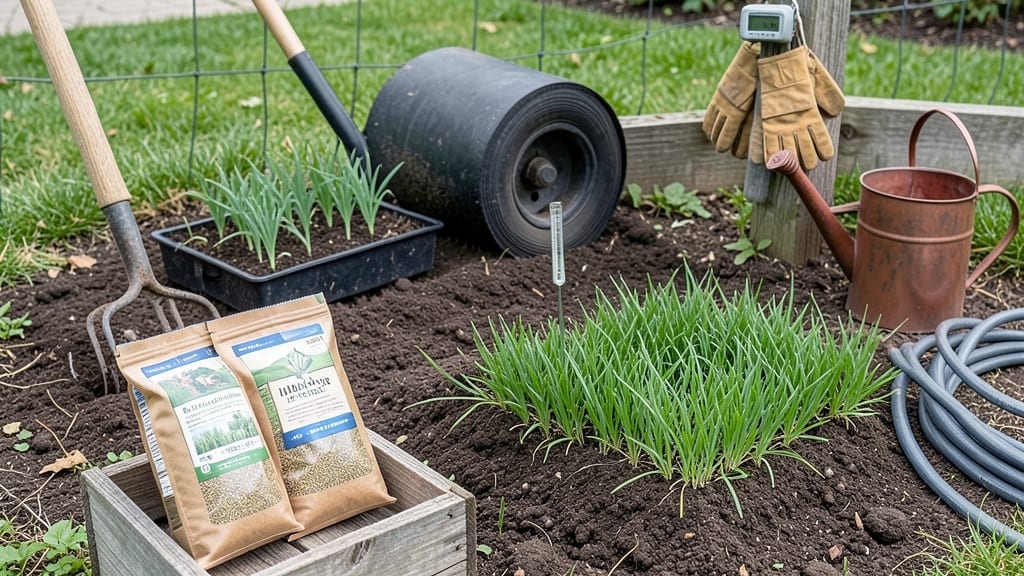
Planting grass seed in Idaho works best 4-6 weeks before your first frost or right after the last spring freeze—timing that turns a patchy lawn into a lush, hardy carpet.
Here’s the catch: Idaho’s Zone 4b-7b climate means frost can sneak in early or linger late, and planting too soon or too late leaves your grass struggling to root before winter. Get it wrong, and you’re staring at bare spots by summer.
Below, I break down the exact windows for Southern, Central, and Northern Idaho—plus how to prep your soil, pick the right seed, and protect your new grass from Idaho’s unpredictable weather.
You’ll learn how to read your local frost dates, choose fast-germinating varieties like Kentucky Bluegrass, and even extend your planting season with simple tricks that save your lawn from wildlife and drought.
Idaho’s best grass seed planting windows by microclimate (cool-season guide)
Idaho’s diverse microclimates—from the high desert of Southern Idaho to the mountainous Northern regions—create wildly different frost patterns. Cool-season grasses like Kentucky Bluegrass and Tall Fescue thrive when planted during 50-65°F soil temperatures, but timing varies by USDA Zone 4b-7b.
Miss the window, and you’ll battle weak seedlings or winter kill before roots establish.
In Southern Idaho (Zone 7b), where summers are hot and winters mild, your planting window stretches longer than in Northern Idaho (Zone 4b), where early frosts arrive by October.
The key is planting 4-6 weeks before first frost or 4-6 weeks after last frost—but Idaho’s unpredictable spring means flexibility is critical. Let’s break down the exact windows for each region.
🌱 Pro Tip: Use a soil thermometer to confirm temperatures—cool-season grasses won’t germinate well below 50°F, even if calendar dates suggest readiness.
For Southern Idaho, the March 15-April 30 window aligns with warming soils and minimal frost risk. If you plant in late April, monitor forecasts—late frosts can still occur. Fall planting (August-September) is ideal here because cooler temps reduce weed competition and seedlings establish before winter dormancy.
In Central Idaho, where Zone 6a-6b transitions create variability, aim for March 1-April 15 in spring. Fall planting shifts to August 1-September 15 to avoid early October frosts. Tall Fescue is my top recommendation here—it tolerates drought and heat spikes better than Kentucky Bluegrass.
Northern Idaho’s shorter growing season demands precision. Plant April 15-May 15 when soils reach 50°F, but be ready to protect seedlings with frost blankets if nights dip below 32°F. Fall planting here is risky—stick to July 15-August 15 for early establishment before winter sets in.
Regardless of region, soil prep is non-negotiable. Rake existing grass or debris, loosen top 2-3 inches of soil, and level the area. Clay soils (common in Southern Idaho) benefit from gypsum to improve drainage, while sandy soils (like those in Northern Idaho) need compost to retain moisture.
After seeding, consistent moisture is critical. Water lightly twice daily for the first week to keep soil evenly moist (not soggy). Once sprouts appear (7-14 days), reduce to deep watering 2-3x weekly. Morning watering prevents fungal diseases from evening dampness.
🌿 Key Takeaway: Southern Idaho’s longer windows let you plant twice a year, while Northern Idaho’s shorter season means spring-only planting is safest. Always check local frost dates—Idaho’s microclimates can vary 10+ miles apart!
5 Critical factors that determine your Idaho grass seed planting success
Idaho’s clay loam and sandy loam soils behave differently when planting grass seed—one holds moisture like a sponge while the other drains faster than a sieve. Both require precise prep to give seeds the best shot at survival.
The wrong approach means weak roots, patchy growth, and a lawn that struggles to handle Idaho’s dry summers and cold snaps.
I’ve planted grass in both soil types across Idaho’s zones, and these five factors make the difference between a lush lawn and a disappointing patchwork. Let’s break them down so you can avoid common mistakes that derail germination.
- Soil Prep Depth: Loosen top 3-4 inches of soil to break compaction. Clay loam needs extra aeration; sandy loam benefits from organic matter like compost.
- Moisture Retention: Clay soils hold water—test drainage first. Sandy soils dry fast; mulch after planting to lock in moisture for 2-3 weeks.
- Seed-to-Soil Contact: Lightly rake seeds into 1/4-inch depth. Press firmly in sandy loam; avoid compacting clay loam too much.
- Weed Competition: Pre-emergent herbicides can smother seeds. Instead, hand-pull weeds before planting and use straw mulch to block light.
- Post-Planting Care: Water daily for 14 days (morning only). Clay soils need less frequent watering; sandy soils require daily checks.
Let’s tackle the first factor: soil prep depth. Idaho’s clay loam soils often form a hardpan just below the surface, while sandy loam can be so loose it won’t hold seeds in place. I’ve seen seeds blow away in windy Boise yards because the soil was too fluffy.
The fix? Use a garden fork to loosen clay soils to 4 inches deep, while sandy soils just need a light raking to create texture for seed contact.
Next, moisture retention is where Idaho’s soils really split. Clay loam acts like a reservoir—overwatering leads to root rot. Sandy loam drains so fast that seeds dry out before germinating. My trick?
For clay: amend with perlite to improve drainage. For sand: mix in peat moss to boost water-holding capacity. Both soils benefit from a thin layer of straw mulch after planting to slow evaporation.
Don’t skip seed-to-soil contact—this is where 80% of germination failures happen. Seeds need darkness and moisture to sprout, but they also can’t be buried too deep. In sandy loam, press seeds gently with a lawn roller or your boot to ensure contact.
In clay loam, avoid compacting further; instead, use a light rake pass after seeding to tuck them into the surface without smothering.
Finally, weed competition and post-planting care often get overlooked. Weeds steal nutrients and shade out grass. My go-to method? Solarize the soil 2 weeks before planting by covering with clear plastic on sunny days to kill weed seeds.
After planting, water deeply in the morning—never at night—to prevent fungal diseases like damping off, which is especially risky in Idaho’s humid fall mornings.
Master these five factors, and your Idaho grass seed will germinate consistently and quickly, even in challenging soils. The key is adapting techniques to your specific soil type—clay loam needs drainage help, while sandy loam craves moisture retention.
Start with soil tests if you’re unsure, and always plant when soil temps hit 50-65°F for best results. 🌱