
Companion Plants
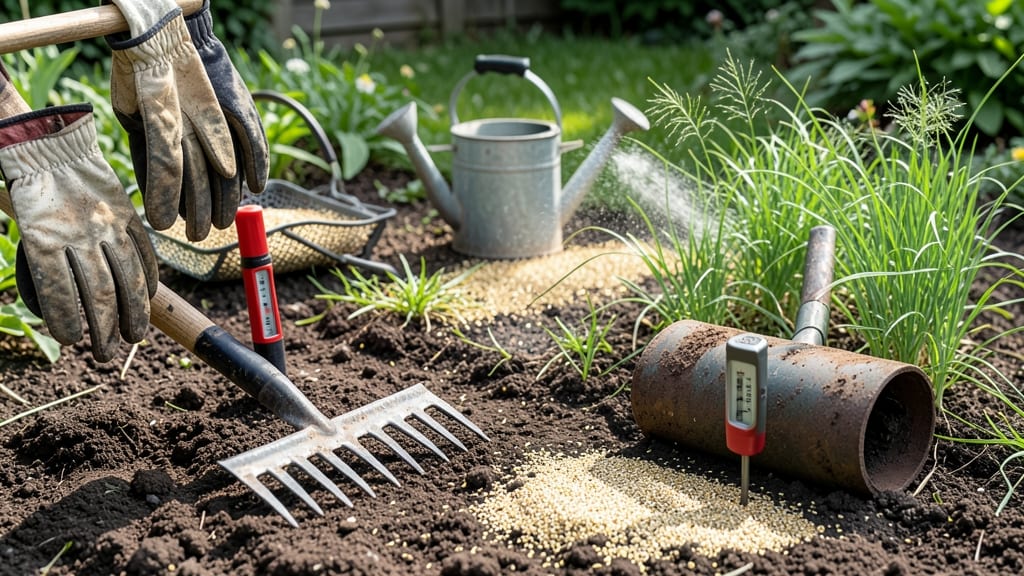
Planting grass seed in Pennsylvania in spring means timing it 4-6 weeks before your last frost date—any earlier, and frost will kill tender sprouts; too late, and summer heat stresses young roots.
If you’ve ever spread seed in March only to watch it freeze or in May only to see weeds take over, you know how critical those deadlines are. The right window turns bare soil into a thick, green lawn in just weeks.
Pennsylvania’s zones 5b-7a span from late April in the north to early April in the south, so your local last-frost averages are the key. Below, I break down the exact deadlines by region and how to prep your soil for success.
You’ll also discover the trade-offs between early spring planting (cooler temps, fewer weeds) and late spring (warmer soil, faster germination), plus the 3-step prep that keeps your new grass from washing away or drying out.
Pennsylvania’s spring grass planting deadlines by hardiness zone
Timing your grass seed planting in Pennsylvania is all about avoiding late frosts while giving new seedlings enough time to establish before summer heat. Pennsylvania spans USDA zones 5a-7a, meaning your exact last-frost dates can vary by weeks.
Plant too early, and frost will kill tender sprouts; too late, and summer drought or weeds will take over.
For cool-season grasses (like Kentucky bluegrass, fescue, and ryegrass), which dominate PA lawns, the ideal window is 4-6 weeks before your average last frost date. This gives seeds time to germinate and develop a strong root system before summer stress arrives.
Warm-season grasses (like Bermuda or Zoysia) are rare in PA but prefer late spring planting after soil warms.
Here’s how to find your exact last-frost date: Check the National Oceanic and Atmospheric Administration (NOAA) frost maps or your local Cooperative Extension Service. For example, Pittsburgh (zone 6a) averages its last frost around April 15, while Erie (zone 5b) might see frost until May 1.
Planting 4-6 weeks before these dates ensures success.
| USDA Zone | Average Last Frost | Ideal Planting Window | Risk of Late Frost | Notes |
|---|---|---|---|---|
| 5a (Erie, Northeast PA) | May 1 - May 15 | April 1 - April 15 | High | Wait for soil to warm above 50°F |
| 5b (State College, Central PA) | April 20 - April 30 | March 15 - March 31 | Moderate | Use frost cloth for early plantings |
| 6a (Pittsburgh, Western PA) | April 10 - April 20 | February 28 - March 15 | Low | Early spring is safest |
| 6b (Lancaster, Southeast PA) | April 5 - April 15 | February 20 - March 10 | Low | Soil warms quickly; monitor moisture |
| 7a (Delaware Water Gap, Southeast PA) | March 25 - April 5 | February 15 - February 28 | Very Low | Fastest germination; water deeply |
If you’re in zone 5a or 5b, like Erie or Scranton, I recommend waiting until mid-April to plant. These areas have a higher chance of late frosts, and cool-season grasses can handle brief chills once established.
For zones 6a-7a, like Pittsburgh or Philadelphia, you can start as early as late February, but be ready to protect seedlings with frost cloth if nighttime temps dip below 32°F.
Late spring plantings—after May 1—are riskier because summer heat and weed competition can overwhelm young grass. If you miss the ideal window, consider fall overseeding (late August to early September), which is often more successful in PA’s climate.
Just ensure your soil is still warm enough for germination (above 50°F).
Pro tip: Use a soil thermometer to check if your soil is ready. Grass seeds need soil temps between 50°F and 65°F to germinate properly. If your soil is still cold, wait another week or two. Cold soil slows germination and makes seedlings more vulnerable to disease and pests.
After planting, maintain consistent moisture
How to prepare your lawn for spring grass seed planting in PA
Spring is the perfect time to plant grass seed in Pennsylvania, but your lawn needs the right prep to ensure those tiny seeds sprout into a thick, healthy carpet. Without proper preparation, your new grass will struggle with weeds, poor soil contact, or uneven growth.
The key is a clean, loose, and nutrient-rich seedbed—one that holds moisture while allowing roots to penetrate easily.
Start by testing your soil’s pH level (6.0-7.0 ideal) and nutrient balance. Pennsylvania’s clay-heavy soils often need compost or lime to improve drainage and fertility. Skipping this step means your grass seed may not germinate evenly, leaving patches of bare dirt where weeds move in.
I’ve seen lawns fail spectacularly because of overlooked soil prep—don’t let that be you!
🌱 Step-by-Step Lawn Prep for Spring Grass Seed
- 🔍 Test Soil
Use a soil test kit (or send to Penn State Extension) to check pH (6.0-7.0) and nutrient levels. Amend with lime if pH is below 6.0 or compost if organic matter is low. - 🪴 Kill Weeds
Apply a non-residual herbicide (like glyphosate) 2-3 weeks before planting. Let it dry completely to avoid harming new grass. For organic options, use vinegar + dish soap (spot-treat only). - 🔄 Till the Soil
Rent a rototiller to loosen the top 4-6 inches of soil. Break up compacted layers to help roots grow deep. Smooth the surface with a rake afterward. - 🌿 Choose the Right Seed
Pennsylvania’s climate favors cool-season grasses like tall fescue (drought-tolerant) or Kentucky bluegrass (spreads quickly). Avoid warm-season types (e.g., Bermuda) unless you’re in Zone 7a+. - 💧 Level and Water
Rake the soil to a fine, smooth finish. Lightly water the area to settle dust before seeding. This prevents seeds from washing away during your first watering.
Once your soil is prepped, focus on seed selection—Pennsylvania’s cool-season climate means you’ll want grasses that thrive in 60-75°F temperatures. Tall fescue is my top pick for its drought resistance and shade tolerance, while Kentucky bluegrass spreads aggressively to fill bare spots.
Mixing seed types (e.g., ryegrass + fescue) gives you faster germination and a denser lawn.
After seeding, cover seeds lightly with ¼ inch of soil or compost to protect them from birds and wind. Use a straw mulch (not wood chips) to retain moisture without smothering sprouts.
Water gently twice daily for the first week—just enough to keep the top inch of soil damp. Overwatering can wash seeds away, while underwatering leaves them dry and crispy.
Finally, avoid foot traffic for at least 4-6 weeks to let roots establish. If you’re overseeding an existing lawn, mow the old grass short (1-1.5 inches) first to improve seed-soil contact.
With the right prep, your new grass will outcompete weeds and give you that lush, green lawn by early summer.