
Vegetables
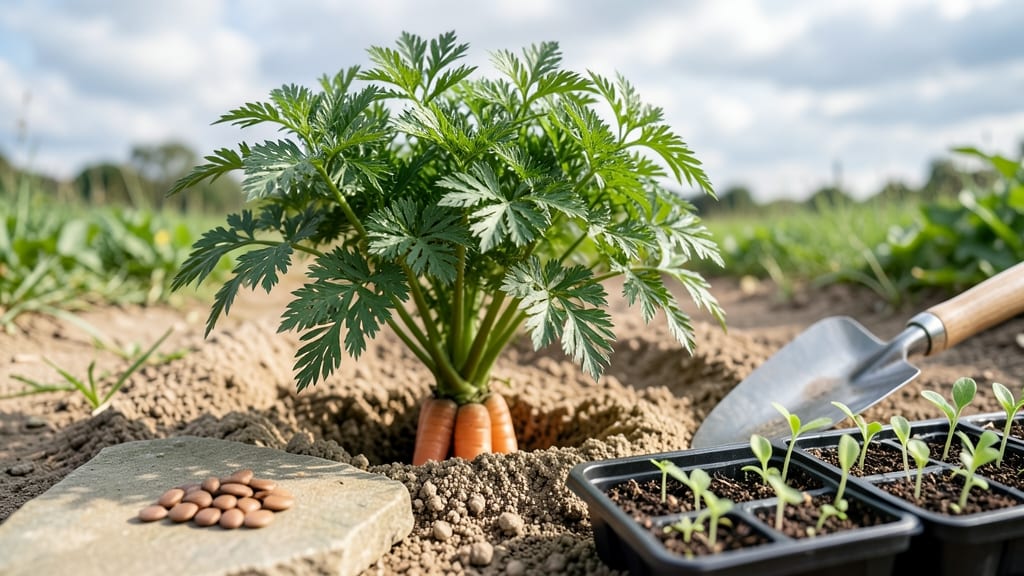
Planting carrot seeds at the right depth is the difference between a lush harvest and a garden full of empty rows. Too deep, and they’ll rot before sprouting; too shallow, and they’ll dry out or blow away.
Most gardeners overthink soil prep but forget the one factor that controls 90% of germination: the seed’s placement. A quarter-inch might sound simple, but the wrong depth can leave you staring at bare soil for weeks.
In this guide, I’ll break down the exact depth for short, long, and heirloom varieties, plus how to adjust for sandy vs. clay soil. You’ll also learn how to spot common mistakes—like planting too close to the surface—and fix them before it’s too late.
By the end, you’ll know not just how deep to plant, but when to thin, how to keep moisture steady, and why some seeds take three weeks to crack the soil while others pop up in days.
Optimal carrot seed depth by variety and soil type
Carrot seeds are tiny powerhouses, but their success hinges on one critical factor: planting depth. Most gardeners aim for ¼-inch depth, but the truth is more nuanced. Variety, soil type, and even moisture levels can shift that ideal by ⅛-inch.
For example, heirloom varieties like 'Purple Haze' need slightly deeper planting than quick-sprouting 'Danvers' to prevent drying out.
The wrong depth throws off germination rates dramatically. Plant too shallow (⅛-inch or less), and seeds dry out before sprouting—success drops to 30%. Too deep (½-inch), and they suffocate, with germination plunging to 15%.
The sweet spot? ¼-inch to ½-inch, adjusted by soil and seed type.
Here’s the breakdown you need: soil texture changes how moisture moves, and carrot varieties have different sprouting speeds. Short varieties (like 'Paris Market') tolerate shallower depths, while long heirlooms (like 'Black Spanish') need consistent moisture—hence deeper planting. Let’s dive into the specifics.
| Variety Type | Optimal Depth | Germination Rate | Soil Adjustment | Notes |
|---|---|---|---|---|
| Short Varieties (e.g., 'Paris Market') | ¼-inch | 85-95% | Sandy: ⅛-inch deeper | Fast germination; thin early |
| Standard Varieties (e.g., 'Danvers') | ⅓-inch | 80-90% | Clay: ⅛-inch shallower | Balanced growth; adaptable |
| Long/Heirloom (e.g., 'Purple Haze') | ½-inch | 70-85% | Loam: standard depth | Slow sprouts; keep moist |
| All Varieties in Sandy Soil | ⅛-inch deeper | 75-85% | Add vermiculite | Prevents drying; improves moisture retention |
| All Varieties in Clay Soil | ⅛-inch shallower | 65-75% | Mix in compost | Improves drainage; reduces compaction |
Sandy soil drains too quickly, so deepen your planting by ⅛-inch to give seeds a moisture reserve. Mix in vermiculite or coconut coir to slow drainage without altering depth.
For clay soil, the opposite is true—plant seeds ⅛-inch shallower to avoid suffocation. Amend the soil with compost or peat moss to improve aeration.
Temperature plays a hidden role too. Cooler soil (50°F–60°F) slows germination, so deeper planting helps retain heat near seeds. Warmer soil (70°F+) speeds sprouting, but shallow planting can dry seeds out faster. Use a soil thermometer to adjust depth if your climate swings wildly.
Pro tip: Pre-sprout seeds before planting in dry or hot conditions. Soak seeds in water for 24 hours, then plant at your usual depth. This tricks them into starting germination before they hit the soil, boosting success rates by 20-30% in tough conditions.
After planting, keep soil consistently moist but not soggy. A light misting every 2–3 days maintains ideal moisture. Use a fine-mist spray bottle to avoid disturbing seeds. Once sprouts appear (in 10–21 days), reduce watering slightly to prevent fungal issues.
Watch for uneven germination, a red flag for depth issues. If some seeds sprout while others rot, adjust your technique: deeper for sandy soil, shallower for clay. Thin seedlings to 2–3 inches apart once they’re 2 inches tall—this prevents overcrowding and gives roots room to grow.
Remember, depth isn’t set in stone. Experiment with your local soil and microclimate. Keep a planting journal to track what works best for your garden. With the right depth, you’ll go from frustrating gaps to a bountiful
Common mistakes that kill carrot germination (and how to fix them)
Even with perfect soil, carrot seeds fail to sprout when planted at the wrong depth. The most common mistake? Assuming a "one-size-fits-all" approach. Heirloom varieties need slightly more coverage than short-root types, and sandy soil requires adjustments compared to clay.
Another silent killer is uneven seedbeds. If your row isn't level, seeds on the high side dry out while low spots stay waterlogged. I've seen entire rows of seeds rot because of just ¼-inch variations in planting depth.
⚠️ The Deadly Depth Zone
Planting carrot seeds deeper than ½-inch or shallower than ¼-inch creates these problems:
- Too deep: Seeds suffocate from lack of oxygen, leading to rot before sprouting
- Too shallow: Seeds dry out or get washed away by rain, never germinating
- Uneven planting: Creates patchy germination where some seeds sprout while others fail
Pro Tip: Use a seed spacing tool or matchstick to maintain consistent depth.
Watch for mold or fungal growth on seeds planted too deep. The telltale sign is a white, fuzzy coating that appears 5-7 days after sowing. This happens when seeds can't break through compacted soil and rot instead.
Moisture management is equally critical. Seeds need consistent dampness but not soggy conditions. I recommend using a fine mist spray to keep the soil surface moist until germination, which typically takes 14-21 days in ideal conditions.
If your carrots sprout unevenly, check your soil temperature. Seeds need soil that's 50-75°F to germinate properly. Cold soil slows germination, while overheated soil can cause seeds to dry out before sprouting.
For troubleshooting, start by lightly raking the soil surface after planting to create a fine, even seedbed. Then cover with ¼-inch of fine compost rather than regular soil to improve moisture retention and prevent crusting.