
Planting
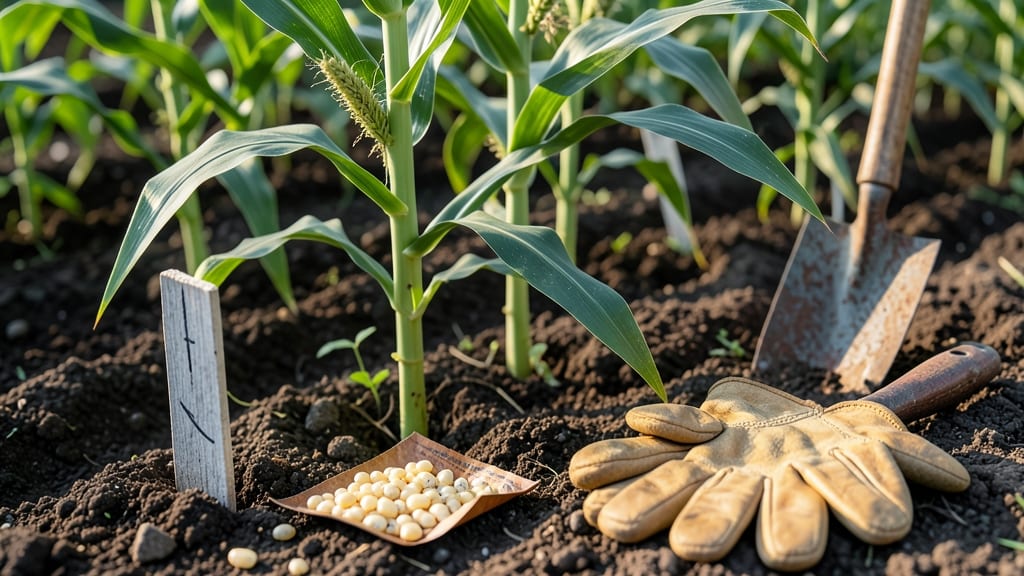
Proper field corn seed spacing is the foundation of a high-yield harvest—get it right, and you’re looking at 30% more ears per acre.
Picture this: rows packed too tight, and your plants compete for sunlight and nutrients, leaving you with stunted stalks and fewer ears. Too wide, and you waste space that could be growing corn.
The sweet spot? It’s not just about the numbers—it’s about matching your soil, climate, and corn variety to the science.
In this guide, I’ll walk you through the optimal row widths (7.5” to 30”+), seed depth (1”–2.5”), and population targets (28k–40k plants/acre) for modern hybrids.
Whether you’re working with 36-inch rows or tight 15-inch precision spacing, you’ll learn how to adjust for drought, no-till, or organic growing—and why even a half-inch difference in depth can mean the difference between a thriving crop and a struggle.
Ready to maximize your yield? We’ll also cover the 5 most costly spacing mistakes and how to fix them before they cost you bushels.
Optimal field corn seed spacing by row width and depth for high-yield varieties
Field corn yields depend heavily on precise seed spacing—too tight, and plants compete for nutrients; too wide, and you waste potential yield. Modern hybrids thrive with row widths between 7.5” and 30”+, but the sweet spot varies by soil type, irrigation, and hybrid maturity.
University trials show 15”–20” rows often deliver the best balance for dent corn varieties, while narrower rows (7.5”–12”) maximize light interception in tight planting systems.
Seed depth is equally critical: planting too shallow risks poor germination from drying soil, while depths over 2.5” can delay emergence. Most experts recommend 1”–1.5” depth for standard hybrids, though 2”+ may help in sandy soils to retain moisture.
Always adjust based on soil moisture—dry conditions demand deeper planting to reach wetter layers.
Population targets further refine spacing: aiming for 28,000–40,000 plants per acre ensures optimal ear development. High-yield hybrids like Pioneer P1190AMX thrive at 32,000 plants/acre with 30” rows and 12” in-row spacing, while shorter varieties may need 36,000+ plants/acre to compensate for reduced plant height.
Precision ag tools now let growers achieve ±5% uniformity in plant stands, directly translating to yield gains.
Soil type dictates spacing tweaks: Clay soils benefit from wider rows (24”–30”) to improve drainage, while sandy soils often use narrower rows (15”–20”) to capture moisture.
Irrigation methods also play a role—center-pivot systems frequently employ 30”+ rows to align with wheel spacing, whereas furrow irrigation may favor 20”–24” rows for even water distribution.
Here’s how row width and depth directly impact yield, based on University of Illinois trials:
| Row Width (inches) | Seed Depth (inches) | In-Row Spacing (inches) | Plants/Acre | Yield Impact (%) | Best For |
|---|---|---|---|---|---|
| 7.5–12 | 1–1.5 | 6–8 | 36,000–40,000 | +8–12% | Precision ag, high-population hybrids |
| 15–20 | 1.5–2 | 10–12 | 28,000–32,000 | +5–9% | Standard hybrids, clay soils |
| 24–30 | 2–2.5 | 12–15 | 24,000–28,000 | +3–7% | Sandy soils, center-pivot irrigation |
| 30–36 | 1.5–2 | 12–14 | 22,000–26,000 | Base yield (0%) | Traditional tillage, low-input systems |
Yield impact based on University of Illinois 2022 trials (vs. 36" rows)
For modern high-yield hybrids, narrower rows (15”–20”) often outperform wider spacing by 5–12%, thanks to improved light capture and reduced edge effects. However, taller varieties over 10 feet may need wider rows (24”+) to prevent lodging. Always calibrate your planter to achieve <
How to adjust seed spacing for different corn types and growing conditions
Field corn and sweet corn may look alike, but their spacing needs differ dramatically. Field corn thrives with 30–36-inch rows and 12-inch in-row spacing, while sweet corn often benefits from tighter 15–24-inch rows to maximize ear production. The key? Match your spacing to your corn type, soil moisture, and agricultural goals—whether you're aiming for grain yield or silage.
For drought-prone areas, wider rows (up to 40 inches) reduce competition for water, but you’ll need to plant deeper (2–2.5 inches) to ensure moisture reaches the seed.
In contrast, no-till systems often call for narrower rows (15–20 inches) to improve weed suppression and soil coverage. Organic growers may also adjust spacing to prioritize hand-weeding efficiency over mechanical harvestability.
Here’s how to balance these factors without sacrificing yield:
Field Corn Seed Spacing: Pros and Cons
- Better air circulation
- Easier mechanical harvest
- Reduced disease risk
- Lower plant population
- More weed competition
- Higher irrigation needs
- Higher plant density
- Better weed suppression
- Ideal for precision ag
- Increased disease risk
- Harder to harvest mechanically
- Requires more nitrogen
If you’re growing sweet corn for home use, consider 12-inch rows with 6-inch in-row spacing to maximize ear production per square foot. This setup also works well for intercropping with beans or squash, which thrive in the corn’s shade.
For field corn destined for silage, widen rows to 36–40 inches to reduce lodging and improve forage quality.
In no-till systems, narrower rows (15–20 inches) help conserve moisture and suppress weeds naturally. Pair this with a starter fertilizer to boost early emergence, as compacted no-till soil can slow germination.
For organic farming, wider spacing (24–30 inches) gives you room to mulch and hand-weed effectively, though you’ll need to monitor for corn borers more closely.
Pro tip: Use a seed spacing calculator to adjust for your local rainfall patterns. In areas with less than 20 inches of annual rain, plant seeds 2 inches deep and space rows 36 inches apart to minimize water stress.
For high-rainfall zones, shallow planting (1 inch deep) with 24-inch rows prevents rot while maximizing yield potential.
Remember, the golden rule is to match your spacing to your equipment, climate, and variety. Test small plots first—even a 1-inch difference in depth can shift your germination rate by 15–20%. With the right adjustments, you’ll turn spacing from a guess into a yield-boosting strategy.