
How To
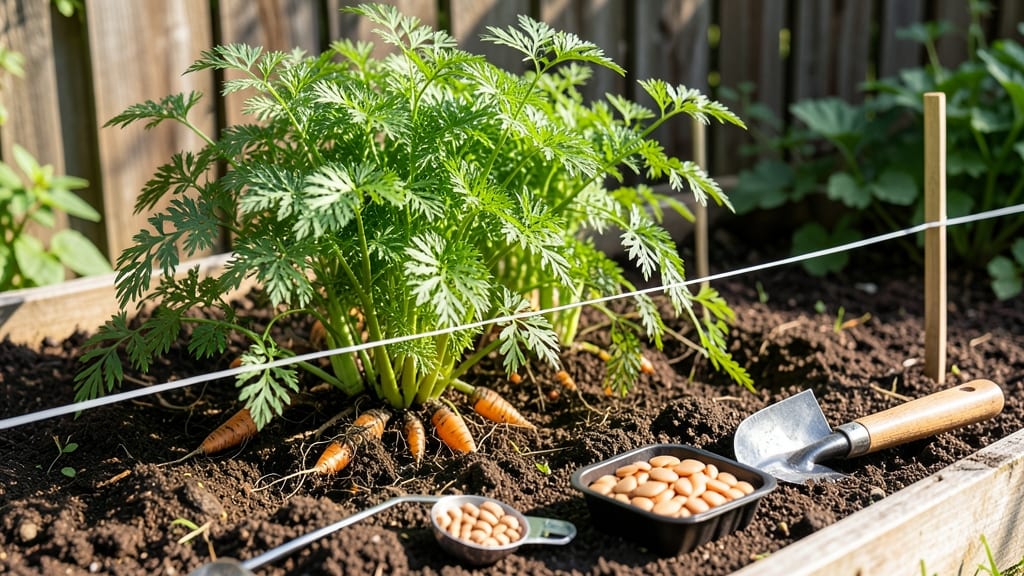
To plant carrots in a 50' x 30" bed with the right seed quantity, aim for 1-2 grams of seed depending on spacing and variety—less for heirloom types and more for organic or rocky soil.
Planting carrots in a 50' x 30" bed can yield a bountiful harvest—but using the wrong seed quantity or spacing wastes seeds, space, and effort. Get the exact planting rates by variety to maximize your garden’s potential without overcrowding or thinning headaches.
Carrot seeds are tiny, so a little goes a long way—just 1 gram sows about 2,000 seeds. That means your 50' x 30" bed needs careful calculation to avoid gaps or overcrowding.
Below, I’ll break down the math for standard varieties, organic adjustments, and how to thin seedlings for the best harvest.
Whether you’re growing Nantes for crisp texture or Chantenay for sturdiness, the right seed-to-space ratio ensures no wasted effort. You’ll also learn how to tweak rates for rocky soil or poor germination, plus pro tips to skip the thinning headache entirely.
Carrot seed quantities for 50' x 30" beds by variety and spacing
Figuring out how much carrot seed to plant in a 50' x 30" bed depends on the variety and your spacing goals. Most seed packets list quantities for 10-foot rows, but scaling up requires precision.
For example, Nantes varieties need more space than Danvers types, while organic spacing can reduce thinning work. Let's break down the exact seed quantities per foot and variety to avoid overcrowding or wasted seeds.
Your 50' x 30" bed equals 12.5 square feet (50' × 2.5' = 125 sq ft ÷ 10 = 12.5). Most carrot varieties mature best with 2-3 inches of spacing between plants.
However, organic spacing (closer sowing) can save seeds but requires thinning. Below, we’ll cover standard and organic rates for popular varieties, plus how to convert grams to seeds per foot.
Pro Tip: Always plant 10-20% extra seeds to account for poor germination or uneven sowing. Carrot seeds are tiny—just 0.005 oz (0.14g) per 100 seeds—so a little goes a long way. For example, 1 gram of Nantes seeds contains roughly 2,500 seeds, while Chantenay varieties pack 2,800 seeds per gram due to their slightly larger size.
For Nantes varieties, like 'Paris Market', aim for 0.25 grams of seed for standard spacing in your 50' bed. That’s just a pinch of seeds—easy to measure with a spoon or seed packet scale.
If you’re practicing organic spacing (closer sowing), increase to 0.4 grams to account for thinning. Danvers types, such as 'Chantenay', need slightly less seed due to their larger size, so 0.22 grams suffices for standard spacing.
Short varieties like 'Little Finger' require more seeds per foot because they’re bred for tighter spacing. Use 0.28 grams for standard spacing or 0.45 grams if you’re sowing densely. Rainbow mixes often have lower seed counts per gram because they include heirloom types with irregular shapes.
For these, 0.23 grams is ideal for standard spacing, but check the packet—some blends vary widely.
To sow evenly, use a seed tape or mark rows with a string and stakes. Drop seeds every 1-2 inches for organic spacing or 2-3 inches for standard.
Cover lightly with ¼-inch soil and water gently to avoid washing seeds away. Thin seedlings to your target spacing when they’re 2 inches tall—use scissors to cut unwanted plants at soil level to avoid disturbing roots.
If your soil contains rocks or debris
How to adjust seed rates for different soil types and germination goals
Soil type and germination goals dramatically impact how much carrot seed you need for your 50' x 30" bed. Rocky soil or poor germination conditions often require 10-20% more seeds to compensate for lost plants.
Meanwhile, high-density harvests (like for storage) may need closer spacing but less total seed—just planted thicker upfront.
For example, organic seeds or heirloom varieties often have lower germination rates, so I recommend increasing your seed quantity by 15-30% to ensure enough plants establish. Conventional hybrid seeds, however, can be sown at standard rates with confidence in higher germination success.
Your bed’s soil texture also matters: Clay-heavy soil may need 10% more seed due to potential seedling stress, while sandy soil might require 5-10% less since seeds can dry out faster. Always adjust based on your soil’s water retention and stone content.
To avoid thinning headaches, consider successive sowing in smaller batches every 2 weeks. This ensures a steady harvest without overcrowding. For example, plant 0.5g every 14 days instead of all 1.5g at once—this also extends your harvest window by 3-4 weeks.
Pro tip: Use a seed spacing calculator or grid marker to map out 2-3" spacing before sowing. This visual guide prevents uneven thinning later. For short varieties like Paris Market, reduce spacing to 1.5-2" to maximize yield in tight beds.
Always account for your germination rate—test a small batch first to refine your calculations. Heirloom seeds may only germinate at 60-70%, while hybrids hit 85-95%. Adjust your seed math accordingly to avoid bare spots in your 50' x 30" bed.