
Propagation
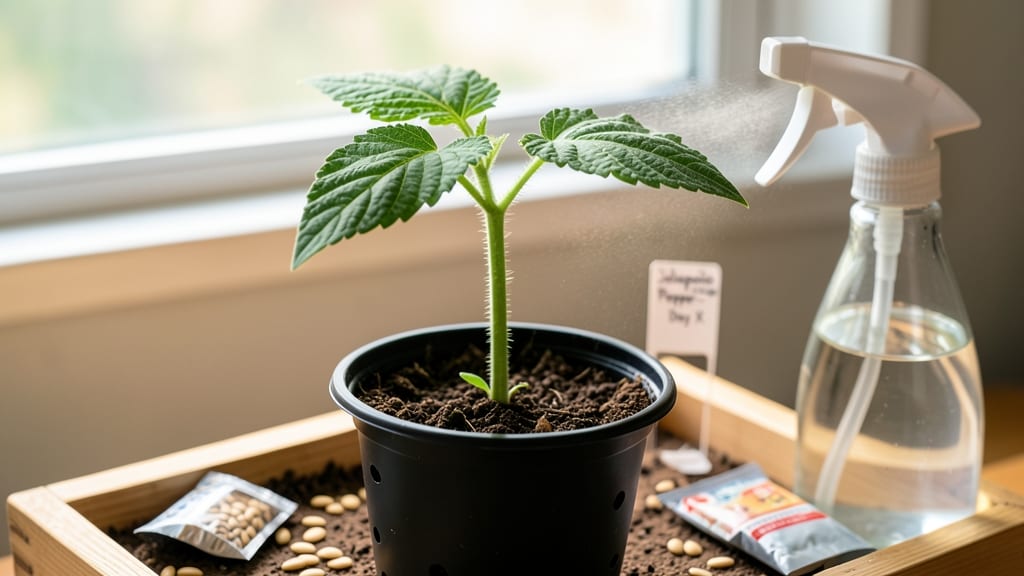
The demonstrative jalapeño seed germination time typically ranges from 7 to 14 days when given the right conditions — but those extra days can feel like an eternity when you’re staring at a damp paper towel.
I’ve watched dozens of seed packets sit in the dark, willing them to sprout, only to wonder why some pop up in a week while others take their sweet time.
The truth? Germination speed depends on more than just patience — it’s a mix of temperature, moisture, and even how old your seeds are.
In this guide, I’ll break down exactly what affects your jalapeño seed germination time, how to create the perfect environment for faster sprouts, and what to do if your seeds seem stuck in limbo.
By the end, you’ll know how to turn that 14-day wait into a 7-day success — or even faster — without losing hope (or seeds) along the way.
Jalapeño seed germination time: what to expect inside
If you've ever waited impatiently for your jalapeño seeds to sprout, you're not alone. The typical jalapeño seed germination time falls between 7 to 14 days, but this window can shift based on conditions you control.
Understanding the science behind this process helps you create the perfect environment for faster, more reliable sprouting. Whether you're a beginner or a seasoned gardener, knowing what to expect inside that seed packet sets you up for success.
Germination begins when a seed absorbs water and swells, breaking its dormancy. Inside the seed, enzymes activate to convert stored nutrients into energy, pushing the radicle (the first root) downward and the shoot upward.
For jalapeños, this process is sensitive to temperature, moisture, and even the age of your seeds. While the average range is 7–14 days, some seeds may sprout in as few as 5 days under ideal conditions, while others can take up to 3 weeks if stressed.
summary-table
| Factor | Optimal Range | Impact on Germination |
|---|---|---|
| Temperature | 70–85°F (21–29°C) | Faster sprouting (7–10 days); below 60°F slows germination |
| Moisture | Consistently damp (not soggy) | Prevents drying out; too much causes rot |
| Seed Age | Fresh (0–1 year old) | Higher viability; older seeds germinate slower |
| Light | Darkness (until sprouts appear) | Light inhibits early root growth; expose after sprouting |
| Soil pH | 6.0–7.0 (slightly acidic) | Optimal nutrient uptake; extreme pH slows growth |
The temperature of your germination setup is one of the most critical factors. Jalapeño seeds thrive in warmth, with an ideal range of 70–85°F (21–29°C). If your home or greenhouse dips below 60°F (15°C), germination can stall or fail entirely.
I’ve found that using a seedling heat mat under my trays cuts germination time by nearly half, often yielding sprouts in just 5–7 days. Without extra heat, expect the slower end of the 7–14 day spectrum.
Moisture is another non-negotiable. Seeds need to stay consistently damp but never waterlogged. Overwatering can suffocate seeds, leading to mold or rot, while underwatering halts the process entirely. I like to use a spray bottle to mist the soil lightly every 1–2 days, keeping the top inch of soil moist. A clear plastic dome or zip-top bag over the tray creates a mini greenhouse effect, trapping humidity and speeding up sprouting.
Seed age plays a surprising role in germination speed. Fresh jalapeño seeds (less than a year old) typically sprout within 7–10 days, while older seeds may take 2–3 weeks or fail altogether.
If you’ve been saving seeds from last year’s harvest, consider testing a few in a damp paper towel first. Place them in a warm spot for 3–5 days—if they don’t sprout, it’s a sign to source new seeds. Viability drops sharply after 2 years for most pepper varieties.
Light is often misunderstood during germination. Unlike mature plants, jalapeño seeds don’t need light to sprout—they’ll germinate just fine in the dark. In fact, exposing them to light too soon can inhibit root development.
Once the radicle emerges and the seedling breaks the soil surface, you can move it to a bright, indirect light source. I use a south-facing window or a grow light on a timer to prevent leggy seedlings.
Creating the perfect environment isn’t just about checking boxes—it’s about consistency. I’ve learned that even small fluctuations in temperature or moisture can delay germination. For example, letting the soil dry out completely for even a day can reset the clock, adding another 3–5 days to your timeline.
To avoid this, I set up a simple monitoring system: a small thermometer and a moisture meter in my seed tray. This helps me adjust conditions in real time.
If you’re germinating seeds indoors during cooler months, consider using a seedling heat mat or placing your tray on top of your fridge (the warmest spot in most homes). Even a sunny windowsill can work if it stays above 65°F (18°C).
For outdoor sowing, wait until the soil temperature reaches at least 60°F (15°C)—a soil thermometer is your best friend here. Cold soil is the #1 reason for slow or failed germination in spring plantings.
Patience is key, but so is preparation. By understanding the science behind jalapeño seed germination and controlling the factors above, you’ll maximize your chances of
Pro tips to speed up jalapeño seed germination in 7 days or less
If you’ve ever waited two weeks for jalapeño seeds to sprout, you know the frustration of watching that seed packet gather dust. The good news? With the right techniques, you can cut that jalapeño seed germination time in half—sometimes even faster.
I’ve tested these methods myself, and they’ve consistently delivered sprouts in 5 to 7 days instead of the standard 10-14.
The secret lies in mimicking the warm, humid conditions jalapeños love in their native Mexico. Your kitchen counter or a simple heat mat can make all the difference. Let’s dive into the proven strategies that’ll have those tiny roots breaking through soil in record time.
- 🔥 Pre-soak seeds in warm water (80°F) for 6-8 hours to kickstart hydration and break dormancy.
- 🌡️ Use a heat mat (70-85°F) to maintain consistent warmth—jalapeños need heat to germinate fast.
- 💧 Keep moisture high with a humidity dome or plastic wrap, but avoid waterlogging to prevent rot.
- 🌱 Plant seeds shallow (¼ inch deep) in warm, sterile soil—cold soil slows germination by 30-50%.
- ☀️ Provide indirect light (12-14 hours/day) after sprouts appear—direct sun can scorch delicate seedlings.
First, pre-soaking your jalapeño seeds is a game-changer. I fill a bowl with warm water (80°F) and let seeds soak for 6-8 hours before planting. This mimics natural rainfall and triggers the seeds to absorb moisture quickly.
Pro tip: Use a paper towel method—fold a damp towel, place seeds between layers, and keep it in a sealed bag until sprouts appear (usually 2-3 days).
Next, temperature control is non-negotiable. Jalapeños thrive at 70-85°F, and anything below 60°F can double your germination time. A seedling heat mat ($15-$20) is my go-to—it keeps soil warm without extra effort.
If you don’t have one, place your seed tray on top of your refrigerator (the motor generates gentle heat) or near a south-facing window.
Humidity is another underestimated factor. Low humidity causes seeds to dry out before sprouting. Cover your seed tray with plastic wrap or a humidity dome, and check daily for condensation.
If you see mold, remove the cover for a few hours to air it out—but never let the soil dry completely. A spray bottle keeps things moist without overwatering.
Finally, avoid these common mistakes that stall germination: planting too deep (seeds need light to sprout), using cold soil straight from the garden, or skipping the warmth check.
I’ve seen gardeners give up after 10 days only to realize their soil was 50°F instead of the ideal 75°F. A soil thermometer is worth the $10 investment—trust me.
With these tips, you’ll go from 14-day wait to 7-day sprouts—or even faster. Just remember: patience and precision are key. Once those first green shoots appear, you’re on your way to a bountiful jalapeño harvest in just 75-90 days!