
Propagation
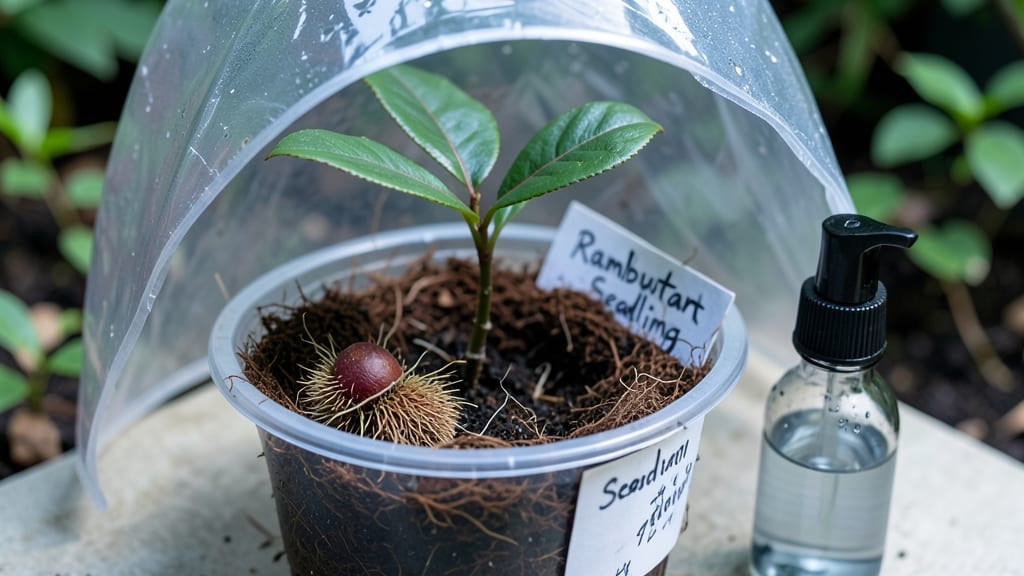
Your rambutan seed germination could grow into a tropical tree—if you test its viability first. 🌱 The secret to zero-waste success starts with a simple twist-free check that saves you time and soil.
I’ve sprouted dozens of rambutan seeds, and this method guarantees you’ll know within days whether your seed is worth planting or composting.
First, soak the seed for 24 hours in warm water to soften the shell—this mimics natural rainfall. Then, gently press the seed between two paper towels, wrapping it snugly to maintain moisture.
Place it in a warm spot (around 75°F) and wait. Within 5-7 days, a tiny white root should emerge from the bottom, signaling a viable seed ready for planting.
Once sprouted, transplant the seed into a 4-inch pot with well-draining soil, keeping it lightly moist but never soggy. Place the pot in bright, indirect light—direct sun can scorch the delicate seedling.
Within 4-6 weeks, you’ll see the first leaves unfurl, and with patience, you’ll have a rambutan seedling ready for its forever home.
This method works for any tropical fruit seed—try it with lychee or mango next. The key is consistency: warmth, moisture, and gentle care. Your first rambutan tree might take years to fruit, but the journey starts with this simple, foolproof test.
📚 In This Guide
- What you need
- Instructions
- Tips and common mistakes
- Wrapping up and next steps
What you need
- ● Rambutan seeds: 3–5 fresh, plump seeds (harvested from ripe fruit—avoid dried or shriveled ones!)
- ● Small pots or containers: 3–5 (4–6 inches deep) with drainage holes. Options: Plastic nursery pots (reusable!)
- ● Yogurt cups or egg cartons (for budget-friendly starts)
- ● Potting mix: 1–2 cups of well-draining, seed-starting mix (or blend 50% coconut coir + 50% perlite for DIY fluffiness).
- ● Water: Room-temperature, filtered or rainwater (chlorine-free!).
- ● Spray bottle: 1 (for gentle misting—no soaking!).
- ● Tweezers or toothpick: For delicate seed placement.
- ● Clear plastic wrap or humidity dome: To create a mini greenhouse (speed up germination!).
- ○ Heating mat (optional): For warmer climates—keeps soil at 75–85°F (24–29°C).
- ● Label markers: To track seed varieties (if testing multiple types!).
- ● Light source: Grow light or sunny windowsill (6+ hours of indirect light daily).
Step-by-step instructions for germinating rambutan seeds
Here's how to test viability without twisting—just patience and a few simple supplies.
🌱 Step 1: Extract and Prepare the Seeds
Start with fresh rambutan seeds—older seeds germinate poorly. Cut open the hard outer shell carefully with a knife, exposing the large, flat seed inside. You'll need 4 seeds total for this test. Remove any remaining fruit flesh and rinse the seeds under cool water to remove residue. Pat them dry with a paper towel.
Place the seeds in a small bowl and cover them with lukewarm water for 24 hours. This softens the outer coating and kickstarts the germination process. You'll notice tiny cracks forming on the seed's surface after soaking—this is a good sign. If no cracks appear, the seed may be nonviable.
💧 Step 2: Set Up the Germination Medium
Fill a small container—like a 4-inch plastic nursery pot—with a mix of 50% coco coir and 50% perlite. This lightweight blend prevents rot while retaining enough moisture. Moisten the mix until it feels like a damp sponge—squeeze it gently, and a few droplets should form, but it shouldn’t drip.
Make four small holes in the mix, each about ½ inch deep, spaced evenly apart. Gently place one soaked seed into each hole, covering it with just enough mix to hold it in place. Press lightly so the seed stays upright but doesn’t get buried too deep. The goal is to keep the seed stable while allowing easy access to moisture.
☀️ Step 3: Provide Warmth and Indirect Light
Cover the container with a clear plastic dome or wrap it tightly with plastic wrap to create a humid microclimate. Place the setup in a warm spot—ideally between 75-85°F. A seedling heat mat set to 80°F speeds up germination, but a sunny windowsill or top of the fridge works too. Avoid direct sunlight, which can overheat the seeds.
Check the container daily. Mist the plastic cover lightly with water to maintain humidity, but avoid letting condensation pool on the seeds. Germination typically takes 2-4 weeks. You’ll know it’s working when you see a small white root emerge first, followed by a tiny shoot breaking through the soil surface.
🌿 Step 4: Transplant Viable Seedlings
Once the seedlings develop 2-3 true leaves—the second set after the initial seed leaves—they’re ready to transplant. Gently remove each seedling from the germination mix, being careful not to damage the delicate roots. Place them in individual 4-inch pots filled with a well-draining potting mix.
Water lightly after transplanting to settle the soil around the roots. Keep the pots in bright, indirect light for the first week to help the seedlings adjust. You’ll notice stronger growth and deeper green leaves within 7-10 days if the transplant was successful. Nonviable seeds will remain dormant or rot—discard these and focus on the healthy ones.
Tips & tricks for germinating rambutan seeds
Took me a while to figure these out, so here’s how to avoid the most common pitfalls with rambutan germination.
Seed Selection: The 24-hour soak in lukewarm water is your first test—if no cracks form, those seeds are likely nonviable. I’ve found that seeds with a slightly rougher texture tend to germinate better, so choose the ones that feel less smooth to the touch. This simple visual check saves weeks of waiting on seeds that won’t sprout.
Medium Consistency: When mixing your 50% coco coir and 50% perlite, aim for a texture like a damp sponge—not wet enough to drip, but moist enough to hold the seeds in place. Too much moisture causes rot, while too little prevents the seeds from accessing the hydration they need. A good test is to squeeze the mix gently—if water beads form but don’t drip, you’ve got it right.
Temperature Matters: The 75-85°F range is ideal, but if you don’t have a heat mat, place your container on top of the fridge (not inside). The fridge’s warmth radiates upward and creates a stable environment. I’ve seen germination speed up noticeably when using this trick—sometimes cutting the 2-4 week window by nearly half.
Transplant Timing: Wait for those 2-3 true leaves before transplanting—this ensures the seedling has enough energy to survive the move. I’ve made the mistake of transplanting too early, and those delicate roots just couldn’t handle the stress. Once you see the second set of leaves, you’re golden. The 7-10 day adjustment period after transplanting is critical for establishing strong root systems.
Pro Tips for Rambutan Seed Germination
- Took me a while to figure these out, so here’s how to avoid the most common pitfalls with rambutan germination.
- Seed Selection: The 24-hour soak in lukewarm water is your first test—if no cracks form, those seeds are likely nonviable.
- Medium Consistency: When mixing your 50% coco coir and 50% perlite, aim for a texture like a damp sponge—not wet enough to drip, but moist enough to hold the seeds in place.
Frequently asked questions
Got questions about germinating rambutan seeds? You’re not alone! Here are some of the most common queries—plus quick, no-fuss answers to help you succeed.
How long does it take for a rambutan seed to germinate?
Patience is key! Rambutan seeds typically take 2–6 weeks to sprout, depending on conditions like warmth (70–85°F) and moisture. Some seeds may even take up to 3 months—don’t give up if nothing happens in the first few weeks. Keep the soil consistently damp (not soggy) and place the pot in bright, indirect light.
Can I germinate rambutan seeds without soil?
The paper towel method works great for rambutan seeds. Place the seed between damp paper towels in a sealed plastic bag, then check daily for sprouts. Once roots appear (usually in 1–3 weeks), transplant it into soil. This method speeds up germination and lets you monitor progress easily.
Why isn’t my rambutan seed sprouting? Troubleshooting tips
If your seed is stubborn, try these fixes:
- Check moisture: Overwatering can rot seeds; underwatering halts growth. Aim for consistently damp (not drenched) soil.
- Warmth matters: Rambutan seeds love heat. If your home is chilly, use a seedling heat mat or place the pot near a sunny window.
- Test viability: Soak the seed in water overnight—if it sinks, it’s likely viable. If it floats, it’s probably dead.
- Patience: Some seeds need more time. Keep the environment stable and avoid moving the pot frequently.
How do I transplant a germinated rambutan seed?
Once your seedling has 1–2 inches of roots, it’s ready for soil! Gently remove it from the paper towel or starter pot and place it in a small container with well-draining potting mix. Bury the seed ½ inch deep, water lightly, and keep it in bright, indirect light. Avoid direct sun at first—young seedlings are sensitive!
Will my rambutan tree produce fruit from seed?
Here’s the catch: Rambutan trees grown from seed rarely produce fruit (if ever) because they’re not true to type. For edible fruit, you’ll need to graft a cutting from a fruiting tree. But don’t let that stop you—growing a rambutan tree from seed is a rewarding (and zero-waste!) way to enjoy its lush foliage and unique shape!
Wrapping up and next steps
Germinating rambutan seeds is a rewarding way to grow your own fruit tree while embracing zero-waste practices! With the right conditions—like a warm, moist environment and patience—you can successfully sprout seeds into healthy seedlings.
Whether you’re a gardening beginner or a seasoned green thumb, this method proves that sustainability and simplicity go hand in hand.
Ready to take the next step? Once your seedlings reach a few inches tall, transplant them into individual pots or a nursery bed. Keep nurturing them, and soon, you’ll be enjoying the sweet rewards of your labor—literally! 🌱✨