
Companion Plants
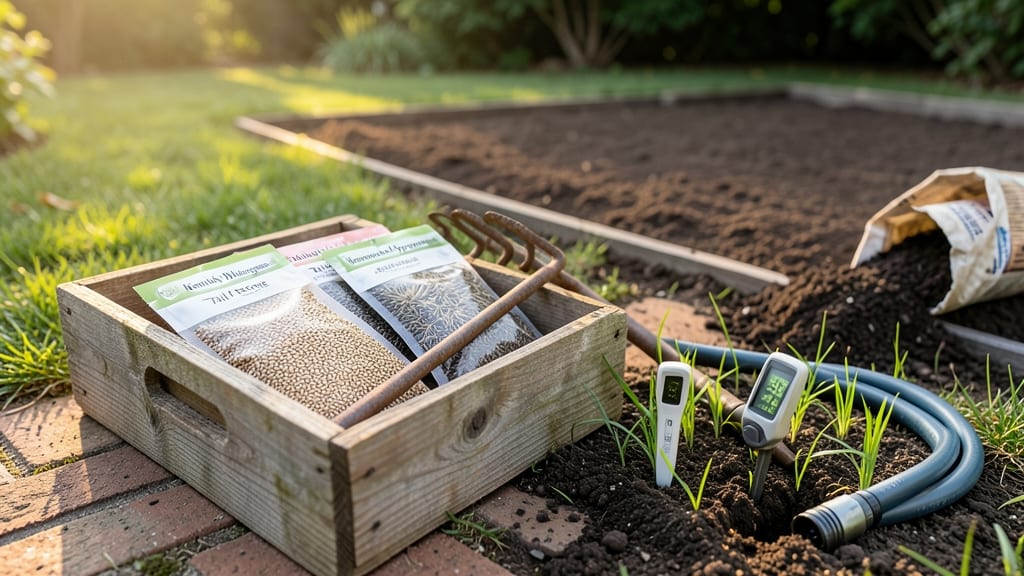
You can plant grass seed in the spring when soil temperatures hit 50°F and stay above 60°F for at least a week — the exact timing depends on your zone and grass type.
Timing your grass seed planting in spring can mean the difference between a lush, green lawn and months of patchy disappointment.
In Zone 6a, like many northern regions, the window is tight: plant too early and frost will kill tender sprouts; too late and summer heat stresses seedlings before roots establish.
Cool-season grasses like Kentucky bluegrass thrive when planted in early spring, while warm-season types such as Bermuda prefer late spring. The key is tracking soil—not air—temperatures, which can vary by 10°F or more from what your local forecast predicts.
Below, I’ll break down the exact week-by-week soil temp rules by zone, plus the 5 critical factors that determine whether your grass takes hold. No more guessing—just a foolproof plan for your 🌱 lawn.
Best spring planting dates by USDA hardiness Zone: soil temperature rules
Getting your grass seed in the ground at the right time is everything—especially in spring when temperatures swing wildly. The golden rule? Plant when soil temps hit 50-65°F consistently. Below that, seeds struggle to germinate; above it, they dry out before roots establish.
But here's the catch: cool-season grasses (like fescue or ryegrass) thrive in 50-60°F soil, while warm-season types (like Bermuda or Zoysia) need 65-75°F. Your USDA zone dictates when these windows open.
To simplify, I’ve mapped out exact planting weeks by zone, paired with soil thermometer checks. Northern zones (like Zones 3-5) can start as early as late March, while Southern zones (like Zones 8-10) wait until April or May.
Regional quirks matter too—mountainous areas cool faster than valleys, and coastal zones stay milder. Use this guide to pinpoint your ideal 3-week window for peak germination.
Pro tip: Test soil temps at 4 inches deep (where roots form) using a soil thermometer. Morning readings are most accurate. If temps dip below 50°F at night, wait—even if days are warm. Grass seeds need consistent warmth to break dormancy and avoid fungal risks.
🌱
If you’re in Zone 6a (like me!), aim for early April for cool-season grasses—just as daytime highs hit 60°F and nights stay above 40°F. Warm-season grasses? Wait until late April when soil hits 65°F for 3+ days.
Check your local Almanac frost dates too; planting 4-6 weeks before the last frost gives seeds time to root before summer heat arrives.
Regional tweaks matter. For example, Pacific Northwest zones (like Zone 7b) can plant 2 weeks earlier than inland areas due to milder coastal soils. Meanwhile, Deep South zones (like Zone 9a) might see warm-season grasses germinate in March if temps climb fast.
Always err on the side of waiting—seeds won’t sprout until soil warms, but they’ll dry out if planted too late.
One more pro move: Prep your soil 2 weeks ahead
5 Critical factors that determine your ideal planting window
While soil temperature is the most talked-about factor for planting grass seed, it’s only one piece of the puzzle. In my experience, overlooking the other 5 critical factors can turn a promising lawn project into a costly mistake.
These include rainfall patterns, frost dates, the type of grass you’re growing, and even your local microclimate. Let’s break down how each one influences your planting window—and how to use them to your advantage.
First, rainfall consistency is non-negotiable. Grass seeds need 1-1.5 inches of water per week after planting, but too much rain can wash seeds away or cause fungal issues.
In Zone 6a, where spring showers are common, I recommend planting when your local forecast predicts steady but not excessive rainfall for at least two weeks post-planting. Use a rain gauge to track moisture levels—this simple tool saved me from overwatering (and drowning) my first lawn project.
Next, frost dates aren’t just about the last frost. The first frost after planting can also derail your progress. Cool-season grasses like tall fescue or Kentucky bluegrass need 4-6 weeks of frost-free growth to establish roots.
If you plant too close to the first frost, your seedlings will go dormant before they’re ready, leaving your lawn vulnerable to weeds. Check your USDA frost map and add a 2-week buffer on either side of the frost dates for safety.
Cool-season grasses (e.g., ryegrass) thrive in 40-65°F soil and should be planted in early spring. Warm-season types (e.g., Bermuda) need 70-85°F soil and are best planted in late spring after frost risk passes. Mixing types? Plant cool-season first, then warm-season 4-6 weeks later.
A south-facing slope warms up 2-3 weeks faster than a shaded north side. Use a soil thermometer in your specific planting area—don’t rely on neighborhood averages. In my Zone 6a yard, the south side hits 50°F soil by early April, while the north side lags until mid-April.
Most grass seeds lose 50% viability after 1 year. Check the packaging date—if it’s older than 6 months, test germination by soaking seeds in water for 24 hours. Fewer than 70% float? Toss them. I once planted 2-year-old seed and spent twice as much on replanting. Don’t make my mistake!
Planting after June 1 in most zones? Weigh the risks: summer heat dries out seeds before roots grow, and weeds outcompete seedlings. If you must plant late, use a shade cloth for the first 2 weeks and water twice daily. I’ve had success with overseeding in late August instead—cooler temps help.
Even with perfect timing, compacted soil or poor drainage will kill your grass. Aerate 2 weeks before planting and add compost to improve moisture retention. My clay-heavy soil required a gypsum treatment—skipping this step led to patchy germination despite ideal planting conditions.
Don’t overlook local microclimates—they can shift your planting window by weeks. For example, a south-facing slope in my yard reaches 50°F soil by early April, while the shaded north side lags until mid-April.
I solved this by planting the south side first and the north side 2 weeks later. Use a soil thermometer (not air temp!) to confirm readiness in your specific spots. Pro tip: Place it 2 inches deep—surface temps can be misleading.
Finally, if you’re considering a late spring planting (after June 1), run a quick risk assessment. Ask yourself: Can I provide consistent shade and deep watering? Will weeds already be established?
In my experience, late May is the absolute latest for cool-season grasses in Zone 6a—any later, and you’re rolling the dice with summer heat. For warm-season grasses, aim for late spring to early summer when soil hits 70°F+ consistently.
By balancing these 5 factors, you’ll avoid the most common pit