
Plants
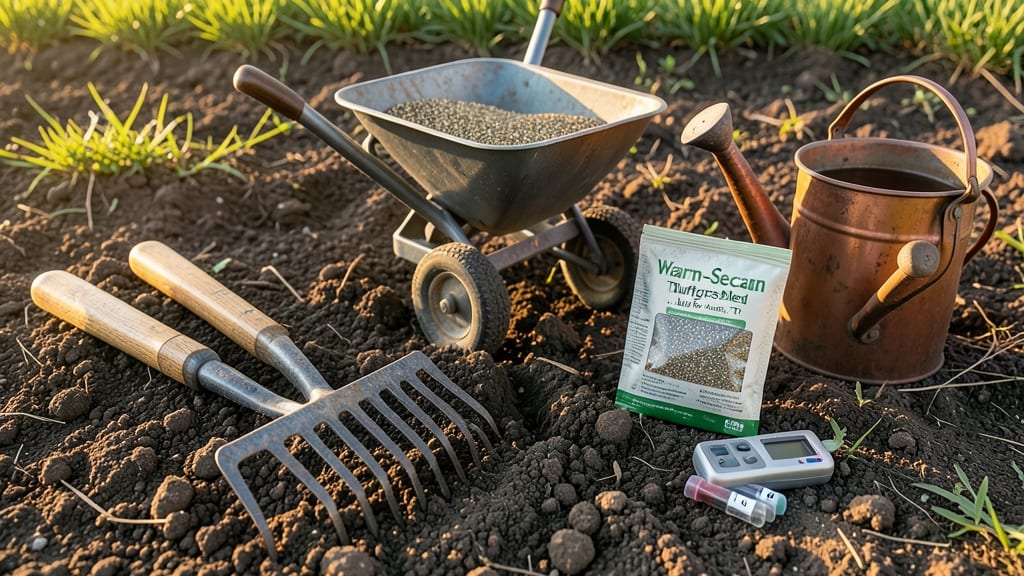
Planting grass seed in Austin, TX, works best between late August and mid-September—when soil stays warm enough for germination but before the first frost threatens new growth.
You’ve probably seen lawns in your neighborhood struggle after a late spring planting, only to wither under Austin’s 100°F+ heat or fail to establish before winter.
The secret? That narrow window in late summer when temperatures dip just enough to let seeds sprout while still giving them weeks to root before frost.
This isn’t just about avoiding heat or cold—it’s about matching Austin’s 8a-8b climate with the right grass type. Cool-season grasses like tall fescue thrive when planted now, while warm-season varieties like Bermuda need their own timing.
Get the schedule wrong, and you’re left with patchy, weak grass that never quite recovers.
Below, I’ll walk you through the exact dates, soil prep, and watering tricks that turn that late-summer window into a thick, green lawn by spring—no guesswork, just results.
Austin TX grass seed planting calendar: best late summer dates and why they matter
Austin’s late summer offers the perfect grass seed planting window—a 6-week span where soil temps drop from scorching to ideal. This is when heat stress fades but frost risk hasn’t arrived, giving seeds the best chance to establish roots before winter.
Historical data shows 2024’s window (August 15–September 15) aligns with average rainfall patterns that reduce irrigation needs.
The USDA Zone 8a-8b climate means Austin’s first frost typically hits December 10, but soil warmth lingers longer in urban areas (like downtown) than in hill country regions. Planting in this late-summer window ensures your lawn has 8-10 weeks of growth before dormancy, preventing winter kill from early freezes.
🌱 Key factors influencing timing include:
- Soil temperature: Ideal 60–75°F (check with a soil thermometer)
- Rainfall: August–September averages 2.5–3.5 inches/month
- Microclimates: Urban areas stay 5–10°F warmer than hill country
For 2024, NOAA projections suggest above-average rainfall in September, making it the ideal month for minimal irrigation needs. However, soil moisture varies—urban clay soils dry faster than hill country loams. Test your soil’s moisture retention before planting to avoid overwatering or drought stress.
Hill country areas (like Dripping Springs) experience cooler nights and lower humidity, allowing for later planting (up to October 1) without heat stress. In contrast, downtown Austin’s urban heat island effect means seeds planted after September 10 may struggle with soil warmth lingering past 80°F.
If you’re overseeding existing lawns, August 20–September 5 is the sweet spot—when current grass is still active but new seeds won’t compete for resources. Use a slit seeder to penetrate compacted soil common in Austin’s clay-heavy areas, ensuring seed-to-soil contact.
Pro tip: Monitor the National Weather Service’s Austin/San Antonio forecasts for 48-hour rainfall predictions. Planting after a 1-inch rain event ensures natural moisture for germination, reducing your watering workload during the critical first 2 weeks.
Remember, cool-season grasses (like tall fescue) planted in late September will dormantize by November, while warm-season types (like Bermuda) stay active until first frost. Adjust your variety based on your lawn’s intended use—shade tolerance or <
Step-by-step late summer grass seed planting for Austin’s soil and weather
Austin’s alkaline soil and unpredictable rainfall demand careful prep before seeding. Start by testing your soil pH—Austin’s clay-heavy soil often runs 7.5-8.5, which stresses grass roots.
Aim for a 6.0-7.0 pH by adding sulfur or peat moss 2-3 weeks before planting. This adjustment gives seeds the best chance to germinate in 7-14 days.
Weed control is non-negotiable in late summer. Use a pre-emergent herbicide like corn gluten meal 1-2 weeks before seeding, or hand-pull weeds to avoid chemical residue that could harm new grass.
For stubborn weeds, spot-treat with vinegar (50% water) the day before tilling. Clear debris and loosen soil to 1/2-inch depth—this improves water absorption in Austin’s heavy clay.
- 1 Test soil pH
Use a soil test kit ($10 at garden centers). Austin’s alkaline soil (pH 7.5+) needs sulfur or peat moss to reach 6.0-7.0. Apply 2-3 weeks before planting.
- 2 Choose the right grass
Austin’s 8a-8b climate suits tall fescue (cool-season) or Bermuda/zoysia (warm-season). Late summer favors tall fescue for winter survival.
- 3 Seed and fertilize
Spread 1/4 lb seed per 100 sqft with a broadcast spreader. Top with 1/4-inch compost and apply starter fertilizer (10-10-10). Lightly rake to cover seeds.
- 4 Watering schedule
Water daily for 15 mins (morning) for 2 weeks, then every 2-3 days for 1 month. Use a rain gauge—Austin’s erratic showers can overwater or underwater.
- 5 First mow at 3 inches
Wait until grass reaches 3 inches (4-6 weeks). Mow high to shade roots and reduce stress. Use a sharp mower blade to prevent tearing.
Post-planting, fertilization timing is critical. Apply a balanced 10-10-10 fertilizer 4-6 weeks after seeding to boost root growth. Avoid high-nitrogen fertilizers—they burn tender new grass. In Austin’s 8a-8b zone, late September is ideal for a second light feeding to strengthen roots before winter.
Monitor for fungal diseases like brown patch, common in Austin’s humid late summers. If grass yellows, reduce watering and improve airflow by mowing higher. Mulch with straw (not hay) to retain moisture and suppress weeds—critical in Austin’s clay soil, which dries out quickly.
By late October, your new grass should be 2-3 inches tall with dense coverage. If germination slows, check soil moisture—Austin’s alkaline clay can repel water. Adjust irrigation to keep the top 2 inches of soil consistently moist but not soggy.
With this care, your lawn will outlast Austin’s winter droughts and summer heat.