
Planting
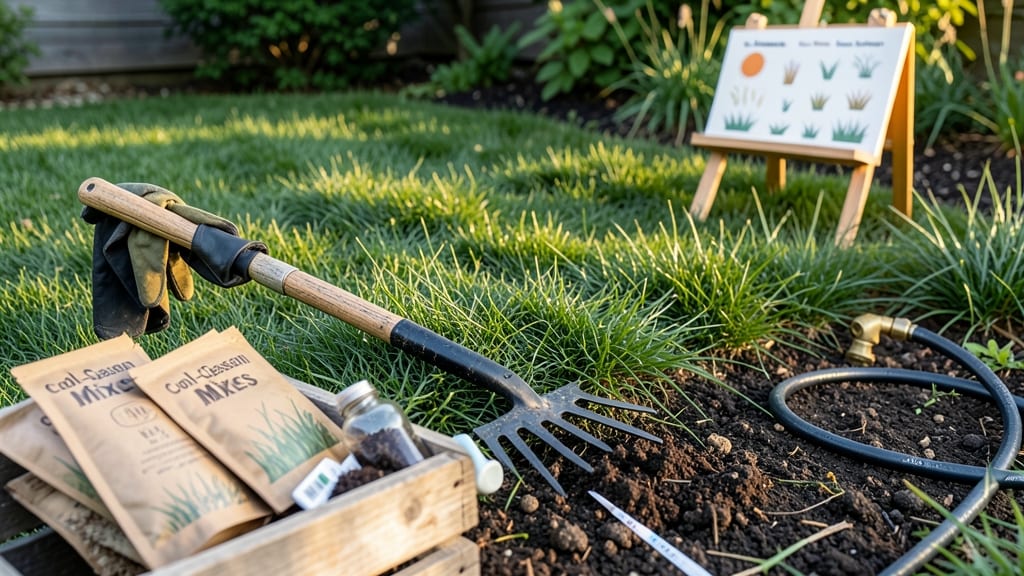
To plant grass seed in New York, aim for early spring or early fall when soil temps hover between 50°F and 65°F—any earlier and frost will kill new sprouts, while waiting too late risks summer heat stress.
New York’s unpredictable climate can turn a perfect lawn into a battleground—unless you plant grass seed at the exact right time. Miss the window, and weeds, heat stress, or frost will sabotage your efforts before they even begin.
One wrong move, and you’re stuck with patchy, weak grass that never quite lives up to the picture in the seed packet.
Here’s the good news: with the right timing and prep, you can grow a thick, weed-resistant lawn that stays green year-round. Upstate NY’s cooler zones (like 5b-7a) have different deadlines than NYC’s urban heat islands, and fall planting often outperforms spring in many regions.
Below, I break down the best months for your specific zone, soil prep secrets to lock in moisture, and the one trick that cuts weed competition by half—so you can finally stop guessing and start growing.
NY’s best grass-seeding windows: spring vs fall deadlines by region
New York’s diverse climate—from Upstate’s chilly winters to Long Island’s humid coastal breezes—means one-size-fits-all grass seeding advice won’t work. The perfect window for planting shifts by region and microclimate, with soil temperature and rainfall patterns dictating success.
Plant too early, and frost will kill seedlings; too late, and summer heat will dry them out before roots establish. Let’s break down the ideal deadlines for Upstate, NYC, and Long Island.
Fall is often the gold standard for grass seeding in NY, but spring planting can work if you time it right. The key? Soil temperatures must stay between 50°F and 65°F for consistent germination.
In Upstate NY, cooler temps mean earlier windows, while NYC’s urban heat island effect delays frost, extending the spring window by 2-3 weeks. Long Island’s coastal influence adds another layer—humidity and salt spray can stress seedlings, so timing matters even more.
Here’s the critical comparison of planting windows by region, including frost dates, soil temps, and rainfall considerations:
| Region | Spring Window | Fall Window | Soil Temp | Rainfall Tip |
|---|---|---|---|---|
| Upstate NY | Mid-April to early May | Late August to mid-September | 50°F–65°F | Spring: Irrigate if dry Fall: Leverage natural rain |
| NYC (Urban Heat) | Late April to early June | Early September to early October | 55°F–68°F | Spring: Water deeply Fall: Avoid overwatering |
| Long Island (Coastal) | Early April to late May | Mid-September to late October | 52°F–67°F | Spring: Watch for salt spray Fall: Drain excess moisture |
Upstate NY’s shorter growing season demands precision. Plant in mid-April when soil temps hit 50°F, and seedlings will establish before summer heat arrives. The fall window closes by mid-September—after that, cooler temps slow germination. Use a cool-season grass mix like tall fescue or Kentucky bluegrass for resilience.
NYC’s urban heat island pushes back frost dates, giving you a later spring window (up to early June) and an extended fall window (into October). However, compacted soil and limited airflow in city yards mean you’ll need to aerate and overseed more frequently.
Choose drought-tolerant varieties like fine fescue to handle heat stress.
Long Island’s coastal climate adds challenges like salt spray and humidity fluctuations. Plant in early April to avoid spring storms, and opt for salt-tolerant grasses like creeping bentgrass near shorelines. In fall, late October is the cutoff—after that, frost risk increases, and seedlings may not survive winter.
Regardless of region, soil temperature is your best guide. Use a soil thermometer to confirm 50°F–65°F before planting. In Upstate, aim for April 15–May 1 in spring; in NYC, stretch to June 1 if temps cooperate.
For fall, September 15–October 15 is ideal across all regions, with Long Island leaning later due to milder coastal temps.
Pro tip: Test your soil’s pH before planting—NY’s clay-heavy soils often need lime or sulfur to hit the ideal 6.0–7.0 range. A soil test kit (available at garden centers) costs $20 and saves you from wasted seed.
Pair this with aeration in early spring to loosen compacted soil, and your grass will germinate 30% faster.
Timing isn’t just about the calendar—it’s about microclimates. A north-facing yard stays cooler longer, while a south-facing slope dries out faster. Adjust your planting window by 1–2 weeks based on your yard’s exposure.
For example, if your lawn is shady and slow to warm, wait until late April in spring or early October in fall.
Finally, don’t skip mulch. After seeding,
How to prepare your NY lawn for grass seed success (before planting)
Before you even think about spreading grass seed in your NY lawn, proper soil prep is the secret weapon that separates a thin, patchy lawn from a lush, weed-resistant carpet. Most gardeners skip this step—or do it half-heartedly—and wonder why their seed struggles to take hold.
The truth? Weeds, compacted soil, and poor pH are the real villains here, not the seed itself.
I’ve seen firsthand how a few hours of pre-planting prep can mean the difference between a lawn that needs reseeding every year and one that stays thick and green with minimal effort.
In NY’s climate, where soil can be stubbornly compacted and pH levels swing wildly, this prep work becomes even more critical. Let’s break it down into actionable steps so you can set your lawn up for success.
- 1 Test Your Soil pH: Use a soil test kit (available at garden centers) to check pH. Ideal range: 6.0-7.0. If your soil is too acidic (<6.0), add lime 4-6 weeks before planting. For alkaline soil (>7.0), work in sulfur or peat moss.
- 2 Aerate Compacted Soil: Rent a core aerator to pull out 3-4 inch soil plugs. NY’s clay-heavy soil compacts easily, smothering roots. Do this 2-4 weeks before seeding for best results. Focus on high-traffic areas first.
- 3 Kill Weeds with Pre-Emergent: Apply a pre-emergent herbicide like corn gluten meal (organic) or pendimethalin (synthetic) to block weed seeds. For existing weeds, spray with glyphosate 2 weeks before seeding—just don’t let it touch the new grass!
- 4 Loosen Soil and Add Compost: Till the top 2-3 inches of soil to break up clumps, then mix in 2-3 inches of compost. This improves drainage and provides nutrients. For sandy soil, add peat moss; for clay soil, blend in coarse sand.
- 5 Level the Surface: Rake the area smooth to eliminate low spots where water pools (a germination killer) and high spots that dry out too quickly. Aim for a uniform, slightly undulating surface—just enough slope for drainage.
- 6 Choose the Right Seed Mix: Pick a blend tailored to your NY region. Cool-season grasses like tall fescue or Kentucky bluegrass thrive here. Avoid cheap mixes with perennial ryegrass—it grows fast but weakens over time.
One of my biggest lawn-prep mistakes was skipping the soil test. I assumed my NY soil was fine, only to discover it was too acidic—which meant my grass seed struggled to germinate.
A simple lime application fixed it, but it cost me an extra month of prep time. Don’t make the same error: test your soil first, then adjust accordingly.
The final touch? Lightly water the soil 24 hours before seeding to create a moist, welcoming bed for your grass seeds. This ensures they don’t dry out as soon as they hit the ground.
Once you’ve prepped the soil, you’re ready to spread your seed with confidence—knowing it has the perfect environment to take root and thrive.
Pro tip: If you’re planting in fall, add a light layer of mulch (like straw) after seeding to protect sprouts from early frosts. This extra step can mean the difference between a bare patch and a full lawn by spring. 🌱