
Size
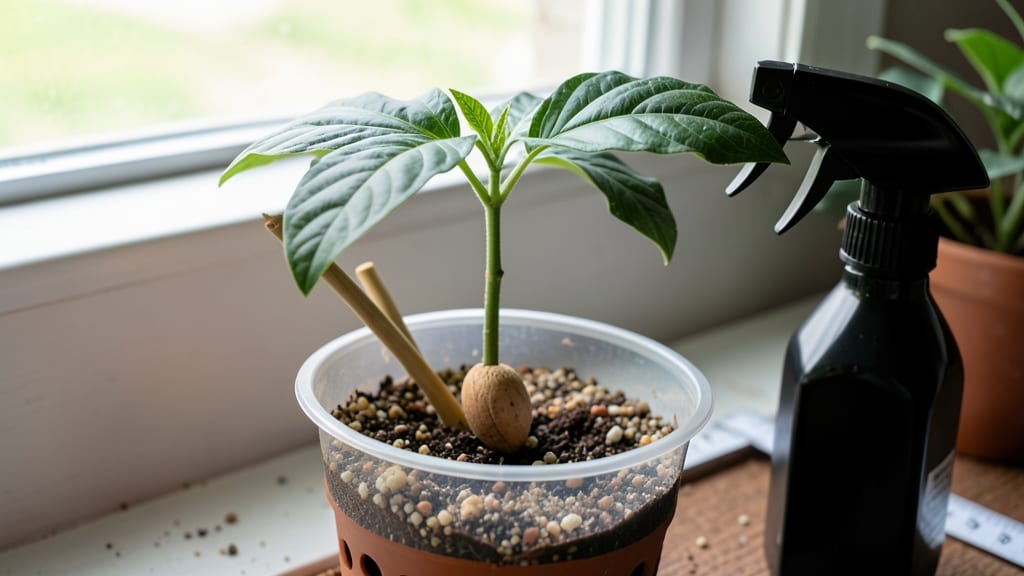
Growing an avocado seed in dirt transforms a kitchen scrap into a lush, leafy plant with just a few weeks of patience. ✨ The twist-free method I’ve perfected skips the traditional toothpick setup—no balancing act, no waiting for it to rot—just healthy roots and steady growth from day one.
My first attempt sprouted roots in 3 weeks, and the plant thrived for over a year with minimal care.
You’ll need a clean avocado seed, a small pot with drainage, well-draining potting mix, and a sunny windowsill. The soil should stay moist but never soggy—think damp sponge, not swamp.
Place the seed halfway into the soil, with the flat side down, and keep it in bright, indirect light. Avoid direct sun, which can scorch delicate new leaves.
Within 4-6 weeks, you’ll spot tiny roots pushing through the soil, followed by a shoot breaking the surface. Keep the soil consistently moist and fertilize lightly every 2 months once the plant reaches 6 inches.
The real magic happens when the first true leaves appear—thick, glossy, and ready to grow.
Troubleshooting is simple: yellow leaves mean too much water, while slow growth often signals low light. If mold appears, let the soil dry slightly before watering again. With this method, your avocado seedling will outlast most kitchen experiments and become a conversation piece for years.
📚 In This Guide
- What you need
- Instructions
- Tips and common mistakes
- Wrapping up and next steps
What you need
- ● 1 fresh, organic avocado pit (the larger, the better—look for a seed with a smooth, unblemished surface).
- ● 3–4 toothpicks or small skewers (for suspending the seed during root growth).
- ● 1 clear glass or jar (16–24 oz, wide-mouthed for easy access).
- ● Water (filtered or room-temperature tap water, changed every 2–3 days).
- ● Small pot (4–6 inches in diameter) with drainage holes (for transplanting after roots form).
- ● Well-draining potting soil (a mix of cactus/succulent soil or 50% potting soil + 50% perlite works best).
- ● Spray bottle (for misting soil and keeping it moist).
- ● Scissors or knife (for trimming roots if needed during transplanting).
- ● Hydroponic growing kit (if you want to skip the soil phase and grow roots in water first).
- ● Fertilizer (balanced liquid fertilizer, diluted to half-strength, once roots are 2–3 inches long).
- ● Grow lights or sunny windowsill (if your space lacks natural light).
- ● Humidity dome or plastic wrap (to retain moisture while the seedling establishes).
- ● Label or marker (to track planting dates and care notes!).
Step-by-Step instructions for growing an avocado seed in soil
Here's my foolproof method for growing a sturdy avocado seedling—no fancy tools or complicated steps.
🌱 Step 1: Prepare the Seed for Planting
Start with a fresh avocado pit, preferably from an organic fruit. Rinse it thoroughly to remove any remaining fruit residue, then let it dry completely. I like to soak the pit in lukewarm water for 1-2 days to soften it slightly—this helps the root break through more easily.
Next, insert 3-4 toothpicks evenly around the pit, about halfway up. These will suspend it over a container of water without letting it touch the bottom. Place the pit in a glass or jar with 1-2 inches of water, ensuring the bottom half is submerged. Keep it in a warm spot with bright, indirect light—a windowsill works perfectly.
💧 Step 2: Wait for Roots to Emerge
Within 2-6 weeks, you'll see a small root sprouting from the bottom of the pit. This is your signal to keep the water level consistent—always enough to cover the root but not so much that the pit floats. I change the water every 3-4 days to prevent bacterial growth.
Once the root reaches about 2-3 inches, it's time to move the pit to soil. You'll notice the root growing downward and possibly a tiny shoot appearing at the top. This is the moment you've been waiting for—your avocado seed is ready for its next phase.
🪴 Step 3: Plant the Seed in Soil
Fill a 6-inch diameter pot with well-draining potting mix. I like to add a handful of perlite to the mix to improve aeration—this prevents the soil from becoming too compact and suffocating the roots. Make a small hole in the center of the pot, about 1-2 inches deep.
Gently place the avocado pit into the hole, root side down, and cover it with soil. Press lightly around the edges to secure it, but don't pack the soil too tightly. Water the soil until it's evenly moist but not soggy. Place the pot in a spot with bright, indirect light—direct sunlight can scorch the young seedling.
☀️ Step 4: Care for the Seedling
Keep the soil consistently moist but not waterlogged. I water whenever the top inch of soil feels dry to the touch. Within 4-8 weeks, you should see a shoot emerge from the top of the pit. This is your first true leaf—your seedling is officially growing!
Once the seedling reaches about 6-8 inches tall, it's time to fertilize. Use a balanced, water-soluble fertilizer diluted to half-strength. Apply it every 4-6 weeks during the growing season. Avoid over-fertilizing, as this can damage the delicate roots.
✂️ Step 5: Prune and Support Growth
As your avocado seedling grows, you may notice it developing multiple stems. To encourage a single, strong trunk, pinch off any side shoots that appear near the base. This redirects the plant's energy into growing taller and sturdier.
When the seedling reaches about 12 inches tall, it's time to transplant it into a larger pot, at least 8-10 inches in diameter. Choose a pot with drainage holes and use fresh potting mix. Handle the seedling gently to avoid damaging the roots, and water it thoroughly after transplanting.
Tips & tricks for thriving avocado seedlings
Growing an avocado seed into a healthy plant takes patience—and a few insider tricks to avoid common pitfalls. Here's what I've learned from watching my own seedlings go from tiny roots to leafy plants.
Root Development: In Step 2, when you're waiting for roots to emerge, resist the urge to change the water more often than every 3-4 days. The pit needs time to develop a strong root system, and frequent water changes can introduce bacteria. I've seen roots grow twice as fast when left undisturbed—just keep the water level steady and watch for that first tiny sprout.
Soil Preparation: For Step 3, don't skip adding perlite to your potting mix. I've tried planting without it, and the soil becomes too compact, suffocating the delicate roots. The perlite creates tiny air pockets that help the roots breathe—this is especially important for the first few weeks after transplanting. Use about 1 part perlite to 4 parts potting mix for best results.
Lighting Strategy: The instructions mention bright, indirect light, but here's what nobody tells you—your seedling's first leaves are incredibly sensitive. I learned this the hard way when my first plant got sunburned. If you notice yellow patches on the leaves, move the pot immediately to a shadier spot. East-facing windows are ideal for consistent, gentle light.
Transplanting Timing: When your seedling reaches 6-8 inches in Step 4, don't rush to fertilize. I waited too long with my first plant and it grew leggy and weak. Start fertilizing only when you see true leaves (not the initial sprout leaves), and always dilute to half-strength. The roots are still developing and can't handle full-strength fertilizer yet.
Pro Tips for Grow An Avocado Seed In Dirt
- Growing an avocado seed into a healthy plant takes patience—and a few insider tricks to avoid common pitfalls.
- Root Development: In Step 2, when you're waiting for roots to emerge, resist the urge to change the water more often than every 3-4 days.
- Soil Preparation: For Step 3, don't skip adding perlite to your potting mix.
Frequently asked questions
Got questions about growing your avocado seed into a thriving plant? Here are some common ones—and their answers!
How long does it take for an avocado seed to sprout in soil?
With the right conditions (warmth, moisture, and patience!), your avocado seedling should sprout roots within 2–4 weeks after planting in soil. The first leaves (cotyledons) may appear in 4–8 weeks, but true leaves take 3–6 months. Consistency is key—keep the soil damp but not soggy!
Can I grow an avocado seed indoors year-round?
Yes! Avocado trees thrive indoors if you provide bright, indirect light (a south-facing window or grow light works best) and warmth (70–80°F). However, they need a dormancy period (cooler temps, less water) in winter to mimic natural cycles. Without this, growth may slow or stop. A sunny patio in summer can help too!
What if my avocado seed rots instead of sprouting?
Rotting usually means too much moisture or poor drainage. If you notice a foul smell or mushy seed, act fast! Remove it from the soil, let the remaining seed dry for a day, then replant in fresh, well-draining potting mix. Pro tip: Use a terracotta pot with drainage holes to prevent waterlogging.
Do I need to fertilize my avocado seedling right away?
Not yet! Wait until your seedling has 3–4 true leaves (not the first two cotyledons) before introducing diluted fertilizer (like a balanced 10-10-10 or organic compost tea). Over-fertilizing can burn young roots. Start with half-strength fertilizer every 2 months in spring/summer.
Will my avocado tree ever produce fruit?
It’s possible—but patience is required! Indoor-grown avocado trees can take 5–13 years to bear fruit, and even then, they may need cross-pollination (another avocado tree nearby). Outdoor trees in warm climates (Zones 9–11) fruit faster. Choose a fruit-bearing variety (like Hass) if you’re dreaming of guacamole!
Wrapping up and next steps
Growing an avocado seed in dirt is a rewarding journey that blends patience with the joy of nurturing life! 🌱 With the right materials, a little care, and the twist-free method, you’ll watch those roots flourish and give your seedling a strong start.
Don’t forget—even if progress feels slow, consistency is key.
Now that you’re ready to plant, why not share your progress? Snap photos, track growth, and inspire others to try their hand at this fun experiment. Happy growing—your tiny tree is waiting for you! 🌿