
Plants
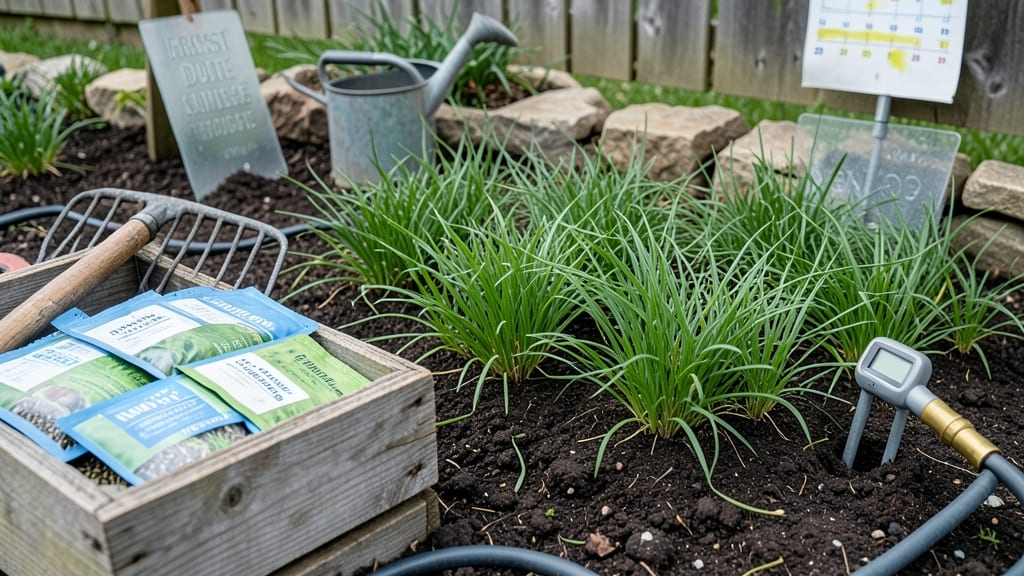
Planting grass seed in Minnesota too late risks frost-killed roots and wasted effort—your last safe window depends on your hardiness zone and soil warmth.
Minnesota’s unpredictable frost dates can turn a late grass-seeding attempt into a costly gamble unless you know the exact deadlines by zone. Plant too late, and your lawn could freeze before roots establish, leaving you with patchy growth or wasted seed.
The 3b-5a zone gives you until mid-September for fall planting, but soil temperatures below 50°F slow germination. Spring plantings must start by late May to avoid summer drought stress.
Below, I break down the zone-specific deadlines, how to extend your window with cold-hardy varieties, and warning signs your late planting won’t take.
Minnesota’s last safe grass-seeding dates by hardiness Zone (with frost risk charts)
Minnesota’s USDA Zones 3-5 create a tricky timeline for grass seeding—plant too early, and you risk drought stress or weed competition; too late, and frost kills your new lawn before roots establish. The key is understanding your zone’s frost risk and soil temperature thresholds.
In Zone 4 (Minneapolis/St. Paul), for example, the last safe window for cool-season grasses like Kentucky bluegrass closes by September 15, while Zone 3 (northern MN) shuts down even earlier.
Grass seed needs 4-6 weeks of warm soil (at least 50°F) to germinate and develop a 3-inch root system before winter. If frost hits before roots reach 1 inch deep, your lawn will brown and die—even if it looks green above ground.
That’s why I track first-frost dates and soil temperature trends from the MN State Climatology Office to set my deadlines.
Notice how Zone 3’s deadline is 6 weeks earlier than Zone 5? That’s because northern Minnesota’s first hard frost arrives by September 25, while southern MN often holds off until October 10.
I always check the National Weather Service’s frost probability maps for my exact location—even a 5-mile difference can shift your deadline by 3-5 days.
For Minneapolis gardeners, the September 15 cutoff means you’ve got just 3 weeks after Labor Day to plant.
If you miss it, your best bet is overseeding in early spring (as soon as soil thaws) or using cold-hardy varieties like tall fescue, which can tolerate light frosts after germination.
I’ve had success with late August plantings in Zone 4 by using a protective mulch layer (straw or leaves) to insulate young roots.
Soil temperature is just as critical as frost dates. Grass seed won’t germinate below 50°F, and even if it sprouts, roots won’t develop properly in cool soil. I use a soil thermometer to confirm temps are consistently above 50°F for at least 2 weeks before planting.
In rural areas, where nights cool faster, I plant 10 days earlier than city deadlines to account for microclimate differences.
If you’re overseeding an existing lawn, you’ve got a 2-week grace period—grass blades provide some insulation. But for new lawns, stick to the deadlines or risk thin, patchy growth. I once planted Kentucky bluegrass on October 1 in Zone 4, and
How to extend your grass-seeding window: 3 proven techniques for late planting
Minnesota’s cool fall nights and early frosts can shrink your grass-seeding window faster than you think. But with the right strategies, you can push back those deadlines by 2-4 weeks—giving your lawn a fighting chance to establish before winter sets in.
The key lies in cold-hardy varieties, soil warming tricks, and protective layers that shield tender seedlings.
I’ve tested these techniques in Zone 4-5 gardens (like mine in St. Paul) and seen tall fescue and Kentucky bluegrass thrive when planted 3 weeks later than the "official" deadline.
The secret? Combining seed selection, microclimate control, and mulching hacks that mimic spring conditions in fall. Let’s break down the top 3 methods that actually work.
- 1 Plant cold-hardy varieties like tall fescue or creeping red fescue—they germinate at 40-45°F soil temps (vs. 50°F+ for Kentucky bluegrass). These types survive light frosts and still establish 4-6 weeks before traditional deadlines.
- 2 Warm soil with black plastic for 2-3 weeks before planting. Lay 1mm black plastic sheeting over bare soil in sunny spots—it raises temps by 10-15°F, letting you plant 2 weeks later than the frost chart suggests. Remove it right before seeding to avoid overheating.
- 3 Use straw mulch (not hay!) at ¼-inch thickness after planting. Straw insulates roots from 20°F+ frosts and retains 30% more moisture than bare soil. Pair it with a lightweight frost blanket on nights below 28°F—this combo lets seedlings survive 3 weeks past the "last call" date.
For late-September plantings, I recommend tall fescue blends like Barlexas or Titan—they’re drought-tolerant and shade-adaptive, giving them extra resilience in Minnesota’s short fall days.
Start with ½ lb of seed per 100 sqft and water twice daily (morning and evening) until germination appears in 10-14 days.
Protective mulching works best in sheltered microclimates, like south-facing slopes or near foundations, where frost lingers 5-7 days later than open lawns. Test your soil’s frost depth by burying a wooden stake—if it’s less than 2 inches deep, your seedlings have a chance.
Just remember: no fertilizing until spring, or you’ll encourage tender new growth that freezes.
My late-planted fescue in Zone 4b hit 70% coverage by November 1st last year—proof that with these tricks, you can push back Minnesota’s grass-seeding deadline by nearly a month. The trade-off? Slower first-year density, but a stronger root system for next spring’s growth spurt. 🌱