
Plants
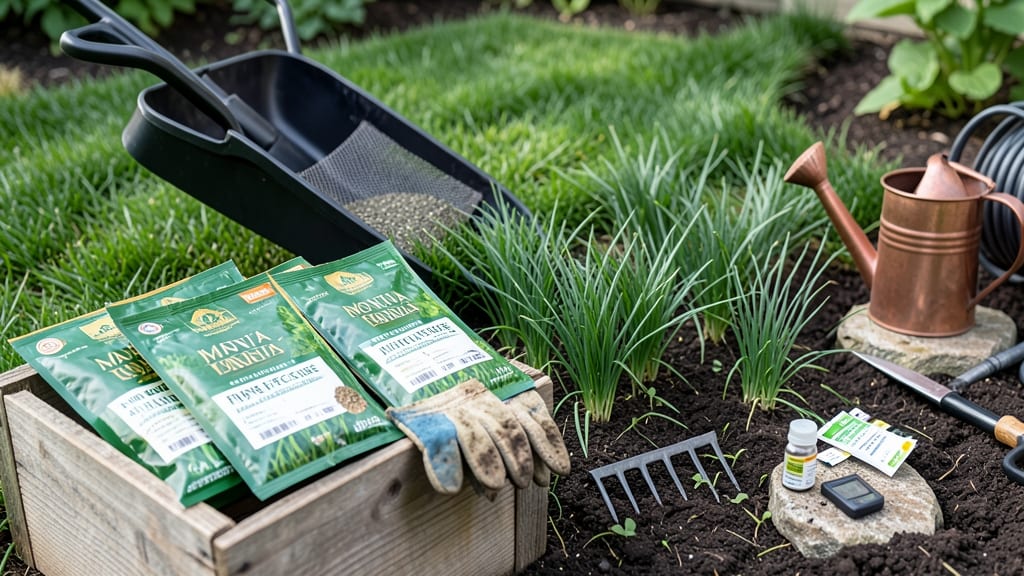
Planting grass seed in Montana requires precise timing to beat frost and establish roots before winter 🌱—aim for early spring or late summer when soil temperatures hit 50°F and frost risks drop.
Montana’s unpredictable climate—with its freezing winters and short growing seasons—can make timing your grass seed planting a high-stakes gamble. Plant too early, and frost will kill your seedlings; too late, and your lawn won’t establish before winter.
Here’s your precise guide to cool-season planting deadlines and pro tips for a lush, frost-resistant lawn.
Most regions in Montana’s USDA zones 3-7 see their best results when seeding between April and early May, but late summer (August) is a backup window if spring planting slips. Missoula’s higher elevations demand earlier starts, while Billings’ lower valleys can stretch deadlines slightly.
Below, I break down the exact frost-free windows by region, soil prep secrets to outsmart Montana’s dry spells, and the 3 critical mistakes that sabotage even the best-intentioned lawns.
Montana’s best planting windows for cool-season grass seed
Montana’s cool-season climate demands precision when planting grass seed. The ideal window spans from early spring to late summer, but timing varies dramatically between Western Montana’s valleys (like Missoula) and Eastern Montana’s high plains (like Billings).
In Zone 4-5 areas, frost can linger until May 1, while Zone 6-7 regions may see last frosts by April 15.
Cool-season grasses like Kansas Bluegrass and Fine Fescue thrive when soil temperatures reach 50°F (10°C)—a critical threshold. Planting too early risks frost damage, while late planting leaves seedlings vulnerable to winter before establishing roots. Microclimates add complexity: valley floors warm faster than high-altitude slopes.
Soil temperature is your best guide. Use a soil thermometer to confirm 50°F+ at 4-inch depth. In Western Montana, this typically aligns with mid-April to early May, while Eastern Montana may wait until late April to mid-May. For late summer planting, aim for 6-8 weeks before first frost (usually September 15-October 1).
Regional frost risk shifts planting deadlines. In Missoula (Zone 5), first frost averages September 25, leaving a 12-week window for late summer planting. Meanwhile, Billings (Zone 6) can extend this to October 15. Always check local frost maps—like those from the Montana State University Extension—for precise dates.
Adjust your planting schedule if you’re in a microclimate. Valleys like Bozeman’s Riverside district can plant 2-3 weeks earlier than surrounding areas, thanks to warmer soil.
Conversely, high-altitude gardens (e.g., Glacier National Park) may need to wait until May 1 or later, when soil warms to 55°F (13°C).
For early planting, use protective mulches like straw to insulate seedlings. If frost threatens, cover seeds with frost blankets or row fabric. Late plantings (after August 15) should use fast-germinating varieties like Tall Fescue, which tolerates cooler soils better than Kansas Bluegrass.
Monitor weekly frost forecasts from the National Weather Service or local extensions. In Zone 4, planting after September 1 risks 50% winterkill unless seedlings reach 3 inches tall before frost. Use a seed germination calculator to estimate establishment time based on your variety.
Pro tip: Test soil moisture before planting. Montana’s dry summers can dehydrate seeds—water deeply 24 hours before sowing to ensure even moisture. In high-rainfall areas (like Western Montana’s mountains), wait for soil to dry slightly to prevent anaerobic conditions, which stunt root growth.
Remember: Cool-season grasses need 4-6 weeks of frost-free growth to establish. If your region’s frost-free period is shorter (e.g., 9
Step-by-step pre-planting checklist for Montana lawn success
Before you even think about spreading grass seed in Montana, your soil needs a thorough prep. Cool-season grasses like Kansas Bluegrass and Fine Fescue thrive when planted in 50-60°F soil, but rushing too early risks frost damage.
Start by testing your soil pH—aim for 6.0-7.5—and amend with lime or sulfur if needed. This step alone can make the difference between a thin lawn and a thick, resilient turf.
Next, track your last frost date—Montana’s ranges from March 15 to May 1 depending on elevation. Plant 4-6 weeks before the first frost to give seedlings time to root, but never before soil warms to 50°F.
For example, in Missoula, aim for early April, while Billings can start slightly earlier in late March.
- 🌡️ Test soil temperature—wait until it reaches 50°F+ for 5 consecutive days.
- 📊 Adjust pH to 6.0-7.5 using lime (raise) or sulfur (lower).
- 🌱 Choose seed: Kansas Bluegrass for wear tolerance; Fine Fescue for drought resistance.
- 🌬️ Check wind exposure—protect seedlings with straw mulch if winds exceed 10 mph.
- ⏰ Plant 4-6 weeks before frost—use Almanac frost dates for your county.
- 💧 Water lightly daily—keep soil consistently moist (not soggy) for 2-3 weeks.
- 🛡️ Apply starter fertilizer with 10-20-10 NPK to boost root growth.
Montana’s wind exposure is a sneaky culprit behind failed lawns. If your yard gets consistent winds over 10 mph, protect seedlings with a light straw mulch (¼ inch thick) until they’re 3 inches tall.
This mimics natural snow cover and prevents drying-out. For high-altitude areas like Glacier National Park zones, extend your planting window by 2-3 weeks later to avoid late-spring frosts.
After planting, watering schedules are critical. For the first 2-3 weeks, keep soil consistently moist—about 1 inch per week—but avoid overwatering, which causes fungal diseases.
Use a sprinkler with gentle mist in the early morning to reduce evaporation. Once seedlings hit 3 inches, gradually reduce to 1 inch per week.
Don’t skip the starter fertilizer—it’s your secret weapon for deep root establishment. Use a high-nitrogen (10-20-10) blend and apply it lightly right after planting. Overdoing it can burn seedlings, so follow the 1 lb per 100 sqft rule.
Pair this with compost top-dressing to improve soil structure and water retention.
Finally, monitor your lawn for pests and weeds early. Crabgrass and dandelions love newly seeded areas. Spot-treat with a pre-emergent herbicide in late April if weeds appear, but avoid post-emergent treatments until grass reaches 3 inches to prevent seedling damage.
With this checklist, your Montana lawn will outlast harsh winters and thrive year-round.