
Planting
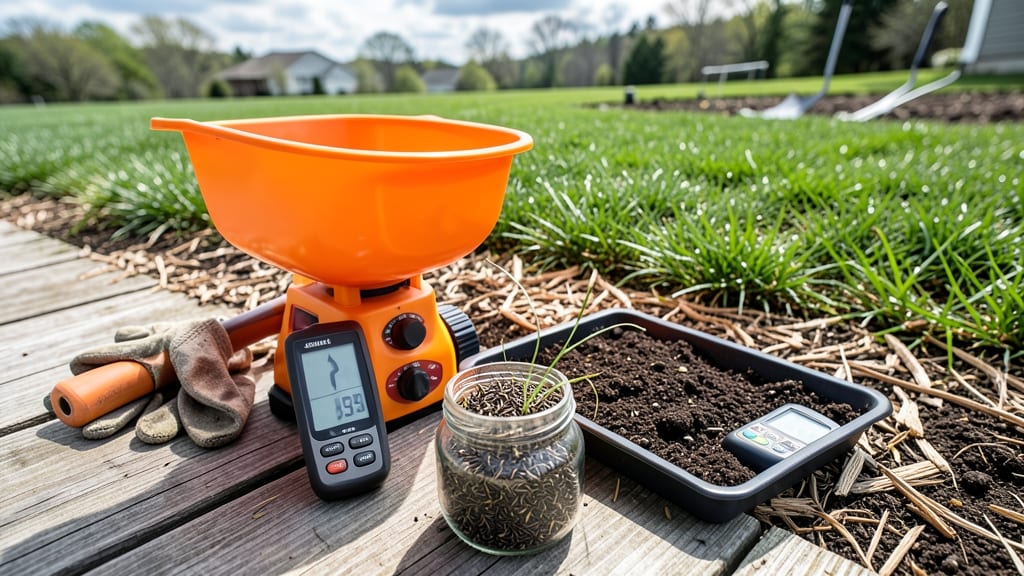
Planting grass seed in North Carolina during late August–September or early March–April gives you the fastest, most reliable germination 🌱 — timing this right means fewer weeds and a lawn that fills in within 2-3 weeks.
Here’s the catch: North Carolina’s zones 7a-8b hide big differences. Coastal areas can handle late summer planting when the heat starts to ease, while the Piedmont’s clay soil needs cooler fall temps to prevent seed from baking in the sun.
Get the timing wrong, and you’re either fighting drought or watching frost nip tender shoots.
Most gardeners in NC swear by fall planting—it’s when soil stays warm enough for roots to take hold, but the air cools to slow weed growth. Spring works too, but you’ve got a 6-week window between last frost and summer’s brutal heat to nail it.
Below, I break down the exact dates by zone, how to prep your soil for NC’s tricky conditions, and the one trick that buys you an extra two weeks if you miss the ideal window.
NC grass seed planting calendar by Zone: frost-free dates for fast germination
Planting grass seed in North Carolina isn’t one-size-fits-all—your USDA zone and local microclimate dictate the perfect timing. Coastal areas like Wilmington (Zone 8a) have no frost year-round, while mountain regions like Asheville (Zone 6b) face early freezes.
The key? Plant when soil temps hit 50-65°F for cool-season grasses or 65-75°F for warm-season varieties, and you’ll see germination in just 7-14 days.
Fall is the gold standard for NC lawns—cool temps slow weed growth while consistent moisture helps roots establish. But warm-season grasses like bermudagrass or zoysia thrive when planted in late spring, after the last frost. Let’s break down your zone’s frost-free window to avoid wasted seed and patchy lawns.
In Zone 5a-5b (mountains), like Boone or Blowing Rock, your last frost typically hits around April 15. This means late August to September is your best shot for cool-season grasses like tall fescue, which germinates best in 55-65°F soil.
For warm-season bermudagrass, wait until late spring—after May 15—when soil warms to 70°F+.
Moving to the Piedmont (Zones 6a-6b), cities like Raleigh or Greensboro see their last frost around March 25. Here, fine fescue thrives when planted in September, while zoysia grass should go in early May.
Pro tip: Test soil moisture—clay-heavy Piedmont soil drains poorly, so amend with compost before planting.
Coastal NC (Zones 7a-8a) is a different story. Wilmington’s Zone 8a has no frost, but September–October still offers ideal 60-70°F soil temps for tall fescue blends. Warm-season St. Augustine loves the humidity—plant it in spring (March–April) for a lush, shade-tolerant lawn.
Adjust for microclimates: A south-facing slope in Zone 7a warms faster than a shaded yard, so plant 1-2 weeks earlier. Conversely, low-lying areas may stay cooler—monitor soil temps with a soil thermometer (available at local nurseries like The Garden Shop in Chapel Hill).
Missed the window? Don’t panic. Fast-germinating varieties like ‘Raleigh’ fescue can sprout in 5-7 days if soil temps are right. Just add a light frost blanket in late fall to protect seedlings. For warm-season grasses, oversowing in late summer gives them a head start before winter.
Remember: Watering is 50% of success. Keep soil consistently moist (not soggy) for the first 3 weeks1 inch of water per week, applied in the morning to
5 Signs your NC soil is ready for grass seed (and 3 mistakes to avoid)
North Carolina’s diverse soil types—from Piedmont clay to coastal sand—can make or break your grass seed success. The right conditions mean fast germination (as little as 7 days for some varieties), while wrong timing leads to wasted seed or weed takeover.
I’ve learned the hard way that soil temperature matters more than calendar dates, especially when planting cool-season grasses like tall fescue or warm-season types like bermudagrass.
Your soil is ready when it hits the perfect sweet spot: warm enough for roots to grow but cool enough to slow weed competition. For NC, that’s typically 50-65°F for cool-season grasses and 65-75°F for warm-season varieties.
But don’t just guess—test it! A simple soil thermometer (or even your finger) can save you from planting too early or too late.
- 🌡️ Soil temp between 50-75°F (use a thermometer 2" deep)
- 💧 Moisture holds like a damp sponge (not soggy or dry)
- 🌱 Drainage tests pass: water pools for 2-4 hours max
- 🌿 Weeds are dormant or just sprouting (fall) or thriving (spring)
- 🌞 Sunlight hits 6+ hours daily (check with a sun calculator)
- 🌡️ Planting when soil is too hot (>80°F) (bakes seeds in Piedmont clay)
- 💧 Skipping the percolation test (coastal sand drains too fast)
- 🌱 Using fresh manure (burns tender grass roots)
Let’s start with the soil temperature—this is your #1 indicator. In NC’s Piedmont region, clay soil stays warm longer, so you can plant cool-season grasses like tall fescue as late as mid-October.
But in the coastal plain, sandy soil cools faster, meaning you’ll need to plant warm-season grasses like zoysia by late May to avoid summer heat stress. Pro tip: Check temps at 10 AM—that’s when soil is warmest and most accurate for planting decisions.
Next, moisture levels must be just right. Stick your finger 2 inches deep—if it feels like a damp sponge (not dripping or bone-dry), you’re golden. In NC’s humid summers, overwatering is just as bad as underwatering.
I’ve seen seed rot take over lawns where gardeners watered daily instead of deeply 2-3 times a week. For sandy coastal soils, you’ll need to water twice daily during the first 2 weeks to keep seeds hydrated.
Don’t overlook drainage, especially if you’re in the Piedmont where clay dominates. Fill a jar with soil and water, then time how long it takes to drain. If water pools for more than 4 hours, your soil is too compacted—amend it with compost or gypsum before planting.
Coastal areas? You might need to mix in peat moss to slow drainage. A quick fix: Test a small patch first to avoid wasting seed on poorly draining spots.
Finally, watch for weed competition. If weeds are already sprouting vigorously, your timing is off—either too early (spring) or too late (fall). In NC’s Zone 7b, aim to plant 4-6 weeks before the first frost (usually mid-September) to give grass a head start.
For warm-season grasses, plant after the last frost but before summer’s brutal heat kicks in (typically mid-April).
Remember: NC’s microclimates mean what works in Raleigh (Piedmont) may fail in Wilmington (coastal). Always adjust for your specific zone, and when in doubt, test your soil—it’s the fastest way to avoid costly mistakes. With the right conditions, you’ll see green blades in as little as 7 days! 🌱