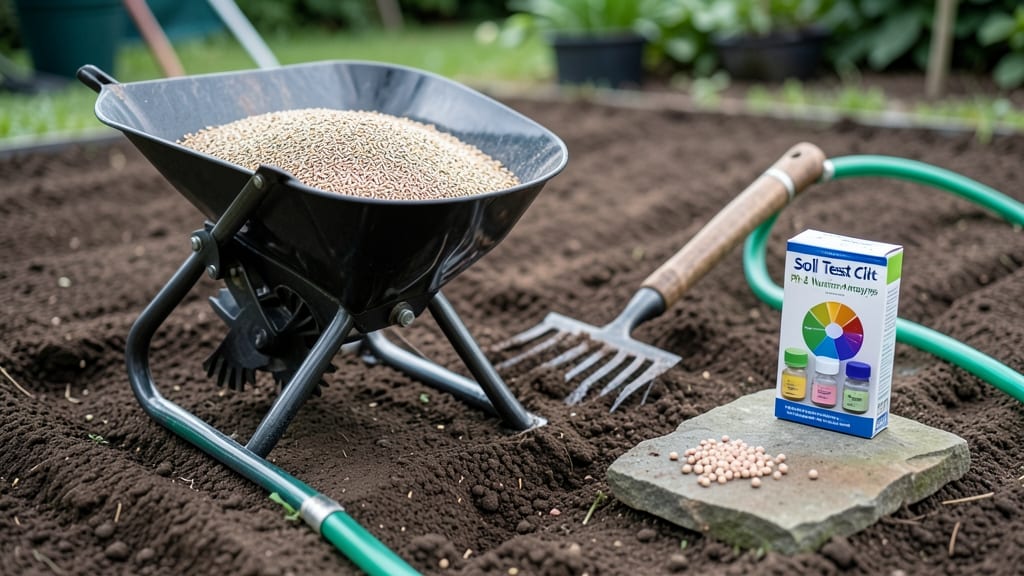
Planting grass seed in spring is all about timing it 4-6 weeks before your last frost—too early and a surprise freeze wipes out your work, too late and weeds steal the show.
Picture this: you’ve spent hours raking, leveling, and scattering seed, only for a late-night frost to turn your effort into a sad, crunchy memory. That’s why knowing your local frost-free date isn’t just helpful—it’s the key to a thick, green lawn by summer.
In USDA Zone 6, like much of the Midwest, that window typically opens around mid-April, but the exact date shifts with your region. The Pacific Northwest might be ready by early March, while the Deep South could wait until May.
Below, I’ll break down how to pinpoint your perfect planting week, plus the soil prep and grass types that make all the difference.
You’ll also discover how to read your soil’s readiness, avoid the three biggest mistakes that kill germination, and keep your new grass thriving once those first blades pop up. Let’s get started.
🌱
When to Plant Grass (Lawn) (Lawn)
Jan
❄️
Feb
🌱
Mar
🌱
Apr
🌱
May
🌱
Jun
☀️
Jul
☀️
Aug
☀️
Sep
🍂
Oct
🍂
Nov
🍂
Dec
❄️
Spring grass seed planting deadlines by US planting zones
Getting your grass seed in the ground at the right time in spring is like catching a wave—too early and frost will wipe out your progress, too late and weeds will steal your lawn's spotlight.
The key is planting 4-6 weeks before your last average frost date, when soil temperatures hit 55-65°F for consistent germination. But these deadlines vary wildly across the U.S., from late February in Zone 10 to May in Zone 3.
Let's break it down by region so you can time it perfectly.
Your local frost-free date isn't just about the calendar—it's about soil warmth and moisture. Cold, wet soil can delay germination for weeks, while dry soil might need extra watering. That's why I recommend checking both average frost dates and soil temperature trends in your area.
For example, the Pacific Northwest might see frost in May, but soil won't be ready until June, while the Deep South could plant in February when soil is already warm.
Here's where regional variations get tricky. Coastal areas like San Francisco (Zone 9-10) might have frost-free soil by January, while inland deserts like Phoenix (Zone 10) can start planting by November.
Meanwhile, Chicago (Zone 5) gardeners shouldn't even think about grass seed until late April or early May. These differences mean you can't just follow a national calendar—your exact location matters more.
Most grass seed packages recommend planting in early spring or early fall, but spring has tighter windows. Cool-season grasses like Kentucky bluegrass and fescue need to establish before summer heat, while warm-season grasses like Bermuda and Zoysia should go in when soil is warm.
The comparison table below shows your exact planting windows by USDA zone, including regional adjustments for coastal vs. inland areas.
| USDA Zone |
Frost-Free Window |
Ideal Planting Time |
Soil Temp Requirement |
Regional Notes |
| Zone 3 (Northern Plains) |
Late May - Early June |
May 1-15 |
55-60°F |
Wait until soil warms; short growing season |
| Zone 4 (Upper Midwest) |
Mid-April - Late May |
April 15-May 1 |
55-65°F |
Northern areas plant later; southern areas can start earlier |
| Zone 5 (Midwest/Southeast) |
Early April - Mid-May |
March 20-April 15 |
55-65°F |
Southeast can plant 2-3 weeks earlier than Midwest |
| Zone 6 (Central US) |
Mid-March - Early May |
March 1-April 1 |
55-65°F |
Pacific Northwest plants later (April); Plains plant earlier (March) |
| Zone 7 (Southeast/Atlantic) |
Late February - April |
February 15-March 15 |
60-65°F |
Coastal areas can plant earlier; inland waits for soil warmth |
| Zone 8 (Gulf Coast) |
January - March |
January 15-February 15 |
60-70°F |
How to check your local frost-free date for perfect timing
Finding your exact frost-free date is the first step to nailing your spring grass seed planting. This date marks the last time temperatures dip below freezing, giving your seeds the consistent warmth they need to sprout without risking frost damage.
Without it, you might plant too early and watch your seeds freeze, or too late and let weeds take over your lawn.
Most gardeners rely on three key tools: the USDA Plant Hardiness Zone Map, your local weather forecast, and a simple soil thermometer.
Each provides a piece of the puzzle—your zone tells you the general range, forecasts give real-time adjustments, and soil temperature confirms it’s truly safe to plant. Let’s walk through how to use them together for foolproof timing.
🌱 Step-by-Step Guide to Frost-Free Timing
-
Step 1: Find Your USDA Zone
Head to the USDA Zone Map and enter your ZIP code. Note your zone number (e.g., 6a, 8b) and the average last frost date listed. For example, Zone 6a typically sees its last frost around April 15, while Zone 9a might not frost until January 31.
-
Step 2: Check Local Forecasts
Use the National Weather Service or your local weather app to find the 10-day forecast. Look for a 3-day stretch with nighttime temps above 40°F (4°C)—this confirms your frost-free window. Pro tip: Bookmark your local agricultural extension office website for hyper-local advice.
-
Step 3: Test Soil Temperature
Buy a $10 soil thermometer (or use a meat thermometer). Stick it 4 inches deep in the ground and check daily. Grass seeds need soil temps of at least 50°F (10°C) to germinate. In Zone 5, this might mean waiting until late May—don’t rush it!
-
Step 4: Count Back 4-6 Weeks
Once you’ve confirmed your frost-free date, count backward 4-6 weeks to land on your ideal planting window. This gives seeds time to germinate before summer heat arrives. For cool-season grasses (like Kentucky bluegrass), aim for early spring; for warm-season grasses (like Bermuda), wait until late spring.
-
Step 5: Monitor for Adjustments
A late frost can push your window back by weeks. Set a calendar reminder for your frost-free date and check forecasts weekly. If a late frost is predicted, delay planting until temps stabilize—your grass will thank you with thicker growth and fewer bare spots.
Let’s say you’re in Zone 7b (like Atlanta or Dallas). Your last frost is usually around March 15, but a soil thermometer shows your ground is still chilly in early April.
Counting back 4 weeks lands you on mid-March, but your soil isn’t ready—so you wait until late March. This flexibility is why checking all three tools matters.
One common mistake? Relying only on the USDA zone map. While it’s a great starting point, local microclimates (like hills or bodies of water) can shift your frost-free date by 1-2 weeks.
For example, a valley might frost 10 days later than the surrounding area. That’s why I always cross-reference with local gardeners’ groups on Facebook or Nextdoor for real-world insights.
Once you’ve locked in your frost-free date, you’re ready to prep your soil and choose the right grass type for your climate. But first, grab that soil thermometer—your lawn’s success depends on it! 🌱
★★★★★4.7(1 review)
|