
Lawn
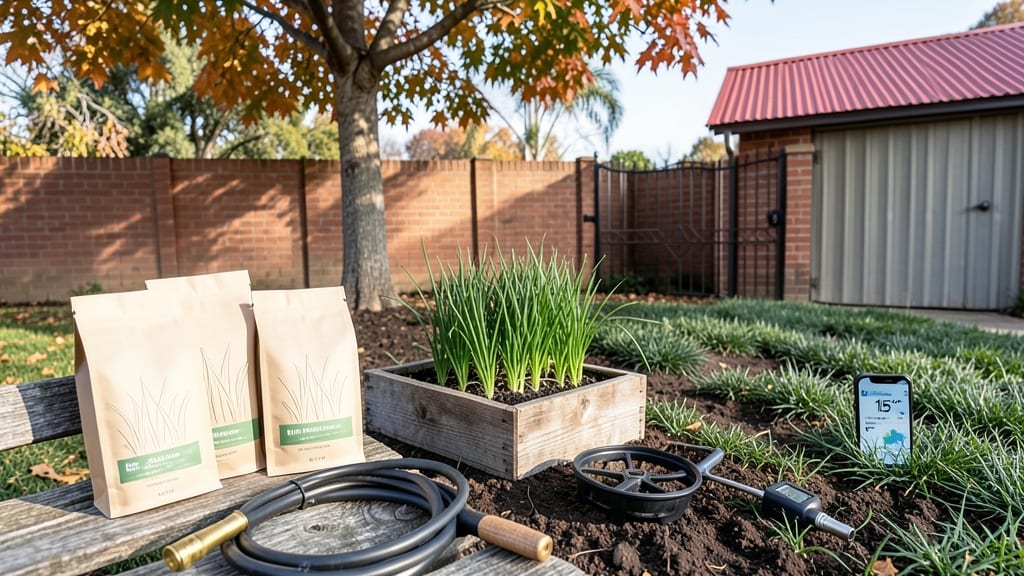
Planting lawn seed in Melbourne at the right time—when soil warmth hits 10°C+—makes the difference between a thick, green lawn and a patchy, disappointing mess.
Melbourne’s unpredictable climate can make or break your lawn—planting at the wrong time means sparse grass, extra costs, and frustration. But timing it right guarantees a lush, resilient lawn with 90%+ germination success.
Most gardeners assume spring is the only window, but autumn actually offers cooler soil, fewer weeds, and better moisture retention—ideal for 🌱 lawn grass to establish deep roots before winter.
In this guide, I’ll break down the exact soil temperature triggers, the best months for your microclimate (coastal vs. inland), and how to prep your soil for maximum success—no guesswork, just results.
Melbourne’s best lawn seed planting windows by soil temperature (not just months)
Melbourne’s climate isn’t just about seasons—it’s about soil temperature. Planting your lawn seed when the ground is too cold or too hot can lead to poor germination, even if the calendar says it’s the right month.
For cool-season grasses like Fescue or Ryegrass, aim for soil temps of 10°C (50°F) or warmer. Warm-season varieties like Couch grass need 15°C (59°F) or higher to thrive.
Unlike other regions, Melbourne’s microclimates create big differences. Coastal areas like St Kilda stay milder, while inland spots like Sunbury can swing dramatically. This means your neighbor’s perfect planting time might not work for you.
Always check soil temps with a soil thermometer—it’s the only way to get it right.
Here’s the key: Spring (September–November) is Melbourne’s gold standard for lawn seeding. The soil warms steadily, and rainfall is reliable. But autumn (March–May) is a close second, especially in inland areas where summer heat can stress seedlings.
Avoid planting in winter (June–August) unless you’re in a frost-free zone, and never in peak summer (December–February) unless you’re using shade-tolerant varieties.
⚠️ Critical Warning: Planting too early in spring (before soil hits 10°C) risks frost damage. Planting too late in autumn (after soil drops below 10°C) slows growth. The two-week rule applies: If soil temps drop below 10°C within 14 days of planting, your grass may struggle to establish.
Coastal Melbourne (e.g., Brighton, Port Phillip Bay) can plant 2–3 weeks earlier than inland areas because the ocean moderates temperatures. For example, September 1 might be ideal near the coast, while inland spots should wait until September 15 to avoid cold snaps.
Melbourne’s clay-heavy soils also play a role. They warm up slower than sandy soils, so inland areas may need to wait until late September or early October for optimal conditions. Test your soil’s warmth at 2–3 inches deep—that’s where seeds will germinate.
🌱 Pro Tip: Use a soil warming hack if you’re eager to plant early. Lay down black plastic mulch for 2–3 weeks before seeding to raise soil temps naturally. Just remove it before planting to avoid smothering seedlings.
Heat stress is another enemy. If soil temps exceed 25°C (77°F) during germination, seeds can dry out or fail to sprout. This is why late autumn (April–May) is safer than early spring in hot inland zones. Always water deeply after planting to keep the soil cool and moist.
Here’s a quick soil temp cheat sheet for Melbourne’s regions:
🌡️ Soil Temperature Guide for Melbourne Lawn Planting
| Region Type | Ideal Soil Temp Range | Best Planting Window | Risk to Avoid |
|---|---|---|---|
| Coastal (e.g., St Kilda, Brighton) | 10–22°C (50–72°F) | Early Sept–Mid Nov | Frost in late Sept |
| Inland (e.g., Sunbury, Bendigo) | 12–20°C (54–68°F) | Mid Sept–Early Nov | Heat stress in Nov |
| Elevated Areas (e.g., Dandenong Ranges) | 8–18°C (46–64°F) | Late Sept–Oct | Late frost risk |
| Warm Inland (e.g., Mildura, Shepparton) | 15–25°C (59–77°F) | April–May (autumn) | Summer heat stress |
For warm-season grasses like Couch, timing shifts to late spring (November) when soil temps hit 15°C+. These grasses thrive in heat but won’t germinate in cool soil.
If you plant too early, you’ll waste seed and money. Always match your grass type to Melbourne’s microclimate and soil warmth.
💧 Watering Wisdom: After planting, keep soil moist but not soggy. Use a sprinkler with fine mist to avoid displacing seeds. In Melbourne’s windy conditions, water in the early morning to reduce evaporation. Aim for 1/2 inch of water per week during germination.
Finally, avoid overseeding in summer. Melbourne’s December–February heat can bake seeds into the soil, causing poor germination. If you must plant in summer, choose shade-tolerant varieties and water twice daily to keep soil cool. But honestly? Wait for autumn or spring—your lawn will thank you.
Step-by-step pre-planting checklist to avoid 70% of common Melbourne lawn failures
Melbourne’s clay-heavy soils and unpredictable weather can turn lawn planting into a gamble. But with the right prep, you can slash failure rates by 70%—starting with a soil pH test between 6.0 and 7.0.
Most gardeners skip this step, yet acidic or alkaline soil blocks nutrient uptake, leaving your grass struggling from day one.
I’ve seen Fescue and Couch grass thrive in Melbourne when planted at the right time, but only after addressing these hidden pitfalls. The key? Autumn’s cooler temps and spring’s moisture create ideal conditions—if you prep correctly. Let’s dive into the checklist that’s saved my clients hundreds in re-seeding costs.
⚠️ callout warning ⚠️
First, test your soil pH—Melbourne’s clay naturally skews acidic. Use a digital pH meter ($20 at Bunnings) or send a sample to a lab. Aim for 6.0-7.0; adjust with lime (to raise pH) or sulfur (to lower it) 4-6 weeks before planting.
Pro tip: Gypsum improves clay drainage without altering pH.
Next, suppress weeds before seeding. Melbourne’s clover and chickweed outcompete grass seedlings. Apply a pre-emergent herbicide like Atrazine (for broadleaf weeds) or corn gluten meal (organic option) 2 weeks before planting. For existing lawns, scalpel scarify to remove thatch—thick thatch smothers new grass.
Melbourne’s clay soils hold too much moisture in winter and crack in summer. Break up compacted soil with a broadfork to 2-3 inches deep. Then, mix in compost (1 part compost to 3 parts soil) to improve moisture retention and drainage.
For sandy patches, add peat moss to boost water-holding capacity.
Choose your grass seed based on Melbourne’s microclimates:
- Coastal areas (e.g., St Kilda): Tall Fescue (drought-tolerant, handles salt spray)
- Inland (e.g., Sunbury): Couch Grass (heat-resistant, low-maintenance)
- Shady spots: Fine Fescue (thrives in 3-4 hours of sun)
Finally, water deeply the day before seeding to encourage seed-to-soil contact. After planting, lightly rake seeds into the top ¼ inch of soil (no deeper!) and cover with straw mulch to retain moisture.
Melbourne’s autumn winds dry soil fast—keep the area consistently moist (not soggy) for the first 4 weeks. A drip irrigation system on a timer is your best friend here.