
Plants
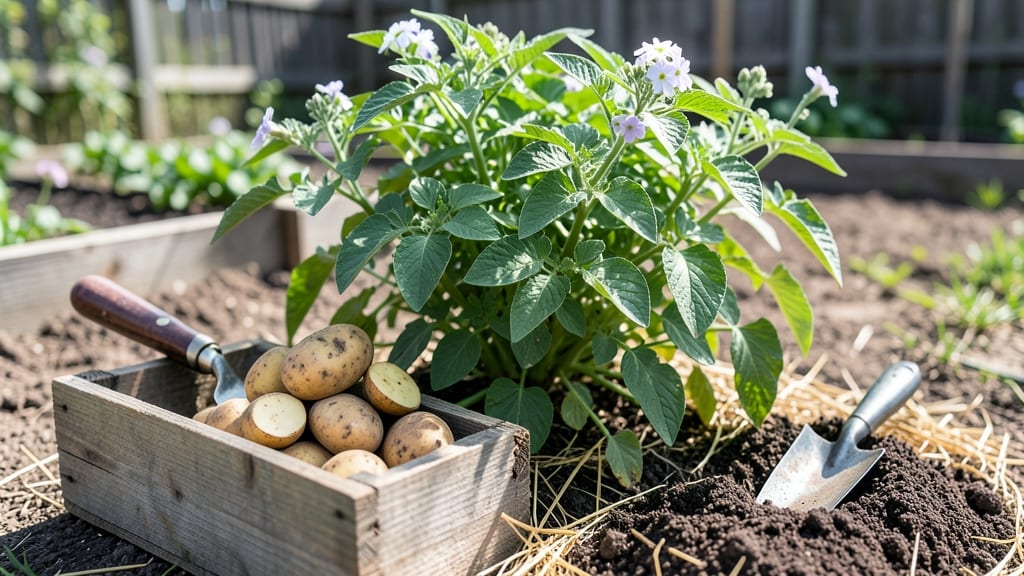
Plant seed potatoes in Michigan about 2-4 weeks before your last frost date—typically mid-April for most of the state, but timing shifts with your USDA zone.
Michigan gardeners know timing is everything—plant too early, and frost will ruin your crop. Too late, and you’ll miss peak harvest season. Here’s the exact frost-free planting window for Michigan’s unique growing zones to maximize your potato yield.
For 5b-6b zones, aim for early April in southern Michigan and early May in the northern regions. The key is waiting until soil temperatures hit 45°F—cold soil slows sprouting, while warm soil speeds up growth.
Below, I’ll break down the best varieties for Michigan’s short season, how to protect young plants from late frosts, and when to start harvesting for July-September yields.
Michigan seed potato planting calendar by USDA hardiness Zone
Michigan’s USDA Zones 4-6 create unique challenges for growing seed potatoes—late frosts can damage young plants, while early planting risks soil too cold for sprouting. The key is planting at the right soil temperature (45°F/7°C) and timing it 2-4 weeks before your last frost date.
Let’s break down the exact planting windows for each zone to ensure your potato tubers develop optimally.
For Zone 4 (northern Michigan), your last frost typically arrives around May 15, while Zone 6 (southern Michigan) sees frost-free conditions by April 15. This means your planting window shifts dramatically—4 weeks earlier in the south compared to the north.
Early varieties like Yukon Gold or Red Norland give you the best chance for a full harvest before Michigan’s first frost in October.
Here’s the frost-free planting calendar tailored to Michigan’s zones, including when to start indoors for a head start:
| USDA Zone | Last Frost Date | Planting Window | Indoor Start (Optional) | Soil Temp Requirement |
|---|---|---|---|---|
| Zone 4 | May 15 | April 15–May 1 | Start indoors March 1 | 45°F (7°C) |
| Zone 5 | April 30 | March 25–April 15 | Start indoors Feb 15 | 45°F (7°C) |
| Zone 6 | April 15 | March 15–April 1 | Start indoors Jan 30 | 45°F (7°C) |
*Plant 2-4 weeks before last frost for best tuber development.
If you’re in Zone 4, aim to plant early varieties like Kennebec or LaSoda by April 15 to avoid late frosts. These varieties mature in 90 days, giving them time to develop before Michigan’s first frost in October.
For Zone 6, you can push the envelope with mid-season varieties like Russet or Adirondack Blue, planting as early as March 15 for a longer harvest window.
For gardeners in Zone 5, a mix of early and mid-season varieties works best. Start early potatoes like Red LaSoda indoors in February and transplant outdoors by April 1.
Follow with mid-season varieties like Yukon Gold planted directly in the soil by April 15. This staggered approach ensures a continuous harvest from July through September.
Pro tip: Use black plastic mulch to warm the soil faster in colder zones. This can shave off 1-2 weeks from your planting timeline, giving your seed potatoes a head start.
Just remember to remove the mulch once plants emerge to prevent overheating. For late frosts, cover young plants with frost blankets or row covers until danger of frost has passed.
Timing isn’t just about frost—it’s also about soil temperature. Cold soil (below 45°F/7°C) slows sprouting and can lead to rotten tubers. Use a soil thermometer to confirm readiness.
If your soil is still chilly, wait a few days or use straw mulch to insulate the soil and speed up warming.
For container growing, adjust your timeline by 1-2 weeks earlier since pots warm up faster. Choose determinate varieties like Red Pontiac, which do well in containers and mature quickly. Plant them in 5-gallon buckets with drainage holes, and place containers in a south-facing spot for maximum sun exposure.
Finally, don’t forget to chit your seed potatoes 4-6 weeks before planting. Place them in a bright, cool spot (around 60°F/15°C) with the rose end up. This encourages sprouts to form before planting, giving your potatoes a 2-week head start once in the ground.
With these zone-specific deadlines, you’ll be well on your way to a bountiful potato harvest!
How to adjust planting dates for Michigan’s unpredictable weather
Michigan’s weather can shift faster than a summer storm, throwing off even the most experienced gardeners. When late frosts linger or early freezes sneak in, your seed potatoes need extra protection. The key is flexibility—adjusting planting dates based on soil temperature, frost forecasts, and your specific USDA zone.
Start by testing your soil with a thermometer. Potatoes need 45°F soil to sprout reliably. If temperatures hover below that, wait—cold soil delays growth and makes plants vulnerable to rot.
In Zone 5b, this often means planting in early May, while Zone 6b gardeners can start as early as mid-April.
🔹 Use a soil thermometer to confirm readiness—never guess. A 45°F minimum ensures healthy sprouting and tuber formation. If your soil is too cold, delay planting by 1-2 weeks.
- Check frost forecasts 2 weeks before your target planting date. Sites like Michigan State University’s Frost Risk Map provide real-time updates.
- Use row covers or cold frames to protect early plantings. These can push back the last frost date by 2-3 weeks.
- Plant in hills or raised beds for better drainage and warmth. Hills warm up faster than flat soil and reduce frost damage.
- Choose early-maturing varieties like ‘Yukon Gold’ or ‘Red Norland’ if your season is short. These finish in 90 days or less.
- Plant succession crops every 2 weeks. This spreads out your harvest and minimizes risk from unpredictable weather.
If a late frost threatens after planting, act fast. Cover young plants with frost blankets or straw mulch at night. These barriers can lower temperatures by 5-10°F, protecting tender shoots. For extra insurance, use cloche tunnels or low plastic hoops over rows.
For northern Michigan (Zones 4-5), consider starting seed potatoes indoors in late February. Use small pots or a seedling tray with potting mix. Once sprouts reach 4-6 inches, transplant outdoors after the last frost. This head start compensates for shorter growing seasons.
Monitor your plants closely after transplanting. If nights remain chilly (below 50°F), extend the season with black plastic mulch. This warms the soil by 2-4°F and suppresses weeds. Combine it with straw mulch on top to retain moisture and regulate temperatures.
🌱 Remember: Michigan’s weather is unpredictable, but with these adjustments, you can extend your growing season and still enjoy a bountiful potato harvest. Start with soil tests, use protective covers, and don’t hesitate to delay planting if conditions aren’t right.