
Propagation
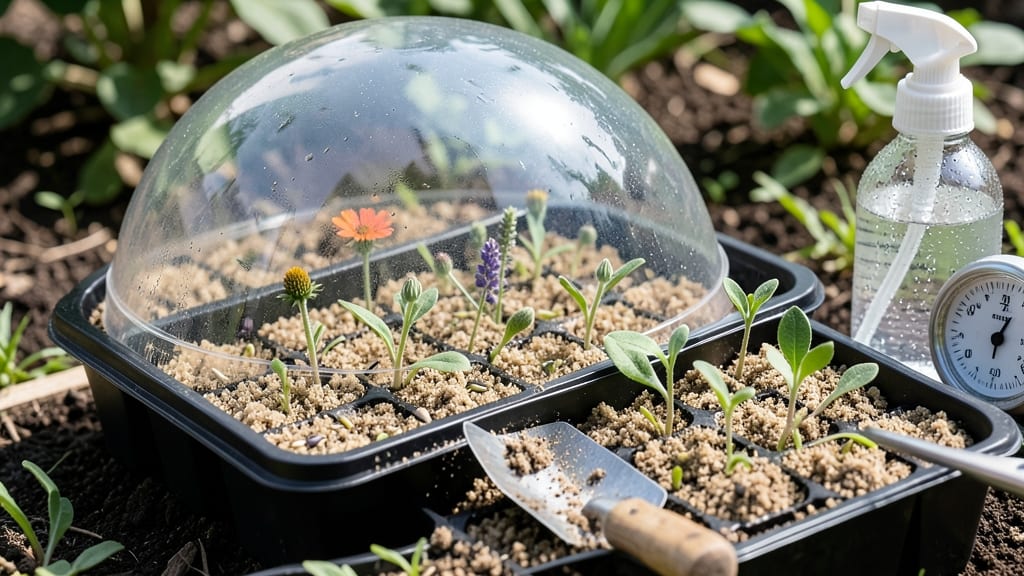
Wildflower seed germination time can be as quick as 5 days—if you know the tricks. 🌱 I’ve learned that some varieties like annual poppies and black-eyed Susans break dormancy fast when prepped right, while others need patience (or a little help from winter).
The secret’s in the soil temperature and moisture balance. Most wildflower seeds germinate best when soil stays between 60-75°F, but some—like bluebonnets—need cold stratification (a mini winter in your fridge) to wake up. Too dry? They’ll wait indefinitely. Too wet? They’ll rot before sprouting.
With the right prep, you’ll see those first tiny green shoots in 7-14 days for fast germinators, or 3-6 weeks for the slower ones. The key is consistency—keep the soil damp but not soggy, and protect those seeds from birds and wind until they’re rooted.
This works year-round for warm-season flowers, but spring and fall are the sweet spots for fastest, most reliable germination. Let’s get those seeds sprouting!
📚 In This Guide
- What you need
- Instructions
- Tips and common mistakes
- Wrapping up and next steps
What you need
- ● Wildflower seeds: Choose native, high-quality seeds (e.g., Black-Eyed Susan, Coneflower, or Milkweed). Aim for 1–2 lbs per 100 sq ft for optimal coverage.
- ● Germination medium: Outdoor: Well-draining potting mix or native soil (amend with compost if needed).
- ● Indoor: Seed-starting mix (sterile, peat-based or coco coir blend).
- ● Containers: Outdoor: Trays, seedling flats, or direct-sown rows (depth: ¼–½ inch for tiny seeds).
- ● Indoor: Biodegradable pots (3–4 inches deep) or seed trays with drainage holes.
- ● Watering tools: Spray bottle (for delicate seeds) or gentle watering can (avoid dislodging seeds).
- ● Light source: Indoor: Grow lights (12–16 hrs/day) or a sunny windowsill (south-facing).
- ● Outdoor: Partial shade cloth (30–50%) if sowing in hot climates.
- ○ Optional: Seedling heat mat (for slow-germinating varieties like Lupine or Penstemon).
- ● Gloves: Nitrile or gardening gloves (to protect hands from prickly seeds like Coreopsis).
- ● Labeling supplies: Plant labels + marker (track varieties and germination dates!).
- ● Mulch/fiber: Lightweight row cover or straw (to retain moisture post-sowing).
- ○ pH test kit: Optional but helpful—wildflowers thrive in slightly acidic to neutral soil (pH 6.0–7.0).
- ● Fertilizer: Balanced, low-nitrogen fertilizer (5-10-5) only after germination (avoid overfeeding!).
- ● Temperature control: Check your wildflower variety’s ideal germination temp (e.g., Sunflower: 70–85°F; Phlox: 60–70°F).
- ● Moisture: Keep soil consistently moist (not soggy) until seeds sprout—aim for 1–2 inches of water per week post-germination.
- ● Patience: Some seeds (like Milkweed) may take 2–4 weeks to break dormancy!
How to time wildflower seed germination for fastest sprouting
Here's how to predict—and accelerate—when your wildflower seeds will break through the soil.
🌱 Step 1: Identify Your Variety’s Germination Range
Wildflower seeds vary wildly in sprouting speed—some pop up in 3-5 days, while others take 2-4 weeks. Annuals like cosmos and zinnias typically germinate in 5-10 days, while perennials (like black-eyed Susans) or native species may need 14-30 days. Check your seed packet for the exact range, as this dictates your patience level.
Here's the thing—don't assume all wildflower mixes behave the same. Some blends contain fast-sprouting annuals mixed with slower perennials, creating a staggered emergence. If your packet says "mixed varieties," expect the first sprouts in 7-14 days, with stragglers appearing over 4 weeks. I always label my trays by variety to track progress.
⏰ Step 2: Create Ideal Moisture and Temperature Conditions
Most wildflower seeds need consistent moisture and warm soil to germinate quickly. After sowing, keep the soil surface evenly damp (not soggy) by misting lightly 2-3 times daily until sprouts appear. A spray bottle with a fine mist setting works best—heavy watering can wash seeds too deep or create crusty soil that blocks emergence.
Temperature matters more than you'd think. Fastest germination occurs at 65-75°F—use a seedling heat mat if your home runs cooler. If your space is chilly, place trays on top of the fridge or near a sunny window. You'll see the difference: seeds in 70°F soil often sprout 3-5 days faster than those in 55°F soil.
☀️ Step 3: Monitor for Sprouts Using the "First True Leaf" Checkpoint
Germination time is only part of the story—what you're really waiting for is the first true leaves (not the initial seed leaves, called cotyledons). For most wildflowers, this happens 3-7 days after sprouts emerge. Track your progress by marking the day you see the first green shoot, then double that time to estimate when seedlings will develop their first true leaves.
Real talk: some seeds take longer to germinate than others, even within the same packet. If you've waited 2 weeks with no sprouts, gently press the soil surface to check for buried seeds. If they're still dry, rewet and cover lightly with a humidity dome. Patience is key—some native wildflowers need cold stratification (a winter chill) before they'll sprout, so don't toss seeds just because they're slow.
💧 Step 4: Adjust Care Based on Sprout Timing
Once you see the first sprouts, shift to bottom-watering to avoid disturbing delicate seedlings. Fill a tray with ½ inch of water, place your seed tray inside, and let it absorb moisture from below. This prevents soil crusting and ensures even moisture without disturbing the seeds. You'll notice seedlings emerge more uniformly when using this method.
Don't overwater now—damping-off (a fungal disease) thrives in crowded, wet conditions. Thin seedlings to 1 inch apart as soon as they develop 2 true leaves, using small scissors to snip at soil level. This prevents competition and gives each plant room to grow. I always thin to the strongest seedlings, discarding the weakest to reduce disease risk.
✂️ Step 5: Transplant After True Leaves Form (Not Just Sprouts!)
Wait until seedlings have 3-4 true leaves before transplanting—this usually happens 10-21 days after germination, depending on the variety. Transplanting too early stresses young plants, while waiting too long risks overcrowding. Harden off seedlings by placing them outside in partial shade for 2-3 hours daily for 5-7 days before full sun exposure.
This is the moment that matters: if you rush hardening off, seedlings will wilt or scorch in direct sunlight. I start with a 50% shade cloth and gradually reduce coverage over 1 week. By the time they're ready for the garden, your wildflowers will be sturdy enough to handle real-world conditions—and you'll have skipped the most common pitfall of impatient gardeners.
Tips & tricks for faster wildflower germination
Here's what nobody tells you about speeding up those stubborn sprouts—without sacrificing quality.
Variety-Specific Tracking: Create a simple chart tracking each variety's expected germination window (from Step 1). I use masking tape labels with the seed type and date sown—this prevents mix-ups when you're checking trays daily. For mixed varieties, mark "fast" (3-7 days) and "slow" (14-30 days) sections separately. This visual system saves time when you're monitoring for the first true leaves (Step 3), letting you focus only on the varieties due to sprout.
Temperature Optimization: The 65-75°F range in Step 2 is your sweet spot, but here's the secret: place your seed trays on a heating pad set to "low" (around 70°F) for the first 72 hours after sowing. This jumpstarts metabolism in dormant seeds. After that, maintain the 70°F soil temperature—you'll notice faster emergence in just 2-3 days compared to cooler conditions. For chilly homes, I place trays on top of my fridge (which stays around 55°F) with a clear plastic dome to trap heat.
Moisture Precision: The 2-3 times daily misting in Step 2 works, but here's the pro move: use a spray bottle with a fine mist setting and weigh your soil mix before sowing. Keep it consistently at 50% moisture by weight—never let it dry out completely between waterings. I use a kitchen scale to check moisture levels daily; this prevents both overwatering (which causes damping-off) and underwatering (which halts germination). For extra insurance, cover trays with humidity domes during the first 7 days, then remove them once sprouts appear.
Light Exposure Strategy: While seeds germinate best in darkness, place your trays near a bright window (but not in direct sunlight) starting on day 5 after sowing. This gives seedlings a head start on photosynthesis once they emerge. I use a south-facing window for maximum light exposure without overheating. The key is to avoid direct sunlight during the critical germination phase—it can dry out the soil too quickly and stress emerging sprouts.
Pro Tips for Wildflower Seed Germination Time
- Here's what nobody tells you about speeding up those stubborn sprouts—without sacrificing quality.
- Variety-Specific Tracking: Create a simple chart tracking each variety's expected germination window (from Step 1).
- Temperature Optimization: The 65-75°F range in Step 2 is your sweet spot, but here's the secret: place your seed trays on a heating pad set to "low" (around 70°F) for the first 72 hours after sowing.
Frequently asked questions
Got questions about getting your wildflower seeds to sprout? You’re not alone! Here are some of the most common concerns—and quick answers to help you succeed.
How long does it take for wildflower seeds to germinate?
The germination time varies wildly by species, but most wildflowers sprout within 7–30 days under ideal conditions (warmth, moisture, and sunlight). Fast growers like cosmos or zinnia may appear in just 5–7 days, while slower varieties like lupine or black-eyed Susan can take up to 6 weeks. Always check the seed packet for variety-specific estimates!
Can I plant wildflower seeds in fall or winter?
Many wildflowers thrive with fall planting because cooler temps and winter rains trigger natural germination. Seeds like poppies and bluebonnets often need a cold period (stratification) to break dormancy. If planting in winter, use a light mulch (like straw) to protect seeds from freezing—just remove it once sprouts appear in spring.
What if my wildflower seeds aren’t sprouting after 30 days?
Don’t panic—seeds sometimes need a little extra patience (or a nudge!). First, check for moisture consistency (soil should stay damp but not soggy). If seeds are old or stored improperly, viability drops. Try scarifying (lightly nicking the seed coat) or soaking overnight for hard-coated seeds. If all else fails, test a few seeds in a damp paper towel—if they don’t sprout in 7–10 days, they may need replacing.
Do I need to thin wildflower seedlings after germination?
Thinning isn’t always necessary for wildflowers, but it helps stronger plants thrive. If seedlings are crowded (less than 6 inches apart), gently snip or pull the weakest ones at the soil line. This reduces competition for water and nutrients. Pro tip: Let a few extra grow—wildflowers often self-seed, so you’ll likely get a natural thicket next year!
What’s the best soil temperature for wildflower seed germination?
Most wildflowers germinate best in soil temps between 60–75°F. Use a soil thermometer to monitor—if it’s too cold (<50°F), try a mini greenhouse (clear plastic dome) or wait for warmer weather. For cool-season varieties (like larkspur), aim for 50–60°F. Heat mats can help speed up germination in chilly climates!
Still stumped? Drop your wildflower variety in the comments—we’re happy to help troubleshoot!
Wrapping up and next steps
Understanding wildflower seed germination time is your first step toward a vibrant, pollinator-friendly garden! From fast-sprouting varieties like Sweet Alyssum (just 5–10 days) to patiently waiting for Black-Eyed Susans (up to 30 days), each wildflower brings its own timeline—and rewards.
With the right prep, patience, and care, you’ll soon be celebrating a burst of color and life.
Ready to take the next step? Start small—plant a few fast-germinating varieties this week and track their progress. Once you’ve mastered the basics, expand your garden with seasonal bloomers or even native wildflower mixes tailored to your region. Happy gardening! 🌱✨