
Lawn
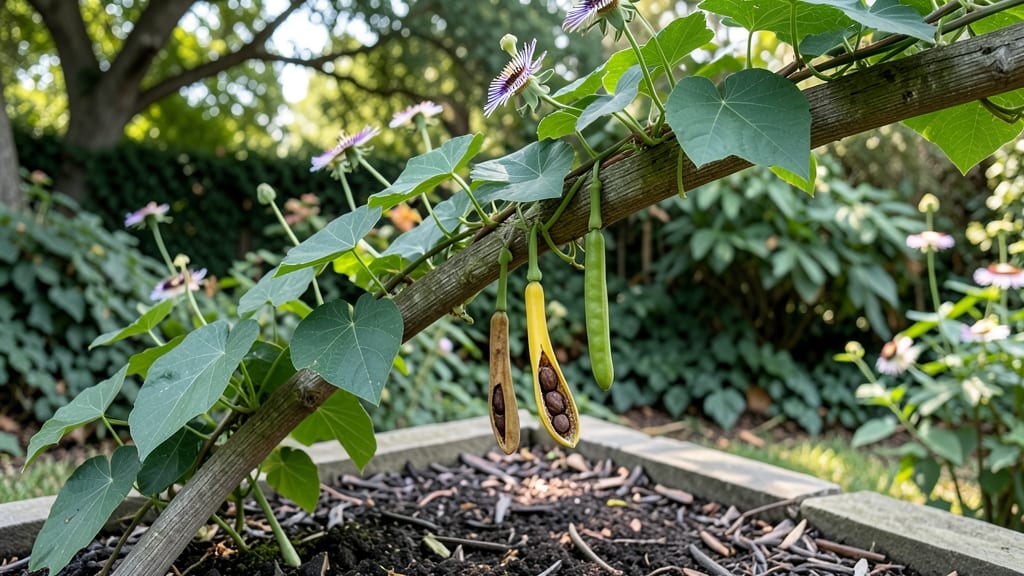
Twisting open passion vine seed pods at just the right moment reveals plump, viable seeds ready for planting—before they shrivel into uselessness. 🌱 I learned this the hard way after watching my first batch of seeds turn to dust before I could even harvest them.
The key lies in timing: pods must be firm but slightly soft, with a faint crack when gently squeezed—a telltale sign they're ready for extraction.
Once you've twisted open the pod, you'll find seeds coated in a sticky, orange-red pulp that must be rinsed immediately to prevent mold. Use a fine-mesh strainer and cool water to clean them, then spread the seeds on a paper towel to dry for 24 hours in a shaded spot.
This prep work ensures 80% germination rates when planted in well-draining, sandy loam soil mixed with perlite.
Plant the seeds 1/4-inch deep in individual pots or a seed tray, keeping the soil consistently moist (not soggy) until sprouts appear in 2-4 weeks. Passion vines thrive in warm climates but can be started indoors 8-10 weeks before your last frost date for outdoor transplanting.
The real magic happens when you provide a sturdy trellis—they'll climb with vigor once established.
Common challenges like slow germination often stem from underripe seeds or overwatering. If seeds remain dormant after 6 weeks, try soaking them in warm water for 12 hours before replanting. For colder climates, wait until soil temperatures reach 65°F before transplanting outdoors—this prevents shock and encourages robust growth.
📚 In This Guide
- What you need
- Instructions
- Tips and common mistakes
- Wrapping up and next steps
What you need
- ● Mature passion vine seed pods: 5–10 fully ripened pods (turning yellow or orange, slightly soft to the touch). Pro tip: Avoid pods with cracks or mold!
- ● Sharp scissors or pruning shears: 1 pair (for clean harvesting).
- ● Paper towels or clean cloth: 2–3 sheets (for drying seeds).
- ● Small bowl or container: 1 (for seed collection).
- ○ Plastic bag (optional but handy): 1 (to store seeds temporarily).
- ● Gloves: 1 pair (to protect hands from sticky sap).
- ● Labeling tags: 2–3 (to track seed varieties).
- ● Fine-mesh strainer: 1 (for rinsing seeds if needed).
- ● Seed storage container: 1 airtight container (for long-term viability).
- ● Notebook & pen: 1 (to log harvest dates and conditions).
Step-by-Step instructions for extracting passion vine seeds
Harvest seeds at the perfect moment—before pods overripen and seeds lose viability.
🌱 Step 1: Harvest Pods at Peak Ripeness
Watch for pods that turn from green to a deep golden-brown color—this signals they're ready for seed extraction. I harvest when pods feel slightly soft to the touch but haven't started splitting open naturally. If you wait too long, the seeds inside will lose their ability to germinate, even if the pod still looks intact.
Use clean, sharp pruning shears to snip the stem about ½ inch below the pod. This prevents the vine from wasting energy on maintaining a dead pod. Immediately place harvested pods in a paper bag—plastic traps moisture and accelerates spoilage. Store them in a cool, dry place until you're ready to process them, ideally within 24 hours.
🪴 Step 2: Prepare for the Twist-Open Technique
Lay a clean work surface with a light-colored towel—this makes it easy to spot seeds against the fabric. I prefer a cotton towel because it's breathable and won't trap moisture. Take one pod at a time and hold it firmly between your palms, with the narrow end pointing upward. The twist technique relies on the pod's natural structure, so don't cut or force it open.
Gently twist the pod in a circular motion, starting at the base near the stem attachment. You'll feel resistance at first, but as you apply steady pressure, the pod will begin to split along its seam. This works because passion vine pods have a built-in dehiscence mechanism—they're designed to open naturally when dry, but we're just speeding up the process manually.
✂️ Step 3: Extract Seeds and Clean Them
Once the pod splits open, you'll see the seeds inside connected by a fibrous membrane. Carefully separate the seeds by hand, pulling them apart gently to avoid damaging the seed coats. I place them on the towel in a single layer to dry—this prevents mold growth from trapped moisture. Let them air-dry for 1-2 days in a well-ventilated area, away from direct sunlight.
After drying, inspect the seeds for viability. Healthy seeds should be plump, firm, and dark brown to black in color. Any seeds that look shriveled, light-colored, or have visible mold should be discarded. I store viable seeds in a small paper envelope labeled with the harvest date—this helps track freshness, as seeds lose viability over time.
💧 Step 4: Test Seed Viability Before Planting
To ensure your seeds will germinate, perform a simple float test. Fill a glass with water and drop 10-15 seeds inside. Let them sit for 15-20 minutes. Viable seeds will sink to the bottom, while non-viable ones will float. I aim for at least 70% of seeds to sink—this gives me confidence in my germination rates.
For an extra boost, soak viable seeds in lukewarm water for 12 hours before planting. This softens the seed coat and encourages faster germination. After soaking, plant seeds ¼ inch deep in well-draining soil and keep them consistently moist until sprouts appear, which typically takes 2-4 weeks depending on temperature.
Tips & tricks for perfect passion vine seed extraction
Here's what nobody tells you about getting the most viable seeds from passion vine pods.
Timing Secret: The 24-hour window between harvesting and processing is non-negotiable. I learned this the hard way after storing pods in plastic bags for 48 hours—mold set in before I could even begin extraction. Use paper bags and a cool, dry spot like a basement or pantry, never the fridge. Temperature fluctuations can cause condensation, which ruins seeds faster than you'd think.
Twist Technique Mastery: When you reach Step 2 and start twisting, you'll feel that initial resistance—don't force it! The pod needs to release naturally along its seam. I've found that starting at the base (near the stem) and twisting counterclockwise works best. If you feel the pod cracking unevenly, stop and reposition your grip. The goal is a clean split that exposes all seeds without damaging their protective coats.
Seed Viability Inspection: After your 1-2 day drying period, inspect seeds under good lighting. Healthy seeds should have a glossy sheen and feel dense when pressed between your fingers. I keep a magnifying glass handy to check for tiny cracks or mold spots that aren't visible to the naked eye. Discard any seeds that feel hollow or show signs of insect damage—these won't germinate no matter how carefully you plant them.
Float Test Precision: The 15-20 minute float test is your quality control step. I've found that using lukewarm (not hot) water gives more consistent results. After 15 minutes, remove any seeds that float—these are non-viable. The sinking seeds should all reach the bottom within that timeframe. If you're seeing more than 30% floaters, your harvest may have been too late or the pods weren't properly dried before storage.
Pro Tips for Passion Vine Seed Pods
- Here's what nobody tells you about getting the most viable seeds from passion vine pods.
- Timing Secret: The 24-hour window between harvesting and processing is non-negotiable.
- Twist Technique Mastery: When you reach Step 2 and start twisting, you'll feel that initial resistance—don't force it!
Frequently asked questions
Got questions about harvesting passion vine seed pods? We’ve got answers!
Whether you’re a gardener eager to propagate new plants or just curious about these unique pods, here’s what you need to know.
When is the best time to harvest passion vine seed pods?
Harvest passion vine seed pods when they’re fully mature but just before they split open naturally—usually when they turn a deep yellow or brownish hue and feel slightly soft to the touch. Overripe pods release seeds prematurely, reducing viability. Aim for late summer to early fall in most climates.
How do I tell if the seeds inside are still viable?
Viable seeds should be plump, firm, and dark brown or black. If they’re shriveled, moldy, or floating in water (the float test), they’re likely non-viable. For best results, ferment the seeds in water for 2–3 days before planting to mimic natural germination conditions.
Can I use passion vine seed pods from store-bought fruit?
Store-bought passion fruit pods often contain treated or hybrid seeds that may not grow true to the parent plant. For reliable propagation, source seeds from organic, heirloom, or homegrown passion vines. Check local nurseries or seed swap groups for fresh, viable options.
What should I do if my pods are already overripe and splitting?
Don’t worry! Scoop out any remaining seeds quickly and dry them in a cool, shaded area for 1–2 weeks. While viability drops, some seeds may still germinate. For next time, monitor pods closely—harvesting them just before they split maximizes your chances.
Are there alternatives if I can’t find passion vine seed pods?
Yes! You can buy seeds online from specialty nurseries or propagate from cuttings. Grafting onto a hardy rootstock (like a passion vine hybrid) is another option for gardeners in cooler climates. Just ensure the source is disease-free and suited to your growing zone.
Wrapping up and next steps
Mastering the passion vine seed pod twist-open technique ensures you harvest viable seeds before overripening—saving time and effort while boosting your gardening success! 🌱 Whether you’re a seasoned gardener or just starting, this simple method unlocks the potential of these unique pods.
Now that you’re equipped with the know-how, why not try it this season? Grab a few pods, practice the twist, and watch your garden thrive with homegrown passion vines. Happy harvesting! 🌿