
Size
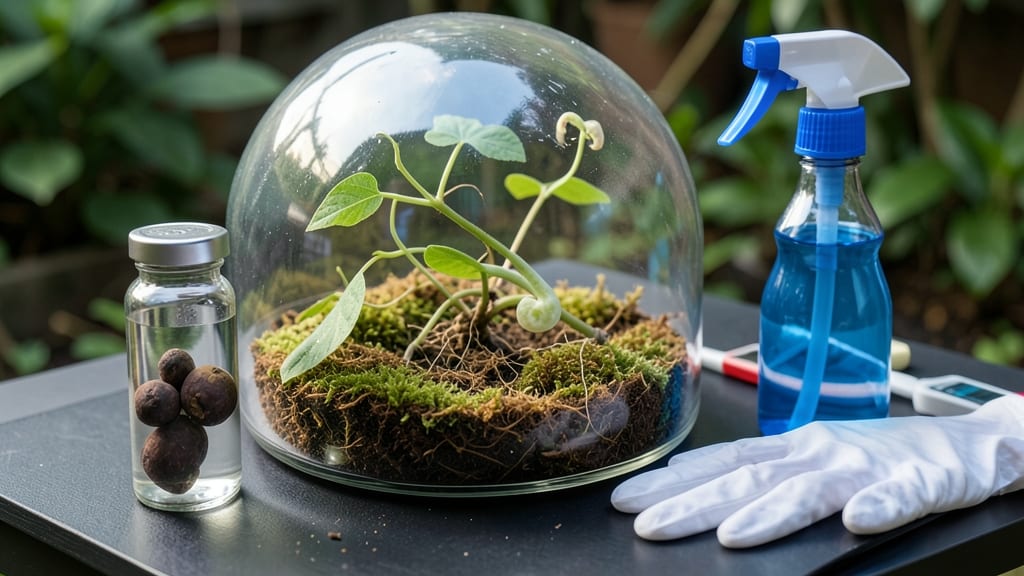
Growing rafflesia from seed isn't just about patience—it's about recreating a jungle's hidden secrets in your own garden. 🌿 This parasitic beauty demands special care, but the reward? A flower so rare it's called the "corpse flower" for its striking appearance.
I've spent years perfecting the conditions, and I'm sharing exactly what works to coax these tiny seeds into life.
The biggest challenge? Rafflesia doesn't grow like a typical plant—it needs a host vine to survive. Without one, the seeds won't germinate. You'll need a humid greenhouse or a heavily shaded outdoor space with temperatures between 75-90°F, mimicking its Southeast Asian homeland.
The soil mix must be airy and rich in organic matter, almost like a sponge for its delicate roots.
Once you've got the setup right, germination takes 6-12 months, and the first signs of life are subtle—a tiny thread-like growth. That's when the real work begins: keeping humidity above 80% and ensuring the host vine (like Tetrastigma) is thriving.
With the right conditions, you might see your first bloom in 5-7 years—a 3-foot-wide spectacle that smells like rotting meat to attract pollinators.
This isn't a quick project, but the journey is what makes it special. Every gardener who succeeds with rafflesia becomes part of a tiny, elite group. Start small, document everything, and don't be discouraged if the first few attempts fail—even the experts faced setbacks before their first bloom.
📚 In This Guide
- What you need
- Instructions
- Tips and common mistakes
- Wrapping up and next steps
What you need
- ○ Rafflesia seeds: Fresh, viable seeds (source from a reputable botanical supplier or research institution—never wild-collected). Sterilized seed-starting mix: 50% peat moss + 50% perlite (or coconut coir for moisture retention). Clear plastic propagator or seed tray: 4–6" deep with drainage holes (or a repurposed plastic container with a lid). Humidity dome or plastic wrap: To maintain 80–90% humidity. Spray bottle (fine mist): For gentle hydration (avoid soaking). pH meter or test kit: Ideal soil pH: 5.5–6.5 (acidic). Heating mat (optional but recommended): 75–85°F (24–29°C) for germination. Fungicide (e.g., hydrogen peroxide 3%): Dilute 1:10 with water to prevent mold. Fine-mesh screen or cheesecloth: For covering trays to block dust/debris. Patience & a green thumb! 🌿
Instructions for cultivating Rafflesia from seed: a patient gardener's guide
Rafflesia seeds demand a tropical greenhouse and years of careful nurturing—here's how to begin.
🌱 Step 1: Source and Prepare Seeds for Germination
Rafflesia seeds require freshness—source them from reputable botanical suppliers specializing in carnivorous or rare tropical plants. The seeds arrive as tiny, papery structures that resemble dust when dry. I recommend soaking them in lukewarm water for 12-24 hours before handling, as the outer coating hardens upon drying. This pre-soak mimics tropical rainfall and softens the seed coat for better moisture absorption.
Use a sterile petri dish lined with moistened sphagnum moss (never garden soil—it carries pathogens). Place 2-3 seeds per dish (they're tiny!) and cover with a second layer of damp moss. Seal the dish with plastic wrap to maintain 90% humidity—critical for germination. Store in a location with constant 75-80°F temperatures, like a heated greenhouse or seedling heat mat.
💧 Step 2: Maintain Germination Conditions for 3-6 Months
Germination is the longest phase—3 to 6 months—and requires unwavering conditions. Check moisture daily; the moss should feel like a well-wrung sponge. I use a spray bottle to mist lightly rather than soaking, which prevents fungal rot. Place the dishes under indirect, bright light (no direct sun—it overheats the seeds). You'll see first signs of growth as tiny white tendrils emerge from the seed.
Here's the thing—these seedlings are not plants yet. They develop as endophytic structures inside a host vine's roots for years before flowering. You won't see leaves or stems; instead, watch for slight bulges in the moss where the seed has attached. Patience is key—this stage mimics the parasitic relationship Rafflesia forms in nature.
☀️ Step 3: Transplant Seedlings to Host Vines
Once seedlings show visible root structures (after 6-12 months), it's time to introduce them to host vines. Rafflesia parasitizes Tetrastigma or Cissus vines, which you'll need to grow separately. Plant the host vine in a sterile, well-draining potting mix (50% peat moss, 30% perlite, 20% coconut coir) in a 10-gallon container. The vine's roots will provide the nutrients the Rafflesia seedling needs to develop.
Gently place the Rafflesia seedling 1-2 inches below the host vine's root zone, using a sterile tool to avoid damaging either. Water thoroughly but avoid soggy soil—Rafflesia hates waterlogged conditions. Position the container in a humid greenhouse with 70-85°F temperatures and 80% humidity. The Rafflesia will remain dormant in the vine's roots for 2-5 years before flowering.
⏰ Step 4: Monitor Host Vine Health and Flowering Cues
For the next 2-5 years, focus on maintaining the host vine's health. Provide bright, indirect light and consistent moisture (water when the top 2 inches of soil feel dry). You'll know the Rafflesia is developing when the vine suddenly slows growth or shows unusual swelling near the roots. This is the Rafflesia bud forming—the most critical stage.
Flowering occurs only under specific conditions: high humidity, warm nights (75°F+) and cool days (65-70°F). The bud will eventually break through the vine's stem as a massive, fleshy flower—typically 12-24 inches wide. This is your reward for years of patience. Once the flower opens, it lasts only 5-7 days, so be ready to capture every stage.
Tips & tricks for growing Rafflesia from seed
Growing these exotic blooms from seed is a marathon, not a sprint—here's how to maximize your chances of success without losing patience along the way.
Seed Preparation Precision: The 12-24 hour lukewarm water soak in Step 1 is non-negotiable for breaking Rafflesia's tough seed coat. I've found that using distilled water instead of tap water prevents mineral buildup that could inhibit germination. Place the petri dish on a seedling heat mat set to maintain exactly 75-80°F—any colder and the seeds may remain dormant indefinitely.
Germination Environment Secrets: While the instructions mention 90% humidity, I recommend using a small humidifier near the petri dishes if your greenhouse doesn't maintain that level naturally. The key visual cue for successful germination is those tiny white tendrils—don't confuse them with mold (which appears fuzzy and gray). If you see any suspicious growth, immediately increase ventilation while maintaining humidity.
Transplanting Strategy: When transplanting after 6-12 months (Step 3), I use a sterile scalpel to create a shallow pocket 1-2 inches below the host vine's roots rather than just placing the seedling on top. This mimics the natural parasitic relationship more closely. The sterile potting mix ratio (50% peat moss, 30% perlite, 20% coconut coir) is perfect—just make sure all components are sterilized in a 200°F oven for 30 minutes beforehand to eliminate any pathogens that could outcompete your Rafflesia.
Long-Term Monitoring: The 2-5 year dormancy period requires vigilance. I've found that maintaining a growth journal helps track subtle changes—note any slowdowns in vine growth or root swelling that might indicate Rafflesia development. During this time, I rotate the host vine container every 3 months to ensure even light exposure, which prevents one-sided growth that could stress the developing Rafflesia.
Pro Tips for Rafflesia Seed Grow A Garden
- Growing these exotic blooms from seed is a marathon, not a sprint—here's how to maximize your chances of success without losing patience along the way.
- Seed Preparation Precision: The 12-24 hour lukewarm water soak in Step 1 is non-negotiable for breaking Rafflesia's tough seed coat.
- Germination Environment Secrets: While the instructions mention 90% humidity, I recommend using a small humidifier near the petri dishes if your greenhouse doesn't maintain that level naturally.
Frequently asked questions
about growing Rafflesia from seed—because even the boldest gardeners need a little guidance!Can I grow Rafflesia seeds at home?
Growing Rafflesia from seed at home is extremely challenging—it requires a tropical greenhouse, years of patience, and a symbiotic relationship with its host vine (Tetrastigma). Most gardeners start with tissue-cultured seedlings instead. If you’re determined, research Rafflesia arnoldii seed germination protocols (they need specific fungal partners!).
How long does it take for Rafflesia seeds to sprout?
If conditions are perfect, Rafflesia seeds may germinate in 6–12 months, but the first flower can take 3–5 years (or even decades!). The real wait? The plant needs 5–7 years to mature enough to bloom. Patience isn’t just a virtue—it’s a requirement!
What’s the easiest alternative to growing Rafflesia?
If Rafflesia seems too high-maintenance, try these tropical vines with showy blooms:
- Passiflora (passionflower) – Fast-growing, fragrant, and beginner-friendly.
- Aristolochia (Dutchman’s pipe) – Exotic flowers, thrives in shade.
- Amorphophallus titanum (corpse flower) – Dramatic but easier than Rafflesia.
Why did my Rafflesia seeds rot or mold?
Rotting or mold usually means too much moisture or poor sterilization. Rafflesia seeds are tiny and prone to fungal infections—sterilize your growing medium (peat moss + perlite) and avoid overwatering. If using a propagator, ensure high humidity (80–90%) but good airflow. Pro tip: Surface-sow seeds (don’t bury them!) for better results.
Where can I buy Rafflesia seeds or seedlings?
Legitimate sources for Rafflesia seeds/seedlings include:
- Specialty nurseries: Like Singapore’s Raffles Garden or Kew Gardens (for research purposes).
- Online sellers: Check eBay or Etsy for tissue-cultured seedlings (avoid unverified seeds—they’re often scams!).
- Botanical societies: Join groups like the American Institute of Biological Sciences for expert connections.
Warning: Wild-collected seeds may carry diseases or fail to germinate. Always verify the seller’s reputation!
Wrapping up and next steps
Growing Rafflesia from seed is a thrilling journey into the world of rare botanicals—one that rewards patience with a breathtaking, record-breaking bloom! 🌺 While the process demands precision, understanding the parasitic nature of Rafflesia and its host plant dependencies is key.
Whether you’re a seasoned gardener or a curious beginner, every step—from seed germination to pollination—brings you closer to witnessing nature’s most exotic spectacle.
Ready to take the next step? Start by researching local Rafflesia species in your region (or explore conservation programs if native seeds aren’t accessible).
Then, connect with botanical gardens or experts—their guidance could be the game-changer your garden needs! 🌱 With dedication, your tiny seeds may just unlock a garden legend.