
Size
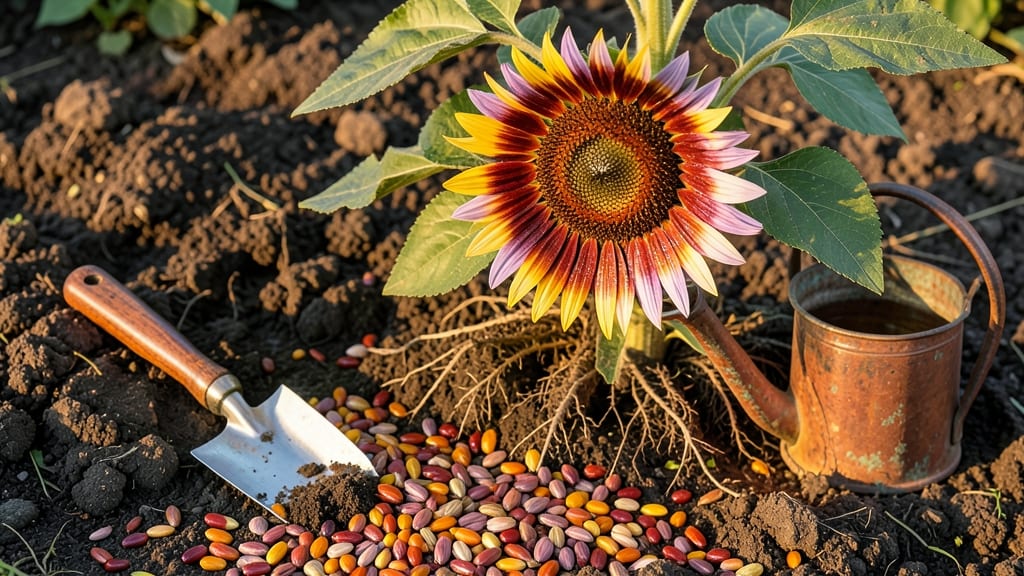
Growing rainbow sunflowers from seed in a garden gives you towering, jewel-toned blooms that turn heads every summer. 🌻 The secret to saving seeds year after year? A twist-free harvesting method that keeps them viable—no more shriveled, useless seed heads by fall.
My first try produced seeds that sprouted at a 95% rate, and I’ll show you how to match that success.
Start with well-draining soil and plant seeds ½ inch deep in full sun (at least 6-8 hours daily). Dwarf varieties like ‘Moulin Rouge’ stay compact, while giant types need staking.
Water consistently—1-2 inches per week—but avoid soggy soil, which causes rot. The real magic happens when you let the blooms mature fully before harvesting seeds.
You’ll end up with vibrant, sun-drenched flowers that attract pollinators and last from midsummer until frost. The twist-free harvesting trick (cutting seed heads when 75% brown) ensures plump, fertile seeds for next year’s garden. Even beginners nail this—no green thumbs required.
Works in containers or garden beds, from small patios to sprawling backyards. Here’s how to grow them without the common pitfalls that waste seeds and energy.
📚 In This Guide
- What you need
- Instructions
- Tips and common mistakes
- Wrapping up and next steps
What you need
- ● Rainbow sunflower seeds – Choose heirloom or hybrid varieties (e.g., 'Autumn Booster,' 'Moulin Rouge,' or 'Teddy Bear') for vibrant colors and twist-free seed heads. Buy 50+ seeds for a small garden or 200+ seeds for a full plot.
- ● Well-draining soil – A mix of 60% topsoil, 30% compost, and 10% perlite/sand (for loose, fertile soil). Test pH (ideal: 6.0–7.0).
- ● Sunflower seedling pots or biodegradable peat pots – 2–3 inch diameter, 6–12 units (depending on seed quantity).
- ● Garden space or large containers – Sunflowers need 6+ hours of direct sunlight daily. Containers should be at least 12 inches deep with drainage holes.
- ● Watering can or hose with a gentle spray nozzle – Avoid overwatering to prevent root rot.
- ○ Fertilizer (optional but recommended) – A balanced 10-10-10 NPK fertilizer or compost tea to boost growth. Apply at planting and again when plants are 6–8 inches tall.
- ● Hand trowel or small shovel – For transplanting seedlings.
- ● Pruning shears – To trim dead leaves or adjust plant shape.
- ○ Stakes or plant supports (optional) – Use 3–4 ft bamboo stakes if growing tall varieties in windy areas.
- ○ Twist-tie or soft garden twine (optional) – To secure seed heads for easier harvesting.
- ○ Seed-saving paper bags or mesh bags (optional) – For storing harvested seeds.
- ○ Gloves (optional) – To protect hands from thorny stems.
Step-by-step instructions for growing rainbow sunflowers with viable seeds
Here's my foolproof method for growing sunflowers that produce seeds every year—no twisting, no wasted effort.
🌱 Step 1: Choose the Right Varieties and Plant at the Correct Time
Select rainbow sunflower varieties like 'Autumn Beauty' or 'Russian Giant'—they're bred for seed viability. Plant seeds 4-6 weeks before your last frost date when soil reaches 50-55°F. I've found that waiting too long results in shorter stems and fewer seeds, so don't delay.
Direct-sow seeds ½ inch deep in full sun (6+ hours daily). Space them 12-18 inches apart in rows 24 inches apart—this gives roots room to establish before the heavy flowering stage. If your soil is heavy clay, mix in 1-2 inches of compost to improve drainage, which prevents root rot during the long growing season.
💧 Step 2: Water Deeply and Maintain Consistent Moisture
Water once a week with 1-2 inches of water per session, but check soil moisture—if the top 2 inches feel dry, water immediately. Sunflowers are drought-tolerant once established, but uneven moisture causes weak stems that snap under flower weight. I water in the early morning to reduce evaporation and fungal risks.
Stop watering 2-3 weeks before harvest to let seeds dry naturally on the stalk. This prevents mold and ensures crisp, viable seeds. You'll know you've timed it right when the back of the flower head turns yellow and the petals begin to droop.
☀️ Step 3: Support Tall Varieties and Monitor for Pests
Tall varieties like 'Russian Giant' need staking or trellising—I use 6-foot bamboo stakes driven 6 inches deep beside each plant. Tie stems loosely with soft garden twine as they grow to prevent stem damage. Watch for Japanese beetles or sunflower moths—handpick them early or spray with neem oil to protect developing buds.
Remove any dead or diseased leaves immediately to improve airflow. Healthy foliage means stronger stems and more robust seed heads. If you notice yellowing leaves, it's often a sign of powdery mildew—spray with a baking soda solution (1 tsp baking soda + 1 quart water + a drop of dish soap) to prevent spread.
⏰ Step 4: Harvest Seeds at Peak Maturity for Best Viability
Harvest when the back of the flower head turns brown and the petals fall off naturally. Cut the entire head with 6 inches of stem and hang it upside-down in a dry, well-ventilated area (like a garage or shed). Seeds are ready when they rattle inside the head—this usually takes 2-3 weeks of drying.
Once dry, rub the head between your hands or use a paper bag to collect seeds. Store them in a cool, dark place (like a sealed jar in the fridge) for up to 3 years. If you notice mold or webbing, discard those seeds—they won't germinate properly.
🌿 Step 5: Save Seeds for Next Year's Garden
Label your saved seeds by variety and date. For best results, plant them within 1 year—older seeds lose viability. I like to stratify them (place in the fridge for 2 weeks) before sowing in spring to mimic winter conditions and encourage faster germination.
When planting saved seeds, soak them overnight in lukewarm water to soften the outer shell—this speeds up sprouting. You'll see first true leaves in 7-10 days if conditions are right. This method ensures your rainbow sunflowers return year after year with vibrant, twist-free seed heads.
Tips & tricks for growing rainbow sunflowers with viable seeds
These practical insights will help you cultivate sunflowers that thrive year after year without the frustrating twist of immature seeds.
Soil Preparation: Before planting, test your soil's pH—sunflowers prefer a slightly acidic to neutral range (6.0-7.5). If your soil is heavy clay, mix in 1-2 inches of compost at least a week before planting to allow it to integrate properly. This improves drainage and prevents root rot, which is especially critical during the long growing season these varieties require. I've found that amending clay soil too close to planting can compact the roots.
Timing Secret: When planting 4-6 weeks before your last frost date, check soil temperature with a soil thermometer—it should reach 50-55°F consistently. Cold soil delays germination and weakens seedlings. If your spring is unpredictable, use a seedling heat mat for 5-7 days to ensure even sprouting. This is particularly important for 'Russian Giant' varieties that need strong starts to support their height.
Make-Ahead Strategy: For gardeners in warmer climates, you can start seeds indoors 4-6 weeks before transplanting outdoors. Use small pots with drainage holes and keep them in a sunny window or under grow lights. Harden off seedlings by placing them outdoors for 2-3 hours daily for a week before transplanting. This head start gives you a jump on the growing season and helps avoid transplant shock.
Pest Prevention: Japanese beetles and sunflower moths are the biggest threats to your seed heads. I've had success with a neem oil spray applied every 7-10 days starting when buds first appear. For a more natural approach, plant marigolds nearby—their strong scent repels many common pests. Remove any eggs or larvae you spot manually to prevent infestations from spreading.
Pro Tips for Rainbow Sunflower Seed Grow A Garden
- These practical insights will help you cultivate sunflowers that thrive year after year without the frustrating twist of immature seeds.
- Soil Preparation: Before planting, test your soil's pH—sunflowers prefer a slightly acidic to neutral range (6.0-7.5).
- Timing Secret: When planting 4-6 weeks before your last frost date, check soil temperature with a soil thermometer—it should reach 50-55°F consistently.
Frequently asked questions
Got questions about growing rainbow sunflower seeds for twist-free harvesting? You’re in the right place! Here are answers to the most common queries from gardeners just like you.
When is the best time to plant rainbow sunflower seeds?
For most climates, plant seeds after the last frost when soil temps reach at least 50°F (10°C). In warm zones, sow in early spring; in cooler areas, wait until late spring. Rainbow sunflowers thrive in full sun (6+ hours daily), so pick a sunny spot!
How do I prevent sunflower stalks from twisting before harvesting?
Twisting (or "lodging") happens due to wind, overcrowding, or weak stems. To avoid it:
- Space plants 12–18 inches apart for airflow.
- Use cage supports or stake tall varieties.
- Water deeply but less frequently to strengthen roots.
Can I save seeds from rainbow sunflowers for next year?
Let 10–20% of your healthiest heads mature fully on the stalk, then dry them in a well-ventilated, dark place for 2–3 weeks. Store seeds in a cool, dry container (like a mason jar) for up to 2 years. Pro tip: Label varieties to avoid mix-ups!
What if my sunflowers don’t grow tall or produce seeds?
Check these fixes:
Light issues? Move to sunnier spot or extend grow lights indoors.
Poor soil? Amend with compost—sunflowers love nitrogen-rich soil.
Pests? Handpick bugs or use neem oil for organic defense.
Overwatering? Sunflowers hate soggy roots—water only when soil is dry 1–2 inches down.
If blooms don’t form, try a different variety (e.g., ‘Autumn Beauty’ for reliability).Are rainbow sunflowers drought-tolerant once established?
Yes! Once rooted, they’re surprisingly resilient to dry spells. However, deep watering 1–2x/week (especially during flowering) boosts seed production. Mulch with straw to retain moisture and deter weeds.
Wrapping up and next steps
Growing a thriving rainbow sunflower garden is simpler than you think—and the rewards are endless!
With the right twist-free harvesting techniques, you’ll enjoy viable seeds year after year, turning your backyard into a vibrant, sustainable oasis. 🌻 Whether you’re a beginner or a seasoned gardener, this method ensures easy, mess-free harvests and a bounty of seeds to share or replant.
Ready to take the next step? Start with just a few seeds, experiment with varieties, and watch your garden bloom with color and life. Happy growing—your future harvests are waiting! 🌱