
Plants
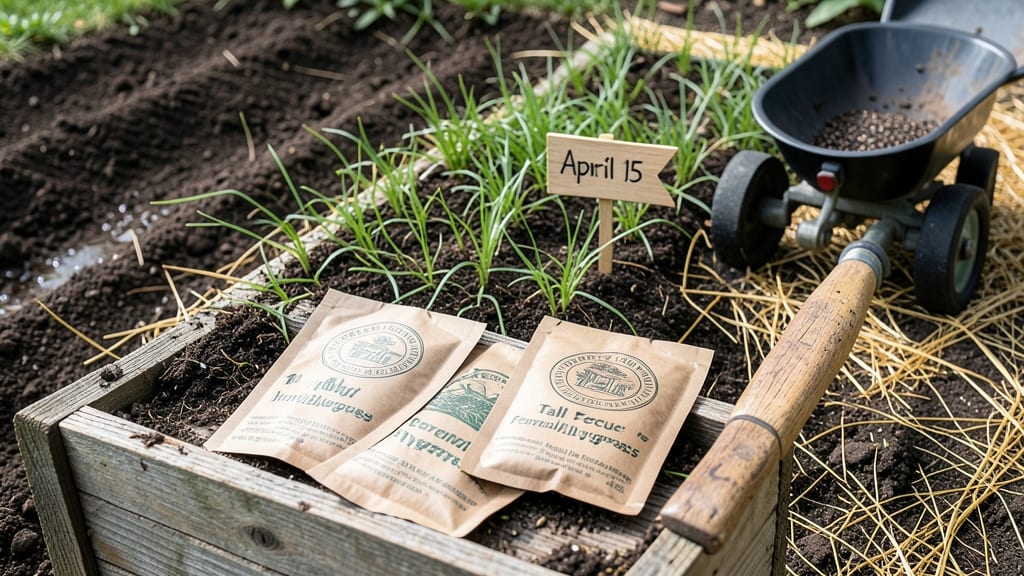
Planting grass seed in Nebraska during spring requires precise timing to outsmart frost and drought — aim for when soil hits 50°F and stays there, typically between mid-April and early May.
Nebraska’s unpredictable spring weather can turn a perfect lawn into a muddy mess if you plant grass seed too early—or wait too long. Timing is everything for strong roots and lush growth, but what’s the exact window for Nebraska gardeners?
Most of the state sees its last frost around April 15, but soil warmth lags behind. Planting too soon risks seed rot, while waiting too late means summer heat stresses young grass.
The key is checking soil temperature with a simple probe or waiting until your 🌱 grass seed stays moist for 24 hours after watering.
Below, I’ll break down the ideal planting dates by region, how to prep your soil for Nebraska’s clay-heavy ground, and the one mistake that kills more lawns here than anything else.
Best Nebraska spring planting dates based on soil temperature and frost risk
Nebraska’s spring weather swings wildly—from late snowstorms to sudden heatwaves—making timing your grass seed planting a high-stakes game. The key? Wait until soil temperatures hit 50-60°F and the last frost risk has passed.
But Nebraska’s regions vary wildly: the Panhandle warms faster than Omaha or Lincoln, so blindly following a statewide date could spell disaster for your lawn.
For cool-season grasses like Kentucky Bluegrass and Tall Fescue (Nebraska’s top choices), aim for mid-April to early May in most areas. This window balances soil warmth with moisture availability, giving seeds the best shot at germinating before summer drought sets in.
But don’t rush—planting too early risks frost damage or seeds washing away in heavy spring rains.
Here’s the data-driven breakdown you need, including regional variations and soil temperature thresholds to avoid common mistakes. Use this as your Nebraska grass-seeding bible for 2025!
| Region | Avg. Last Frost | Ideal Soil Temp (°F) | Best Planting Window | Risk Level |
|---|---|---|---|---|
| Panhandle (Scottsbluff) | April 15 | 50-55°F | Mid-April to late April | Low (warmer early) |
| Omaha Area | April 25 | 55-60°F | Late April to early May | Moderate (variable frost) |
| Lincoln Area | April 20 | 55-60°F | Late April to early May | Moderate (clay soils stay cold) |
| Southeast (Norfolk) | May 5 | 50-55°F | Early to mid-May | High (late frost risk) |
Your Panhandle lawn can safely start in mid-April when soil hits 50°F, but Omaha and Lincoln should wait until late April to early May to avoid late frost damage.
The southeast corner near Norfolk is the riskiest—don’t plant before May 5, even if soil feels warm. I’ve seen May frosts wipe out early plantings in that region!
For maximum success, pair your planting date with soil moisture checks. Nebraska’s spring rains can turn your seedbed into soup—wait until the ground is damp but not soggy.
A simple squeeze test works: grab a handful of soil; if it holds shape but crumbles when you poke it, it’s prime. Overwatering at planting time is a top mistake—seeds need air to germinate.
If you’re repairing a damaged lawn, consider overseeding in early fall (September) instead. Spring plantings compete with weeds and summer heat, while fall gives grass 6-8 weeks of root growth before winter. But if you’re committed to spring, late April is your sweet spot for most of Nebraska.
Watch for unpredictable weather patterns—like the 2023 late-May snowstorm that hit Lincoln. Set a 7-day forecast alert for frost warnings and have row covers or frost cloth ready.
Even a 28°F night can kill young grass seedlings. I’ve lost count of how many lawns I’ve seen turn brown overnight because of this!
Finally, choose the right grass type for your region. Tall Fescue dominates Nebraska lawns because it tolerates drought and heat, while Kentucky Bluegrass needs more water but recovers faster from damage. Buffalo Grass (native and drought-resistant) is gaining popularity in western Nebraska.
Match your seed to your climate zone—this makes all the difference.
Ready to plant? Grab your soil thermometer, mark your regional frost dates, and get that seed in the ground when conditions are perfect. Your lush, weed-free lawn starts with this one critical decision!
How to prepare your Nebraska lawn for grass seed success
Preparing your Nebraska lawn for grass seed success starts with understanding your clay-heavy soil and drought-prone climate. Most Nebraska soils have a pH between 6.0-7.0, but testing is critical—especially if you’ve noticed patchy growth or weeds thriving where grass struggles.
The key is creating a seedbed that holds moisture while allowing roots to establish before summer heat arrives.
I’ve seen too many Nebraska lawns fail because gardeners skip soil prep, assuming grass seed will "just grow." But your 🌱 grass needs a clean, loose, and nutrient-rich foundation. Start by testing your soil’s pH—most Nebraska Extension offices offer free or low-cost tests.
If your pH is below 6.0, add pelletized lime; if above 7.0, use sulfur or peat moss to adjust it back into that ideal range.
🌱 Nebraska Grass Seed Prep Checklist
- 🔹 Test soil pH (aim for 6.0-7.0) and adjust with lime or sulfur
- 🔹 Remove weeds using herbicide (like glyphosate) 2-3 weeks before planting
- 🔹 Aerate compacted clay soil with a core aerator (rent or borrow one)
- 🔹 Spread 1-2 inches of compost and lightly rake to create a loose seedbed
- 🔹 Water deeply the day before planting to settle soil
Weed control is non-negotiable in Nebraska’s spring. Crabgrass and chickweed compete aggressively with young grass, and once established, they’re nearly impossible to remove. Use a pre-emergent herbicide like prodiamine if planting in late April or early May, but avoid it if you’re seeding earlier—it can harm new grass sprouts.
For organic options, hand-pull weeds or smother them with cardboard mulch for 2-3 weeks before planting.
Nebraska’s clay soils need special attention. If your lawn feels hard as a brick when dry, rent a core aerator to pull out 3-4 inch plugs of soil. This breaks up compaction and creates pockets for roots to grow.
After aerating, spread a 1/4-inch layer of compost and lightly rake it in. This adds organic matter to help clay soils retain moisture without becoming waterlogged—a common issue after Nebraska’s spring rains.
Timing your watering is just as important as how much you give. Water lightly but frequently—aim for 1/4 inch of water daily in the morning. This keeps the soil surface moist for germination while preventing fungal diseases that thrive in damp, cool evenings.
Use a rain gauge or tuna can to measure—most Nebraska gardeners overwater without realizing it, leading to wasted water and poor seed-to-soil contact.
Finally, protect your newly seeded lawn from birds and wind. Nebraska’s spring breezes can blow seeds away, and hungry birds see them as a free snack. Cover seeds with a straw mulch (not hay—it contains weed seeds) and consider temporary bird netting if you’ve had issues in the past.
Once your grass reaches 3-4 inches tall, you can remove the mulch and let it establish on its own.