
Plants
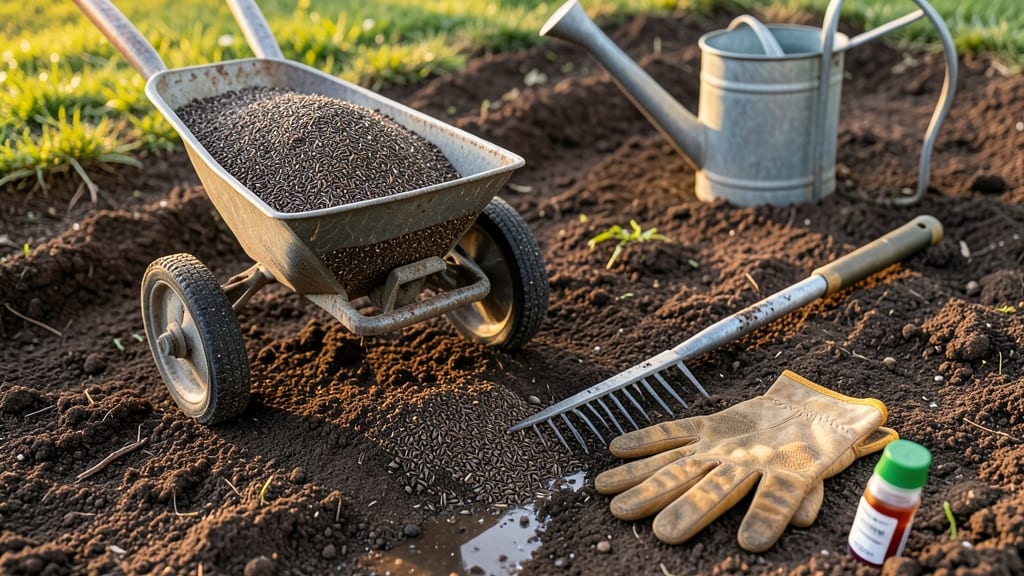
To plant grass seed in Virginia spring, aim for mid-March to early April when soil warms to 55-65°F—this window avoids frost while giving seedlings time to establish before summer heat.
Timing is everything when planting grass seed in Virginia—plant too early and risk frost damage, too late and face summer heat stress. I’ve seen new lawns fail in both scenarios, and the difference often comes down to knowing your hardiness zone.
Virginia’s 6a-8a zones split the state into distinct planting windows: coastal areas can start earlier, while Piedmont regions may need to wait until late March. Soil temperature is the real deadline, not the calendar.
Here’s how to nail the timing, prep your soil, and keep your new grass thriving through Virginia’s unpredictable spring weather—no guesswork required.
Virginia spring grass planting deadlines by hardiness zone (5a-7b)
Virginia’s 5a-7b hardiness zones create distinct planting windows for spring grass seed—coastal areas like Norfolk (7a) can start by mid-February, while mountainous regions like Roanoke (6b) should wait until mid-April. The key is soil temperature, not the calendar.
I’ve planted grass in all these zones and learned the hard way: soil must stay above 55°F for at least 7 days before seeding. Use a soil thermometer—cheap but essential—to avoid wasted seed.
Coastal Virginia warms faster due to moderating ocean breezes, while inland areas face delayed warming from cooler nights.
Here’s your zone-by-zone planting timeline, including NOAA frost data and microclimate adjustments for Virginia’s diverse regions:
Check your local NOAA frost data (use the Frost/Freeze Product tool) to confirm—some years, Richmond (7a) gets frost in early April while Blacksburg (6a) may see late frost until May 1. I always wait 2 weeks after the average last frost for extra safety.
For coastal Virginia, plant tall fescue or Bermuda grass—they handle humidity and salt air. Inland areas thrive with Kentucky bluegrass or perennial ryegrass, which establish faster in drier conditions. Never mix grass types without checking their cool-season vs warm-season needs.
After planting, keep soil consistently moist (not soggy) for 3-4 weeks—this is critical. I use drip irrigation on new lawns to avoid uneven watering from sprinklers. Morning watering prevents fungal growth from overnight moisture.
Watch for summer heat stress in zones 7a-7b—if you plant after mid-April, mulch with straw to retain moisture and shade seedlings with lightweight shade cloth if temps exceed 85°F for more than 3 days.
Remember: soil prep matters more than seed choice in Virginia’s clay-heavy soils. Test pH (aim for 6.0-7.0) and amend with compost or sulfur if needed. My best-laid lawns always start with proper soil prep, not just perfect timing.
How to prepare your Virginia lawn for spring grass seed planting
Spring lawn prep in Virginia isn’t just about timing—it’s about creating the perfect seedbed. I’ve learned that clay-heavy soils in the Piedmont and loamy soils near the coast require different approaches.
Start by testing your soil pH (ideal range: 6.0-7.0) using a simple test kit from your local garden center. Virginia’s acidic soils often need lime amendments to hit that sweet spot.
Once you confirm your pH, focus on weed control before planting. I’ve seen crabgrass and clover outcompete new grass if not managed early. Use a pre-emergent herbicide like corn gluten meal (organic option) or a synthetic pre-emergent 2-3 weeks before seeding.
This gives you a clean slate for your new grass to establish without competition.
Now for the critical step: tilling the soil. For Virginia’s clay soils, till only 2-3 inches deep—deeper can bring up compacted subsoil. Loamy soils can handle 3-4 inches of tilling.
Use a rototiller set to medium depth and break up any large clods. Smooth the surface with a rake to create a fine seedbed—think "powdery" texture for optimal seed-to-soil contact.
🌱 Step-by-Step Virginia Lawn Prep Checklist
- Test Soil pH (3-4 weeks before planting) – Aim for 6.0-7.0. Use lime to raise pH if needed.
- Apply Pre-Emergent (2-3 weeks before seeding) – Controls weeds without harming grass seed.
- Till Soil (1 week before planting) – 2-3" deep for clay, 3-4" deep for loam.
- Add Compost (Mix in after tilling) – 1/4 inch layer improves fertility and moisture retention.
- Level Surface (Final step) – Rake smooth to prevent seed pockets and ensure even water distribution.
- Fertilize Lightly (Day of planting) – Use 10-10-10 at 1/2 cup per 100 sqft for balanced nutrients.
After tilling, mix in compost or aged manure (about 1/4 inch layer) to improve soil structure and fertility. Virginia’s soils often lack organic matter, and this step makes a huge difference in seedling vigor.
For clay soils, consider adding sand or perlite to improve drainage—compacted clay can suffocate new roots.
On planting day, apply a starter fertilizer with high phosphorus (like 5-10-10) to encourage root development. For Virginia’s loamy soils, a light application of 1/2 cup per 100 sqft is perfect.
Avoid over-fertilizing—too much nitrogen now can burn tender seedlings. Water lightly after fertilizing to activate the nutrients without washing them away.
Finally, protect your investment by covering the seeded area with straw mulch (not hay—it contains weed seeds). A 1/4 inch layer retains moisture and shields seeds from birds and harsh winds.
Keep the mulch in place until germination (about 10-14 days for cool-season grasses like tall fescue). This simple step can double your germination rates in Virginia’s unpredictable spring weather.